
How much does corporate catering cost in Boston?
Boston corporate office catering runs $15 to $30 per person. Here's the real breakdown — food, delivery, and hidden fees — with ANI's pricing as a guide.
Planning lunch for the team? The first question is always price. Here's the honest answer. No fluff.
Office catering in Boston usually runs $15 to $30 per person before tax. Delivery is on top. Most teams land around $20/pp for a real buffet.
ANI Catering & Cafe has been pricing office catering across Greater Boston for 30+ years.
The short answer
Typical per-person pricing in Boston:
Budget — $12 to $18/pp. Sandwich trays. Salad bowls. Pizza.
Mid-range — $18 to $25/pp. Hot buffet. Real protein. Sides.
Premium — $25 to $40+/pp. Plated meals. Premium proteins. Servers.
Most offices land in the mid-range. It hits the sweet spot. Real food. Fair price.
What drives the price?
Five things move the needle:
Protein — chicken is cheap. Lamb is not.
Format — buffet is cheapest. Plated is most expensive.
Headcount — bigger orders unlock better per-person rates.
Notice — same-day costs more. Plan ahead and save.
Sides and extras — dessert, drinks, and apps add up fast.
A real example: the ANI Board room Feast
Here's exactly what $20/pp buys at ANI:
Your choice of protein
Fresh salad
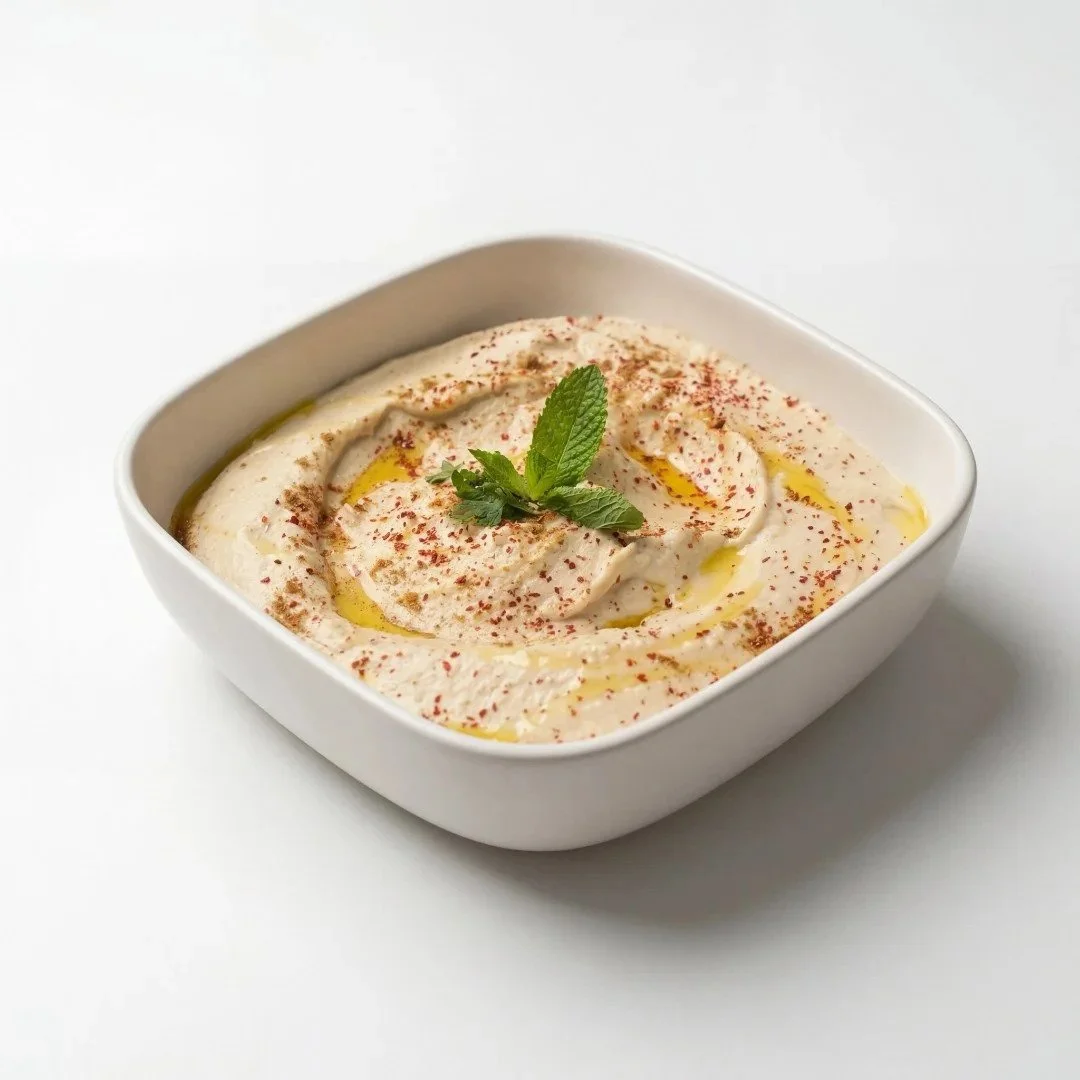
House-made hummus
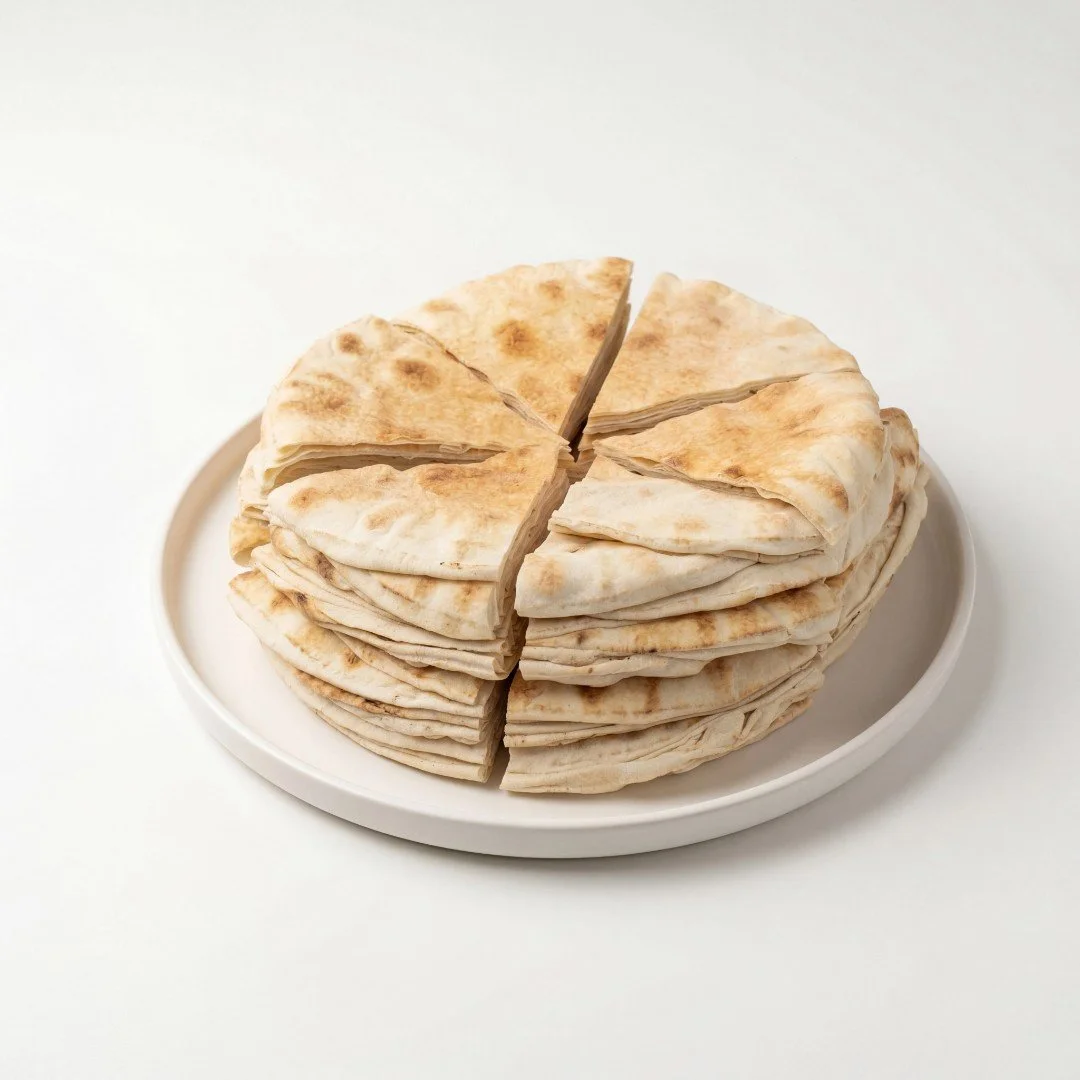
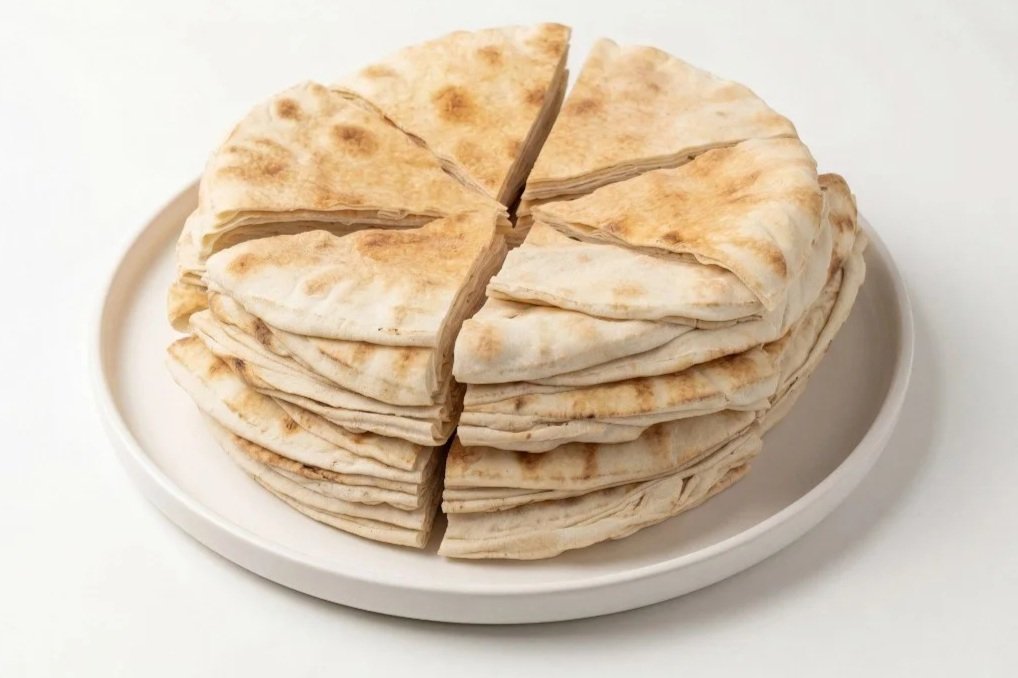
Warm pita bread
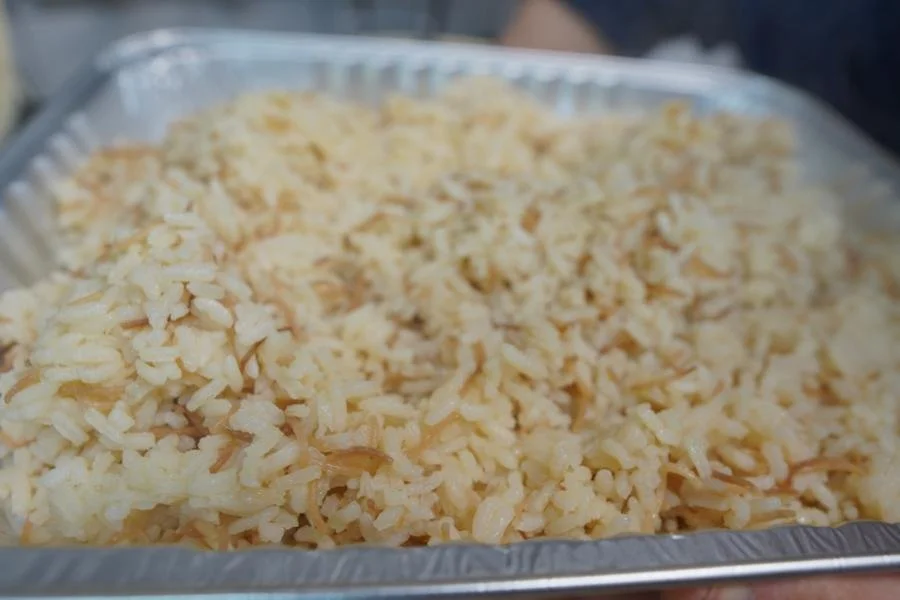
Rice pilaf
That's $20 per person before tax. Buffet-style. Feeds a real lunch. Not a tease.
Want to compare? A national chain charges $24 to $28/pp for less food. Pizza for 10 hits $15/pp once you add salads and drinks. The Boardroom Feast lands in the middle. Better food. Same price.
Delivery fees: what to expect
This is where most people get surprised. Delivery isn't free. Even when it says "free."
Typical Boston delivery fees:
Direct from caterer — $0 to $50
Third-party apps — $0 to $20 (plus service fees)
National chains — $25 to $75
Premium catering — $75 to $150
Distance matters. So does time of day. Rush hour costs more.
Direct vs third-party apps
Two ways to order. Big difference in experience.
Order direct from the caterer:
Real human answers the phone
In-house driver knows the route
Issues get fixed fast
Delivery fee usually $0 to $50
Order through a third-party app (ezCater, etc.):
Lower delivery fee (often $0 to $20)
Convenient interface
But less reliable
Driver may be a contractor
Problems are harder to fix
ANI handles both. Direct orders go to our in-house driver. Third-party orders go through the app's network. Both work. Direct is more reliable.
Hidden costs to watch
Read the fine print. These add up:
Service fees — 5% to 18% on top of food cost
Setup fees — $25 to $75 for buffet setup
Disposable plates and utensils — sometimes free. Sometimes $1 to $3/pp.
Tax — 7% in Massachusetts on prepared food
Tip — usually 10% to 20% for the driver
A $20/pp order can end up at $26/pp once everything lands.
How to keep costs down
Smart moves that actually work:
Order direct — skip the third-party markup
Book early — same-day delivery costs more
Round up headcount — better per-person rate
Stick to one protein — variety costs more
Skip plated. Pick buffet. — saves $5 to $10/pp

What you should actually budget
For a 20-person office lunch in Greater Boston:
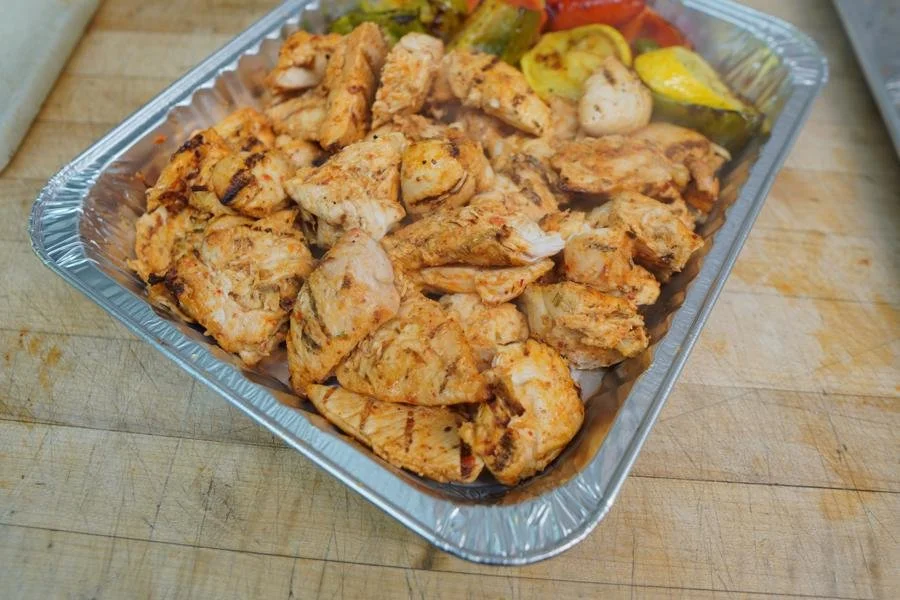
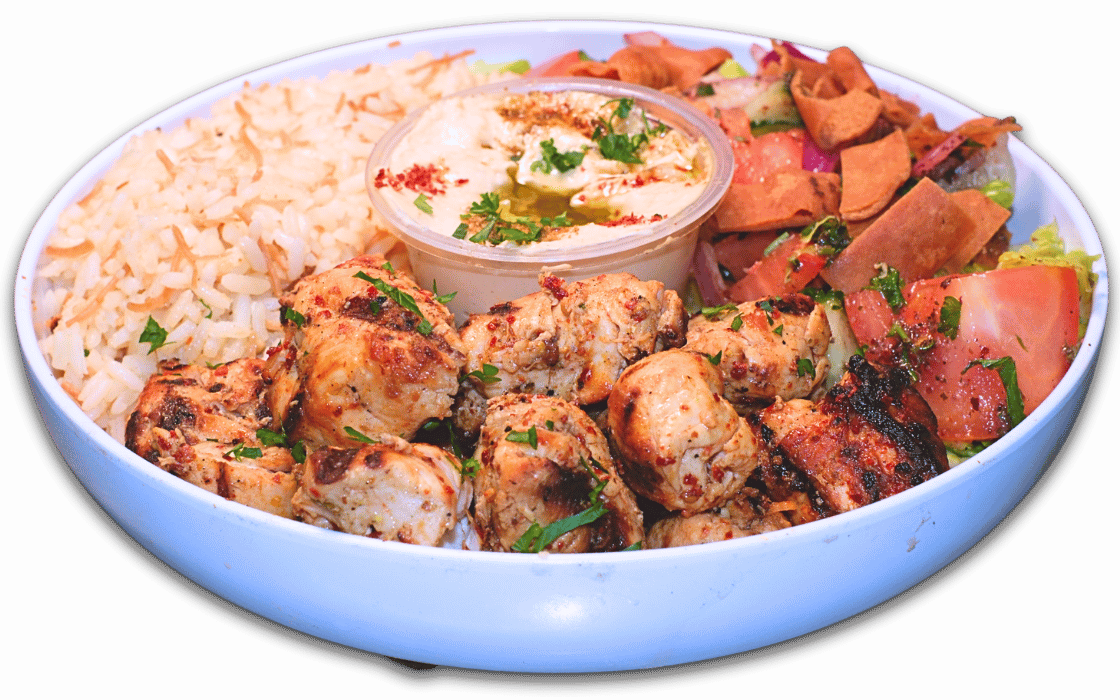
Food — $400 (at $20/pp for our Chicken Kabob Platter)
Delivery — $0 to $50 ($0 delivery can be iffy)
Tax — 7% (about $30)
Tip — $40-$60 (Usually 10-15%)
Total — roughly $460 to $530. About $23 to $27/pp all in.
That's the real number. Not the menu price.
How ANI prices Office catering
We keep it simple. No service fees. No setup fees for standard orders. Delivery is $0 to $50 direct depending on distance. The Boardroom Feast usually starts around $20/pp before tax. The price on the menu is the price you pay!
ANI Catering & Cafe is family-owned and Belmont-based. We've been catering Boston offices since the early 90s. Call us at (617) 484-6161 for a real quote in real numbers. No games.
Quick takeaways
Boston office catering runs $15 to $30/pp before tax
ANI's Boardroom Feast is $20/pp — protein, salad, hummus, pita, rice pilaf
Delivery is typically $35 in the Metro Boston Area ($0 to $20 through third-party apps)
ordering direct for delivery is more reliable than apps like EZcater and Doordash
Budget about 25% on top of food cost for delivery, tax, and tip
Catering In and Near Boston
You need to feed a group, soon. Whether it's a Tuesday office lunch or a weekend shower, here's what actually matters when booking catering in Boston — from delivery range to last-minute orders to small-party menus.
What "Boston" really means when you're booking catering
A lot of "catering in Boston" results aren't really in Boston.
They're in the suburbs — fine for a wedding, less fine when your office is in Kendall Square and you need lunch on the table by noon.
When you're comparing caterers, look at:
Actual drive time to your office or venue (not just the city listed on the website)
Delivery radius — many caterers cap it at 10–15 miles
Whether they cross into Boston, Cambridge, and Watertown without an upcharge
Belmont sits right on many city lines. A caterer based in Belmont like ANI can hit Cambridge, Boston, Lexington, Waltham, and Newton without it becoming a logistics project.
That proximity is the difference between hot food at noon and cold food at 12:45.
Last-minute catering in Boston:
what's actually possible?
Most big Boston caterers want 48–72 hours' notice.
Some want six weeks for anything social.
That's a problem when your CEO announces a Friday lunch on Wednesday or you’ve got family visiting from out of state unexpectedadly.
Here's what's realistic:
Same-day or next-day: wraps, platters, dips, salads, and pre-cooked proteins
2–3 days out: custom hot buffets and family-style spreads
1+ week out: full-service events with staff, setup, and breakdown
The trick is choosing a caterer that's also a working restaurant. A real kitchen running real lunch service every day already has the food prepped, the staff on, and the ovens hot. A 30-person wrap-and-platter order on short notice isn't a scramble — it's Tuesday.
If a caterer requires a week's notice for a tray of hummus, keep scrolling.
Office lunches vs. social events:
different orders, different rules
A lot of Boston catering pages lump everything together.
They shouldn't. The needs are very different.
Office and corporate catering wants:
Easy individual portions or buffet-style trays
Vegetarian, vegan, gluten-free, and halal options on the same order
Disposable serving ware included
Quiet, on-time delivery
Social events (showers, birthdays, graduations, and other Parties) want:
A spread that looks abundant on the table
Shareable platters — kabobs, falafel, dips with warm pita bread
Something a little more festive than sandwich boxes
Flexibility on head count up until the last day or two
If you're booking for both kinds of events from the same caterer, ask for menus side by side. The price points and serving styles should look noticeably different.
Small parties deserve real catering, too.
Here's a quiet frustration with a lot of "Boston caterer" search results:
The minimums are huge.
20 people. 30 people. 40-person backyard BBQ. Some require a $1,500 floor. Fooda
But most of life's gatherings are smaller than that. A baby shower for 12. A retirement lunch for 8. A Sunday family dinner for a visiting cousin.
Look for caterers that offer:
Family-style feasts starting around 5 people anicateringandcafe
Party platters built for 8–10
À la carte add-ons — extra hummus, a tray of baklava, a dozen falafel — without rebuilding the whole order
Small doesn't mean lazy!
A great kabob platter with rice pilaf, fattoush, hummus, and warm pita bread feeds a dozen people beautifully and costs less per head than most boxed-lunch corporate menus.
Affordable catering in Boston isn't a contradiction
"Affordable" and "Boston catering" don't usually share a sentence.
They can!
A few things drive real price differences:
Cuisine type. Middle Eastern catering — kabobs, shawarma, falafel, dips, rice — runs leaner per head than steakhouse or seafood spreads, without feeling cheap.
Service style. Drop-off catering is dramatically cheaper than full-service with staff and rentals.
Restaurant-based caterers vs. event companies. A working restaurant has lower overhead than a dedicated event company with its own commissary.
No mystery fees. Watch for delivery surcharges, "service" fees, gratuity that's already baked in, and rental minimums.
Ask for an itemized quote. If a caterer can't give you a per-person price for a basic buffet within 24 hours, that's a sign.
How to know you're hiring a top-rated caterer
Reviews matter — but read them right.
Look for:
At least 100+ Google reviews with a 4.5+ average. A perfect 5.0 from 9 people tells you nothing.
ezCater ratings specifically — that's where corporate catering customers leave honest feedback
Repeat-customer language. "We use them for every quarterly meeting" means more than "great food!"
Years in business. A family-run shop that's survived 20+ years in Boston food service has been stress-tested.
Photos from real events — not just stock plating shots
A top-rated caterer in Boston should have all of the above, plus a phone number that a human actually answers during business hours.
If your week looks anything like the inbox we see — a Thursday office lunch for 30, a Saturday graduation party for 50, a last-minute platter run for an open house — you don't need a six-month wedding planner.
You need a real kitchen that can cook fresh, halal, preservative-free Middle Eastern food and get it to you on time.
That's exactly what ANI Catering & Cafe does, every day, from 687 Belmont Street in Belmont — right on the Boston and Cambridge city line!
Call 617-484-6161 or order online when you're ready to feed your crowd.
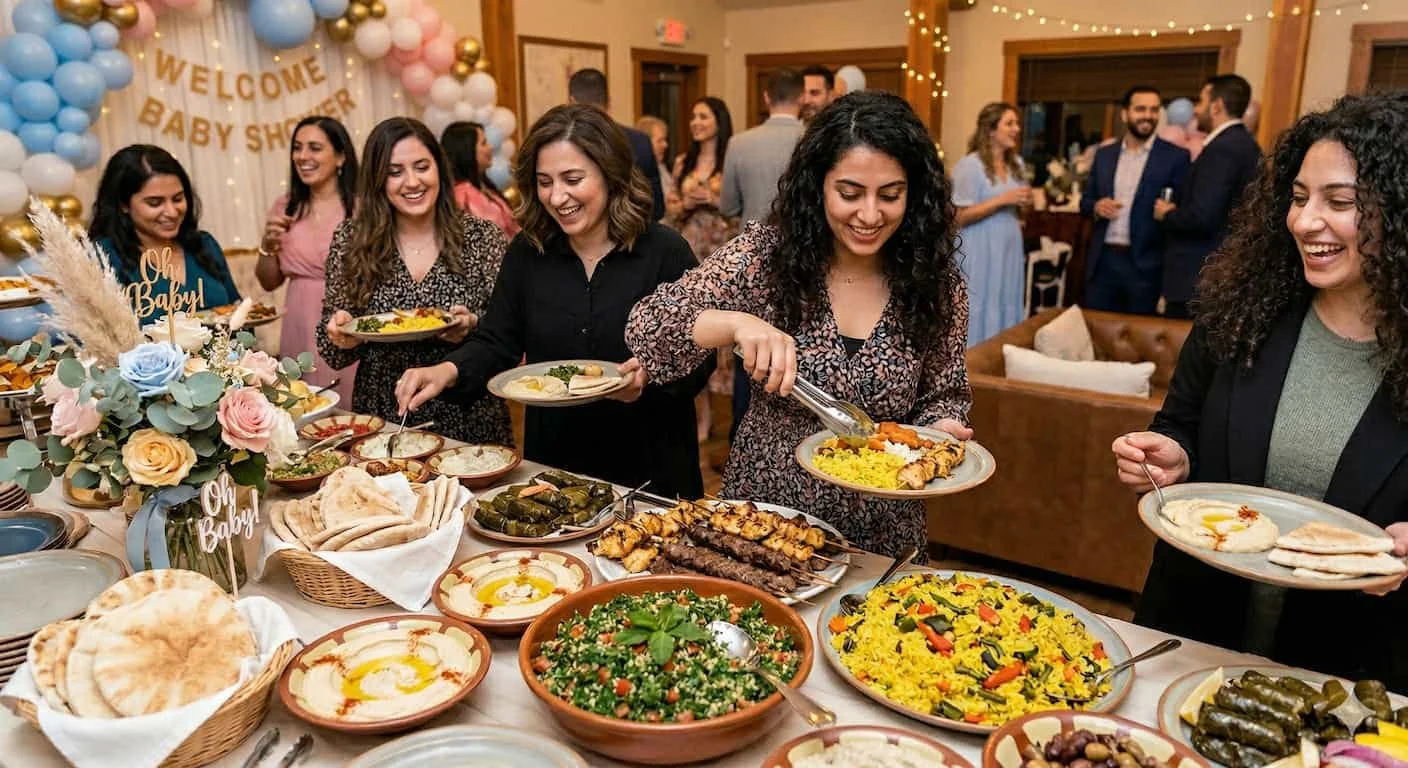
Best Affordable Baby Shower Catering in Boston
Need affordable baby shower catering in Boston? Here's what it actually costs, what food works best, and what to look for in a caterer before you book.
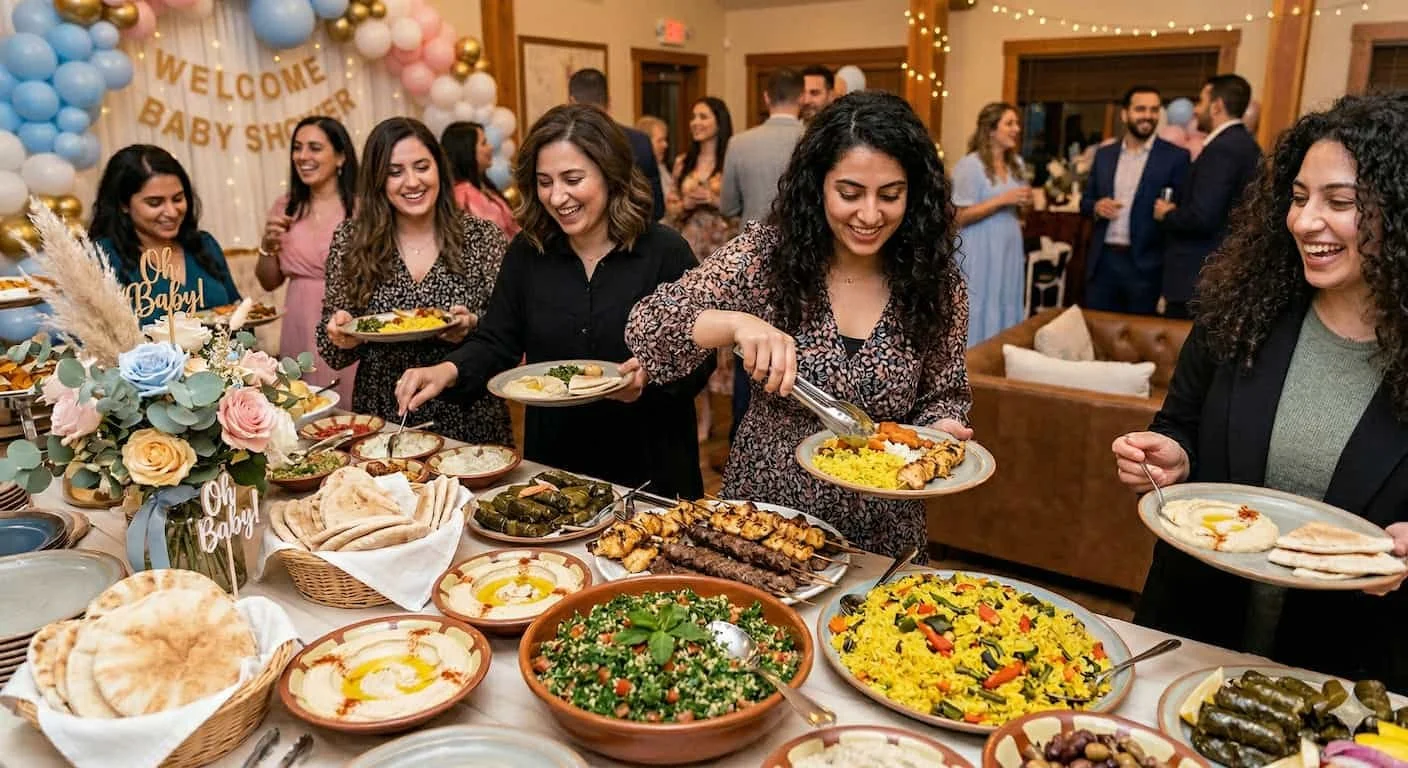
Planning a baby shower in Boston?
You need catering that's:
1. good,
2. affordable,
3. and stress-free?
Luckily, You're in the right place!
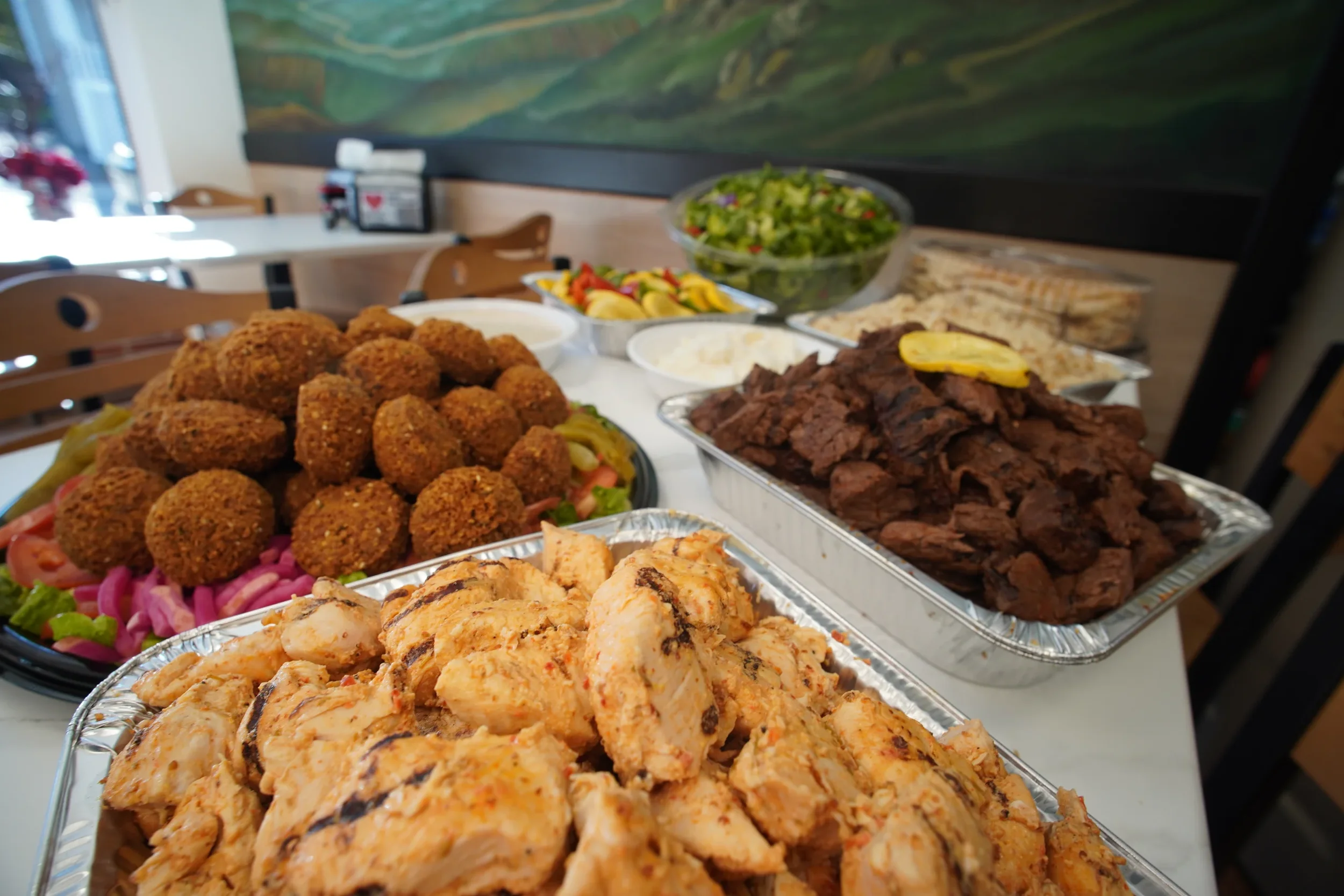
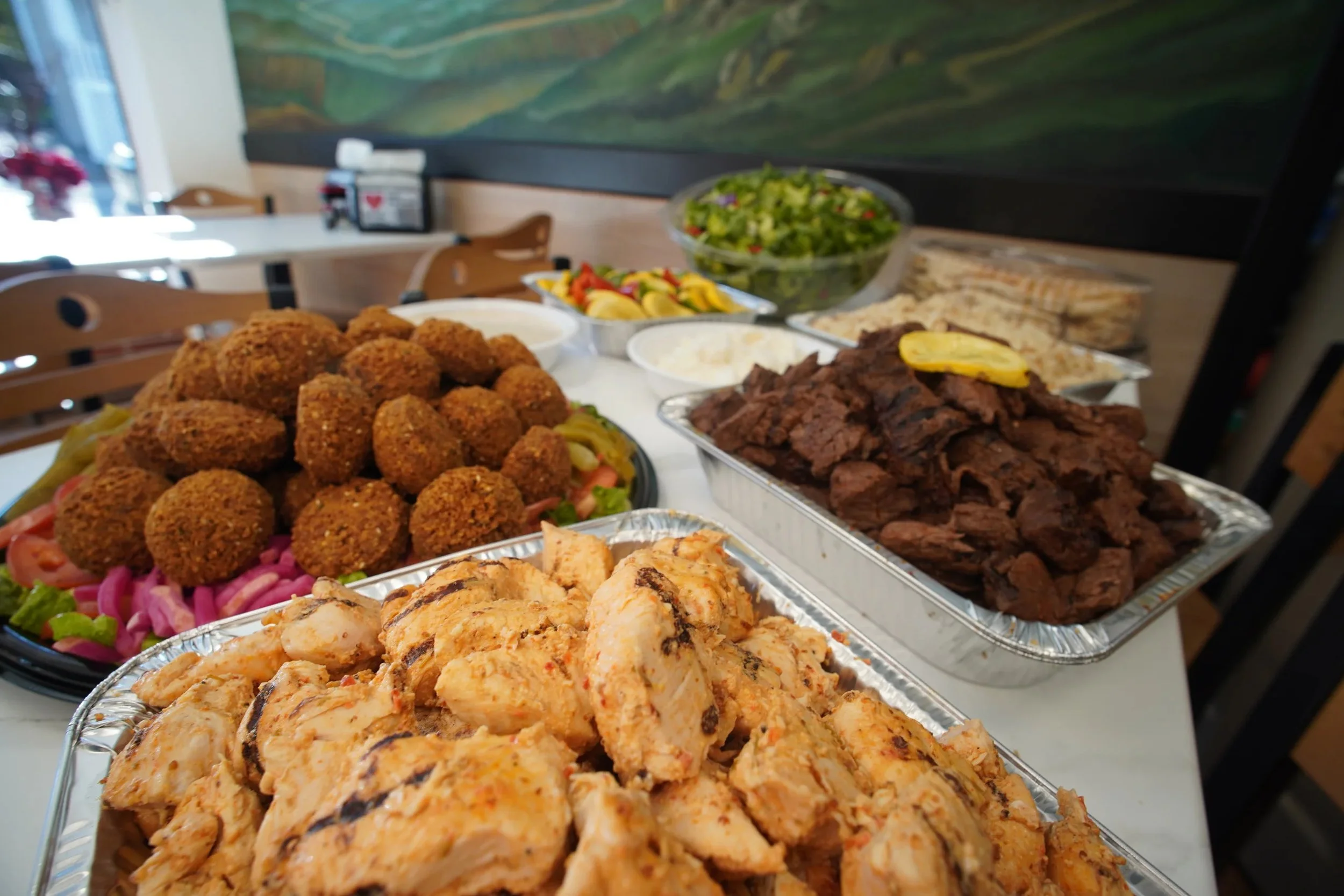
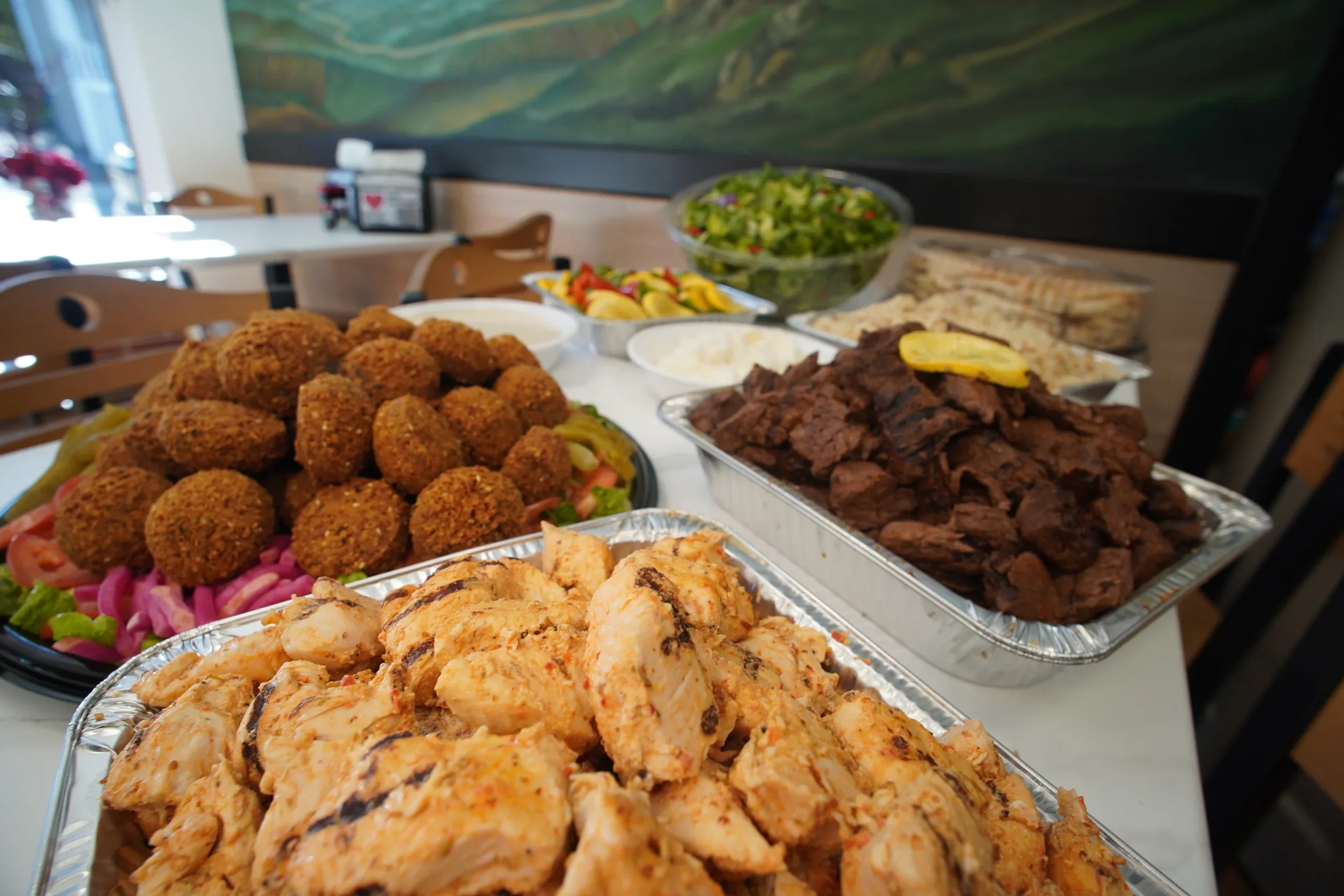
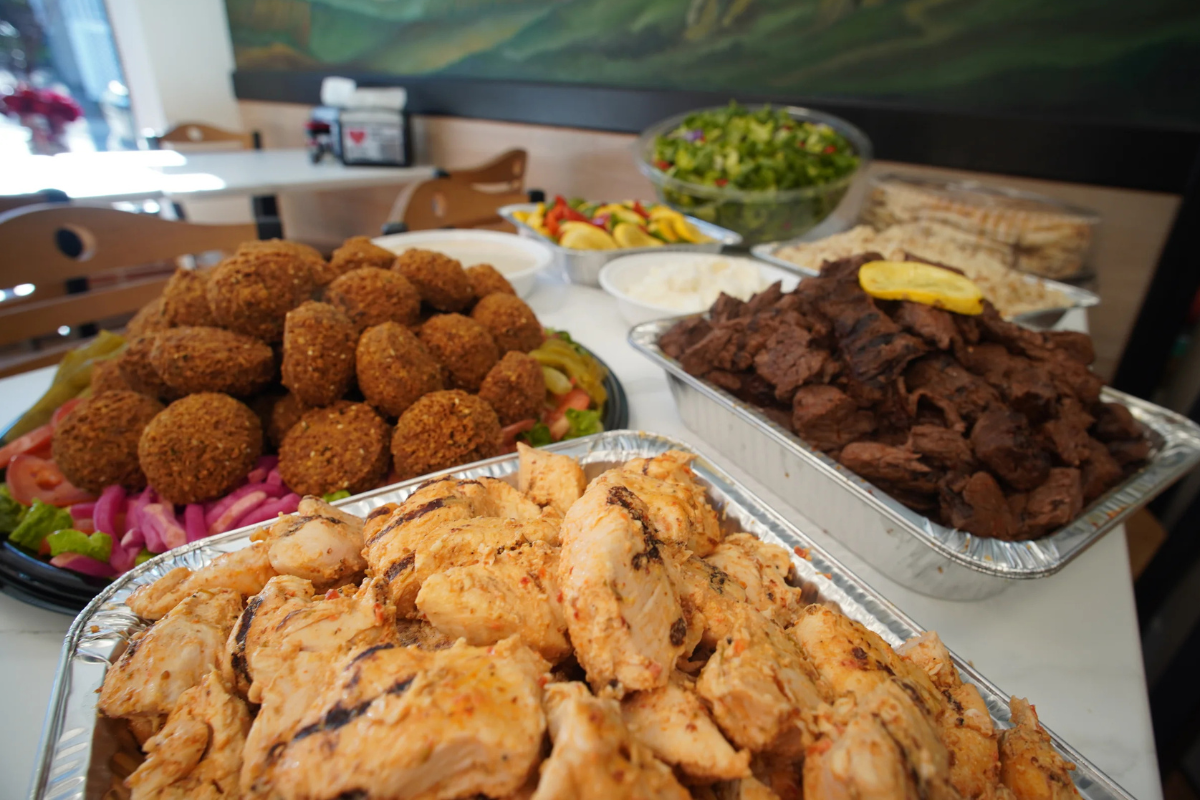
A full ANI catering spread — grilled chicken KEbab, beef Kebab, falafel, tabbouleh, and Syrian Bread. Halal-certified Middle Eastern food catered fresh in Greater Boston.
This guide covers exactly what small baby shower catering costs in Boston, what food works best, and how to find a caterer that actually shows up on time.
How Much Does Baby Shower Catering Cost in Boston?
Price is the first question.
Here's the honest answer:
Group Size
10–15 people — $150–$250
15–25 people — $250–$450
25–40 people — $450–$700
40–60 people — $700–$1,100
Budget rule of thumb:
$15–$20 per person covers a full, quality spread.
What affects your price:
Menu — mezze and dips cost less than carved protein trays
Delivery — typically $15–$35 depending on distance
Setup — drop-off is significantly cheaper than staffed service
Lead time — last-minute orders sometimes carry a premium
Tip: Restaurant caterers are consistently more affordable than event catering companies — often for the same or better food quality.
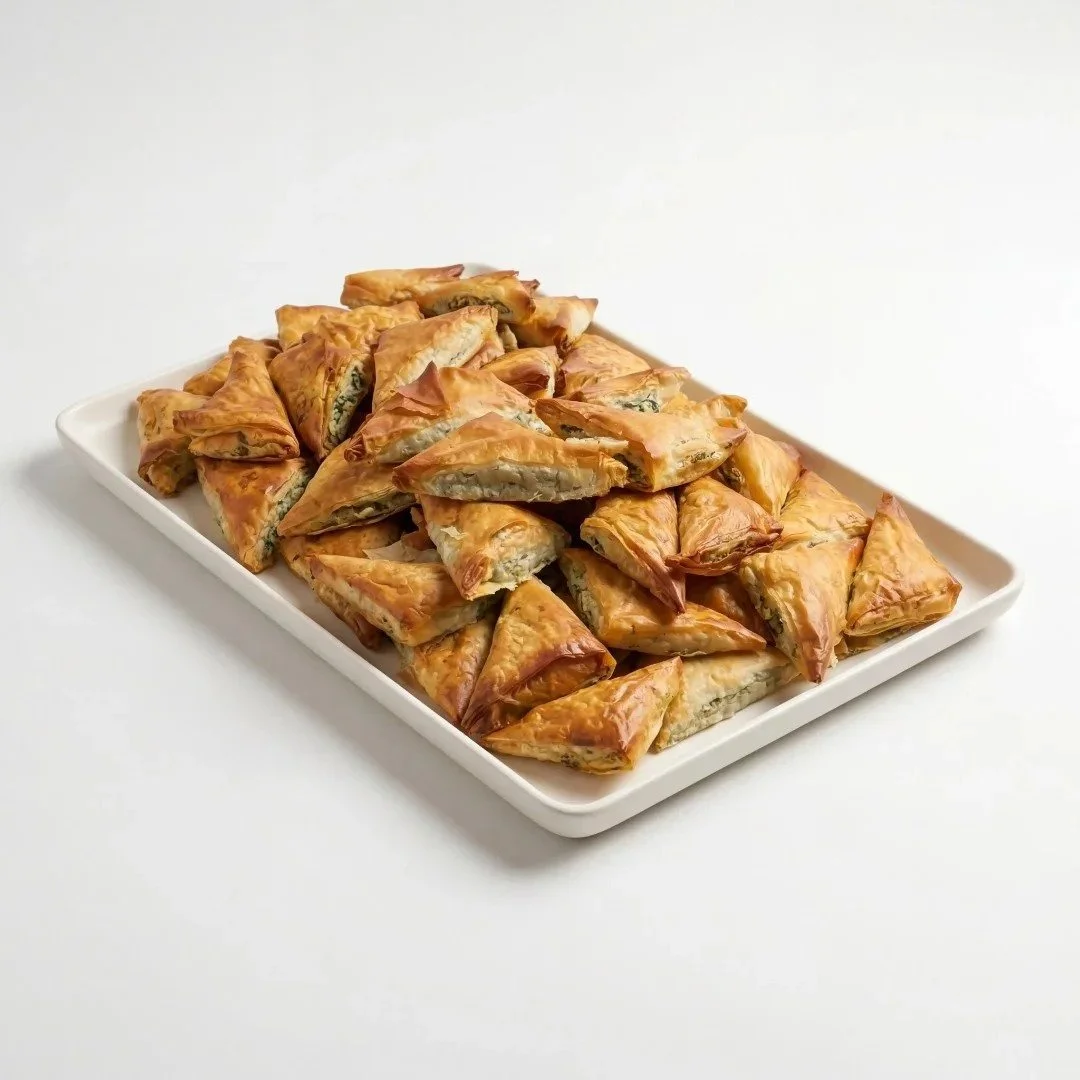
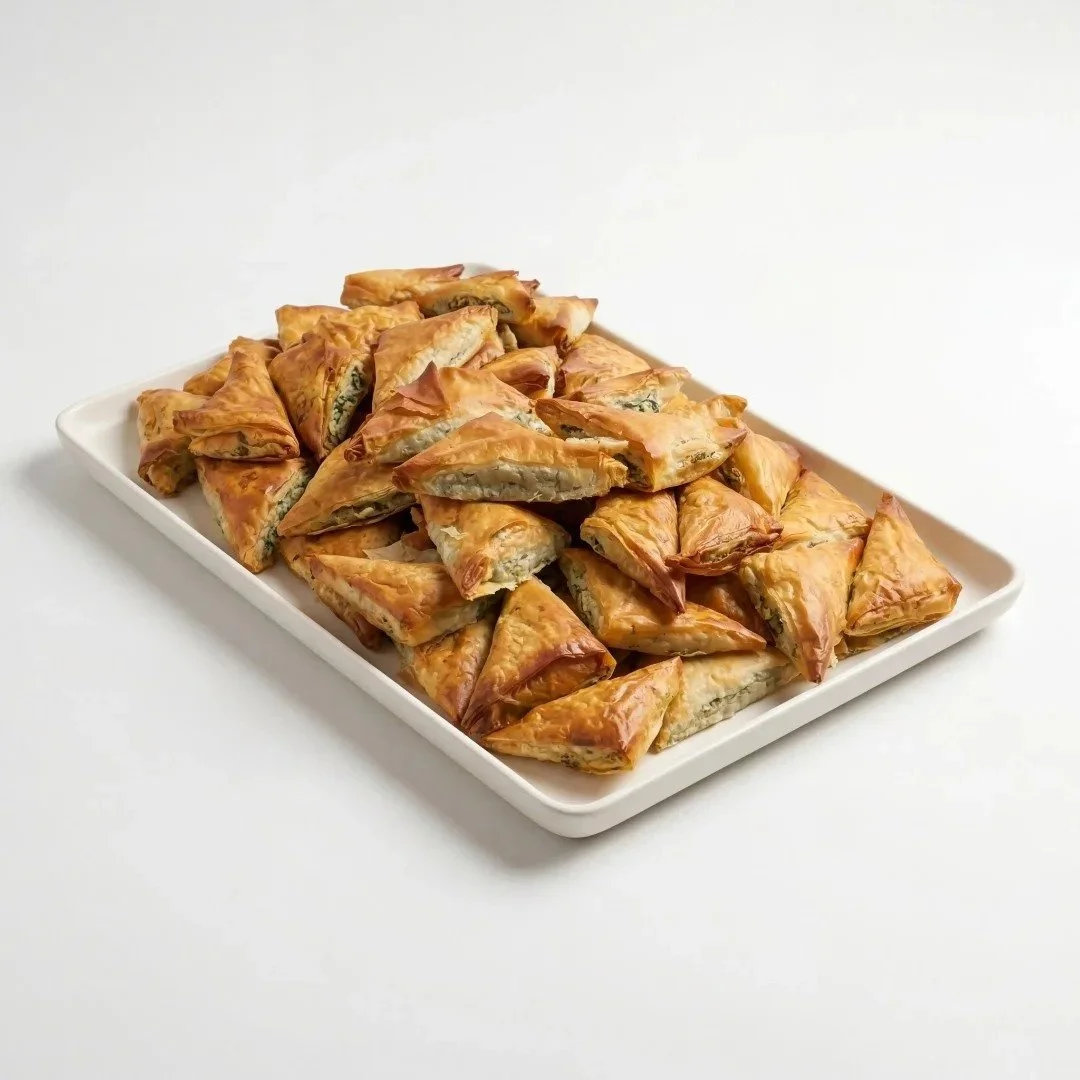
ANI's spanakopita — flaky phyllo triangles stuffed with spinach and cheese, baked fresh and served by the tray. A crowd favorite for catering spreads across Greater Boston.
What Is the Best Food for a Small Baby Shower?
The best catering food for a baby shower needs to:
✔ Look great on a spread table
✔ Hold at room temperature for 1–2 hours
✔ Work for guests with different dietary needs
✔ Not smell up an indoor space
✔ Be easy to eat without a full place setting
The top choice: Mediterranean and Middle Eastern mezze
Here's why it wins:
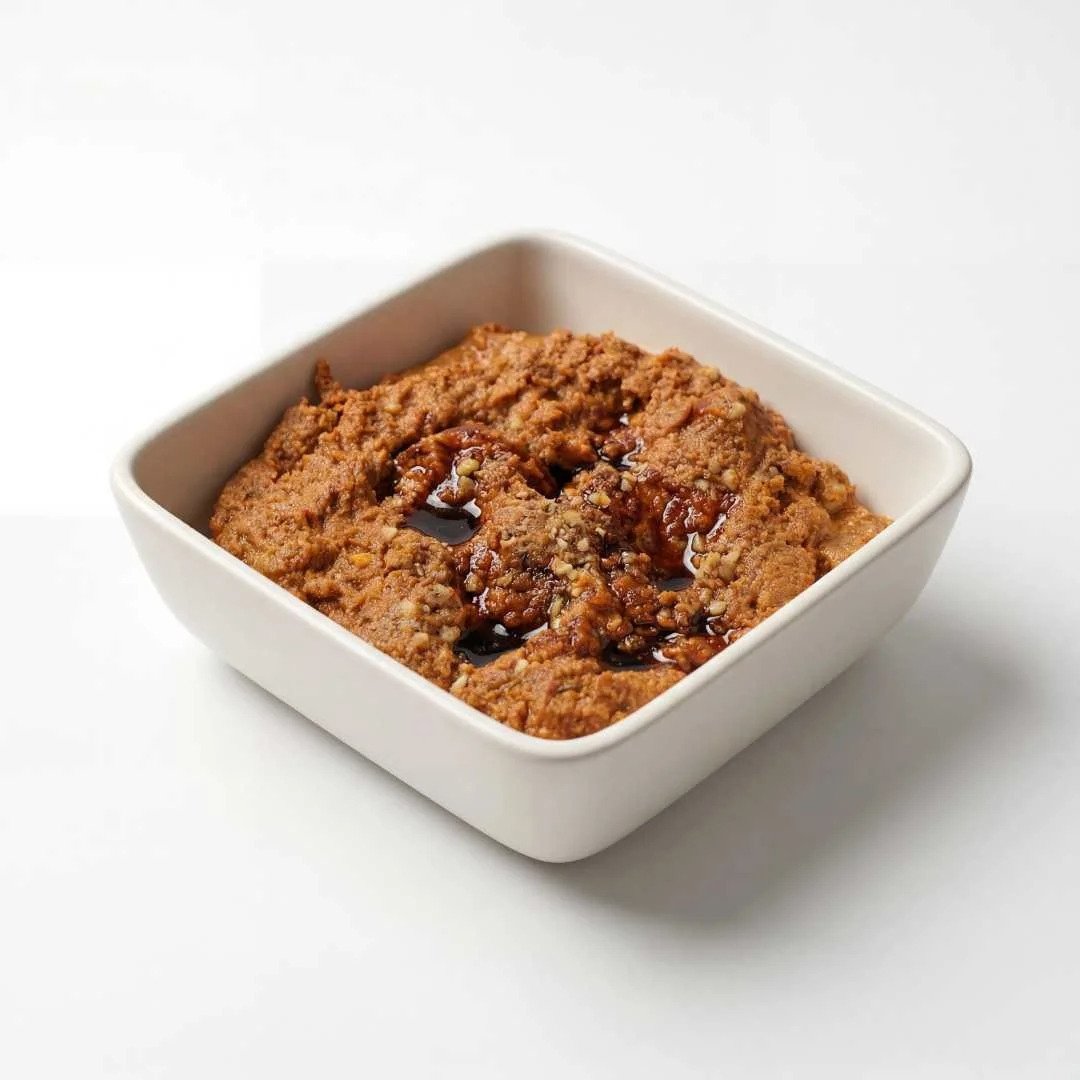
Hummus, baba ganoush, tabbouleh, stuffed grape leaves, falafel, and pita look beautiful displayed together
Everything is designed to be eaten at room temperature
Naturally covers halal, vegetarian, and gluten-free in a single order
Warm, aromatic smells — not sharp or pungent
Light enough for a daytime event
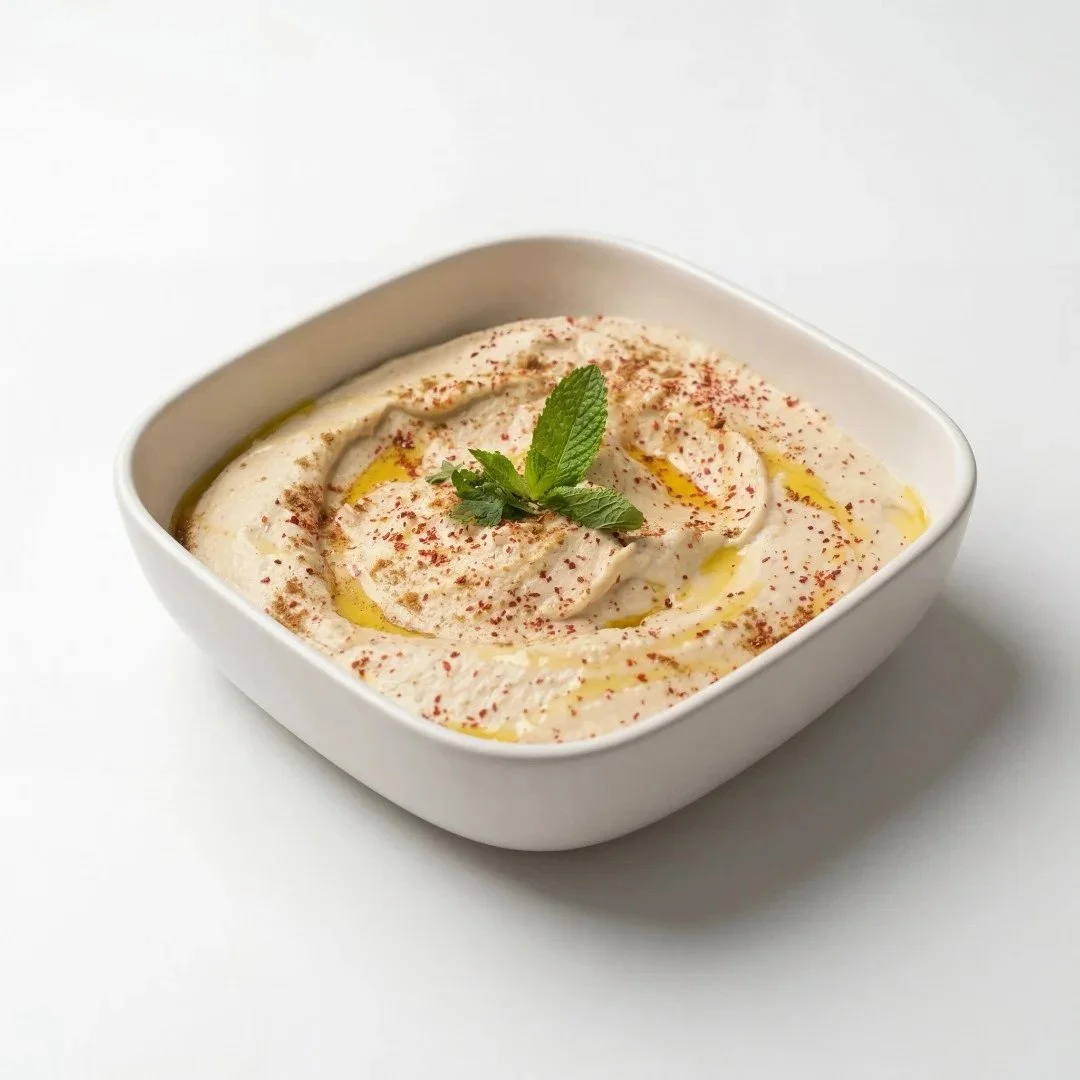
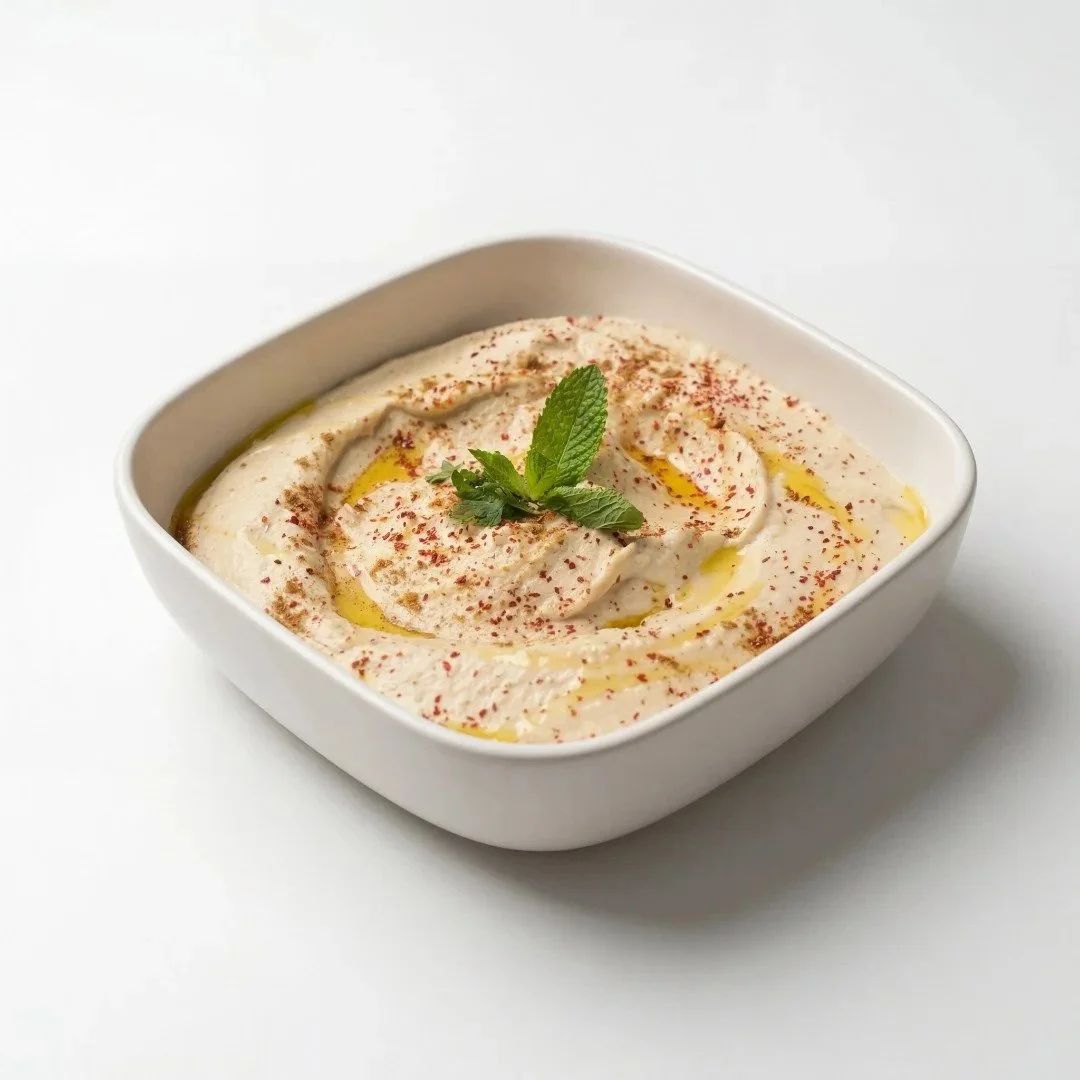
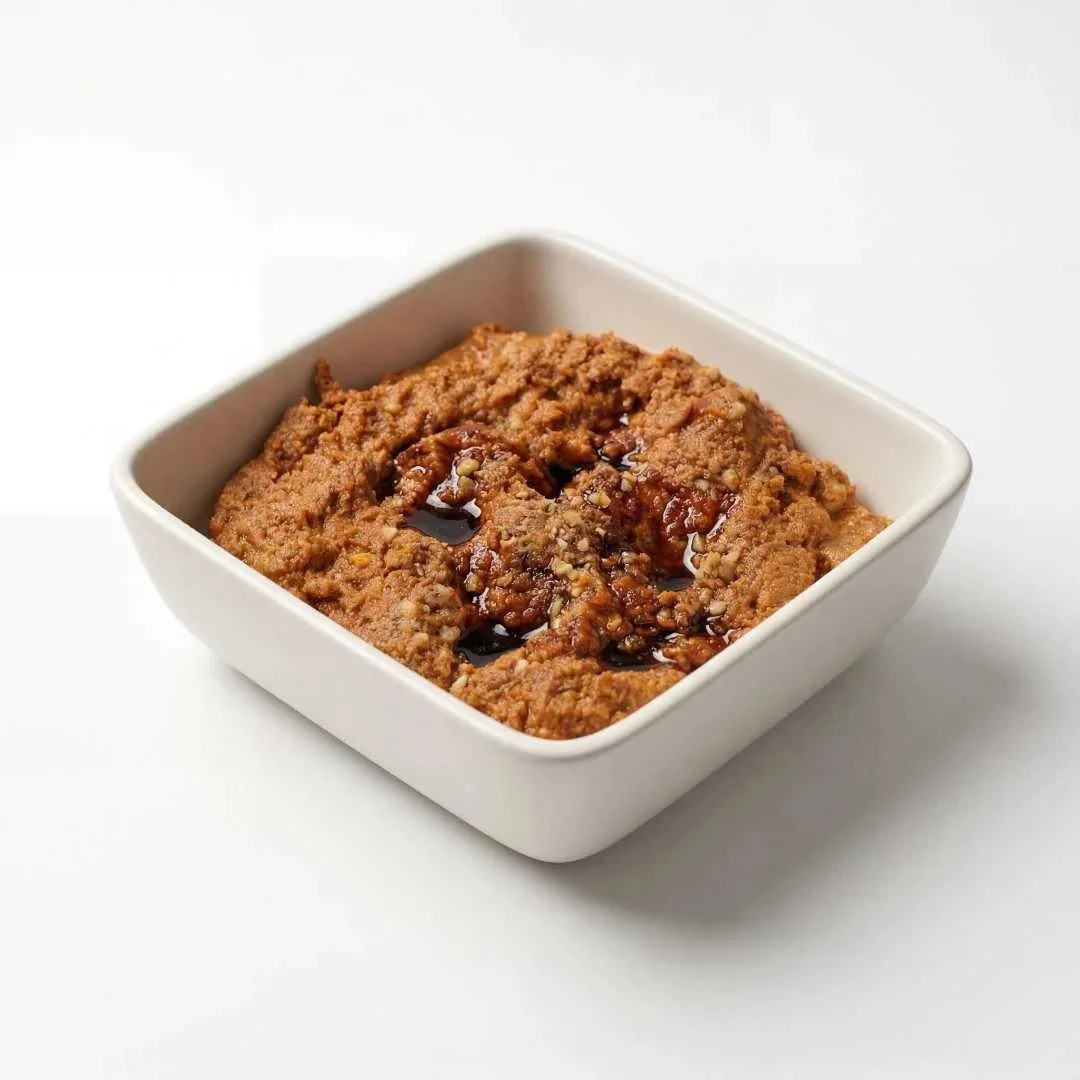
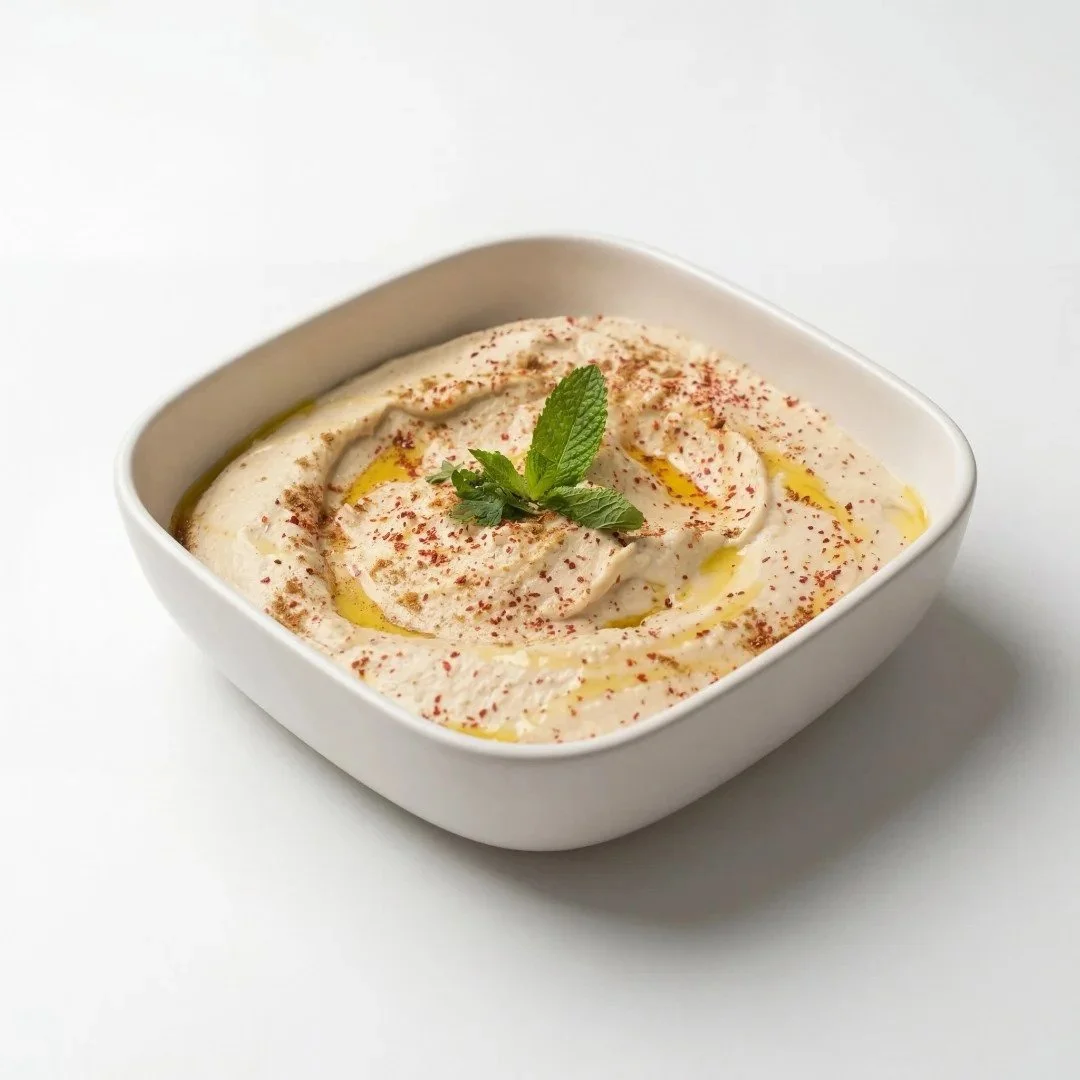
ANI's house hummus — made fresh daily, finished with olive oil, Aleppo Red Pepper, and mint. A staple of every catering spread.
Other solid options:
Protein trays — chicken shawarma, kafta, or kabobs with rice. Filling, halal-certified, holds heat well
Wraps — easy to eat standing up, good for a casual vibe
Dip and flatbread spreads — lower cost, high visual impact, great as a lighter option
What to avoid:
Fried food — soggy within 20 minutes
Heavy pasta dishes — too dense for afternoon events
Strong-smelling fish or curry — not ideal in enclosed spaces
Cream sauces — break and separate in transit
Is Baby Shower Catering Affordable for Small Groups?
Yes — if you know where to look.
The mistake most people make is contacting event catering companies first.
They charge for staffing, equipment rental, and overhead that you simply don't need for a small shower.
For a group of 10–30 people, you need:
A restaurant caterer that does drop-off
2–4 trays of food
No staffed setup required
That's it. At $15–$20 per person, a small baby shower spread is genuinely affordable — especially when shared between the people organizing the event.
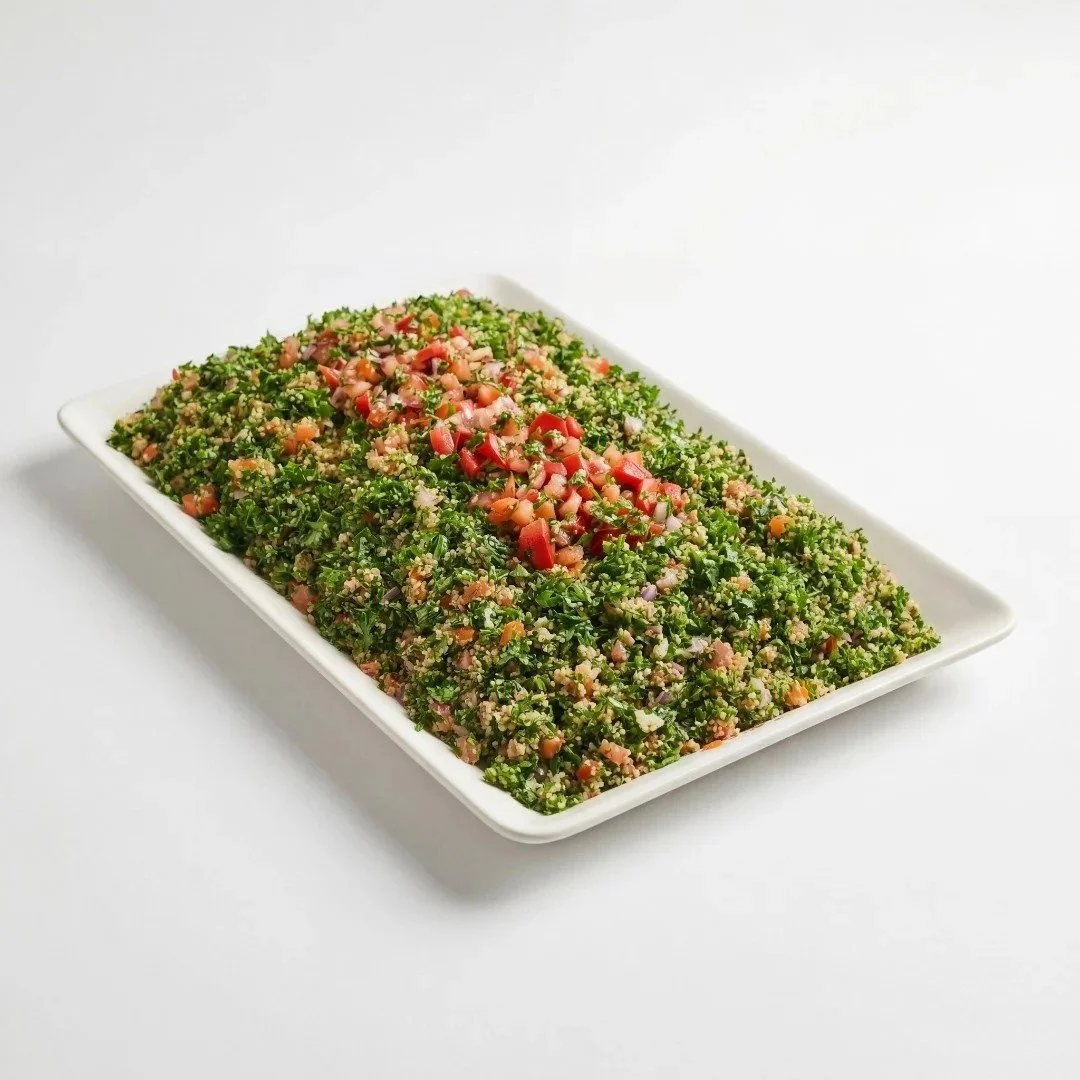
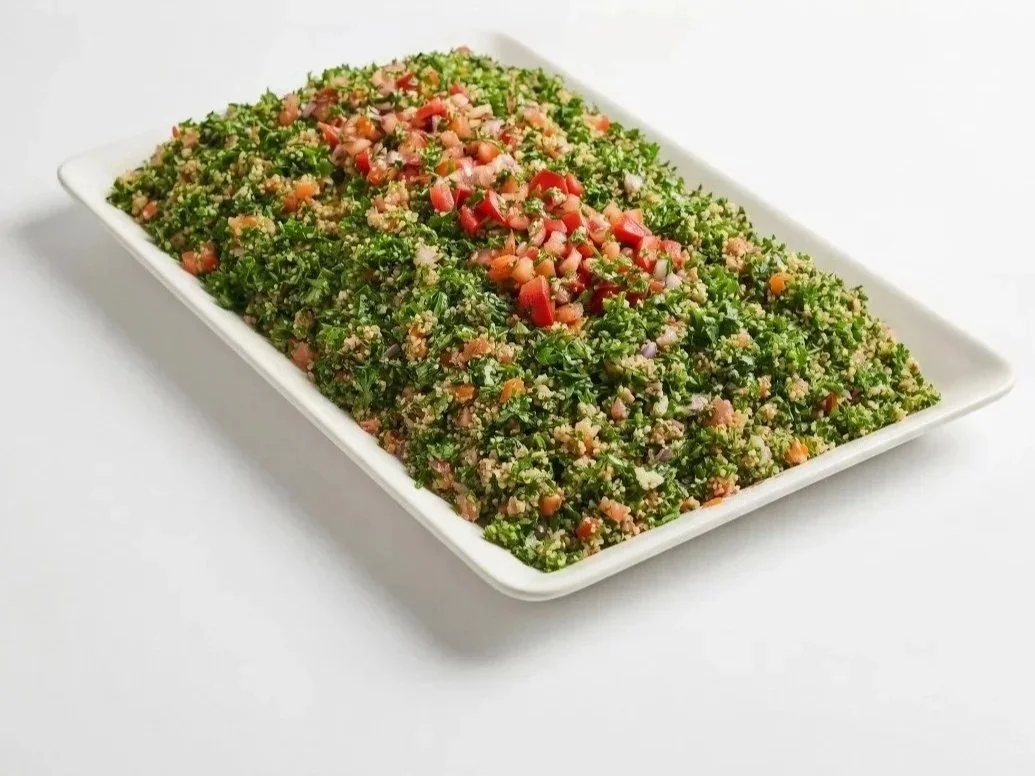
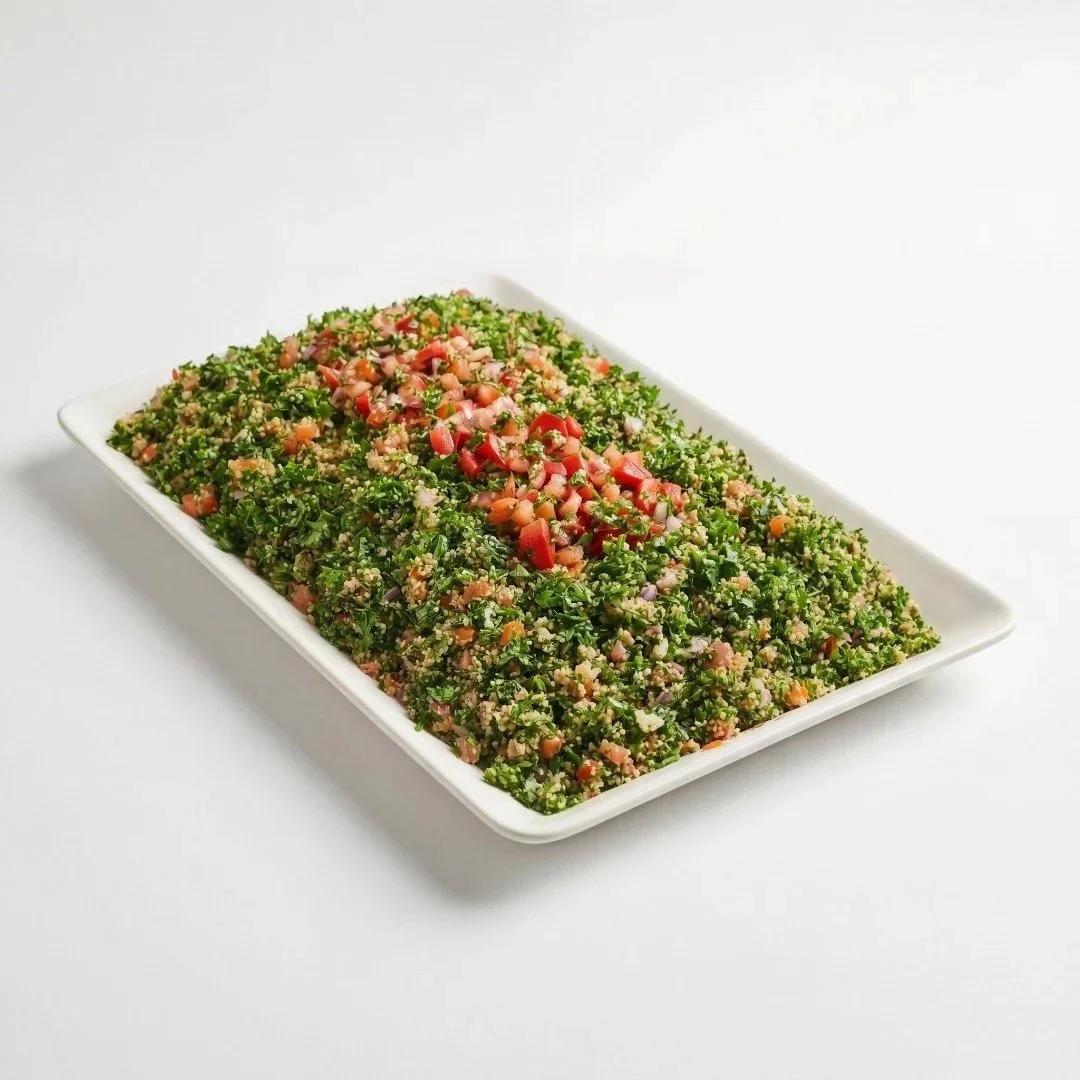
ANI's tabbouleh — bright, fresh, and made from scratch. Finely chopped parsley, bulgur, tomato, and lemon. A natural fit for any catering spread.
What Makes a Baby Shower Caterer the "Best"?
Best doesn't just mean tastiest.
It means reliable.
Look for these six things:
Same-day response — slow quotes predict slow service
Transparent pricing — no surprise fees on the invoice
Verified reviews — patterns of "on-time" and "will reorder" matter more than star ratings
Fresh daily cooking — not reheated product
Real restaurant operation — daily accountability means better quality control
Easy dietary handling — halal, vegan, gluten-free without a fuss
Ask one question before you book:
“Do you cook fresh every day?”
Does the Caterer Cover All Dietary Needs?
Baby shower guest lists are mixed.
You'll often have:
Guests who keep halal
Vegetarians and vegans
Gluten-free needs
Pregnant guests avoiding certain ingredients
The best catering option covers all of these in one order — without requiring separate dishes or awkward conversations.
Middle Eastern food does this naturally:
✔ Halal-certified proteins, clearly labeled
✔ Satisfying vegetarian mains — not just sides
✔ Naturally gluten-free options throughout
✔ Dairy-free by default on most dishes
One order. Everyone eats well.
How Far in Advance Should You Book?
Ideal: 5–7 days out
Workable: 48–72 hours
Last minute: Call directly — don't rely on a web form
Weekend mornings are the busiest catering window in Boston. They fill fast. Book early.
How Do You Place a Baby Shower Catering Order?
Have these five things ready before you reach out:
Date and time of the shower
Headcount — an estimate is fine
Delivery address
Dietary needs — halal, vegan, gluten-free, allergies
Budget — being upfront saves time on both sides
A good caterer responds with a quote the same day. If you're waiting more than 24 hours, that's a preview of how the order will go.
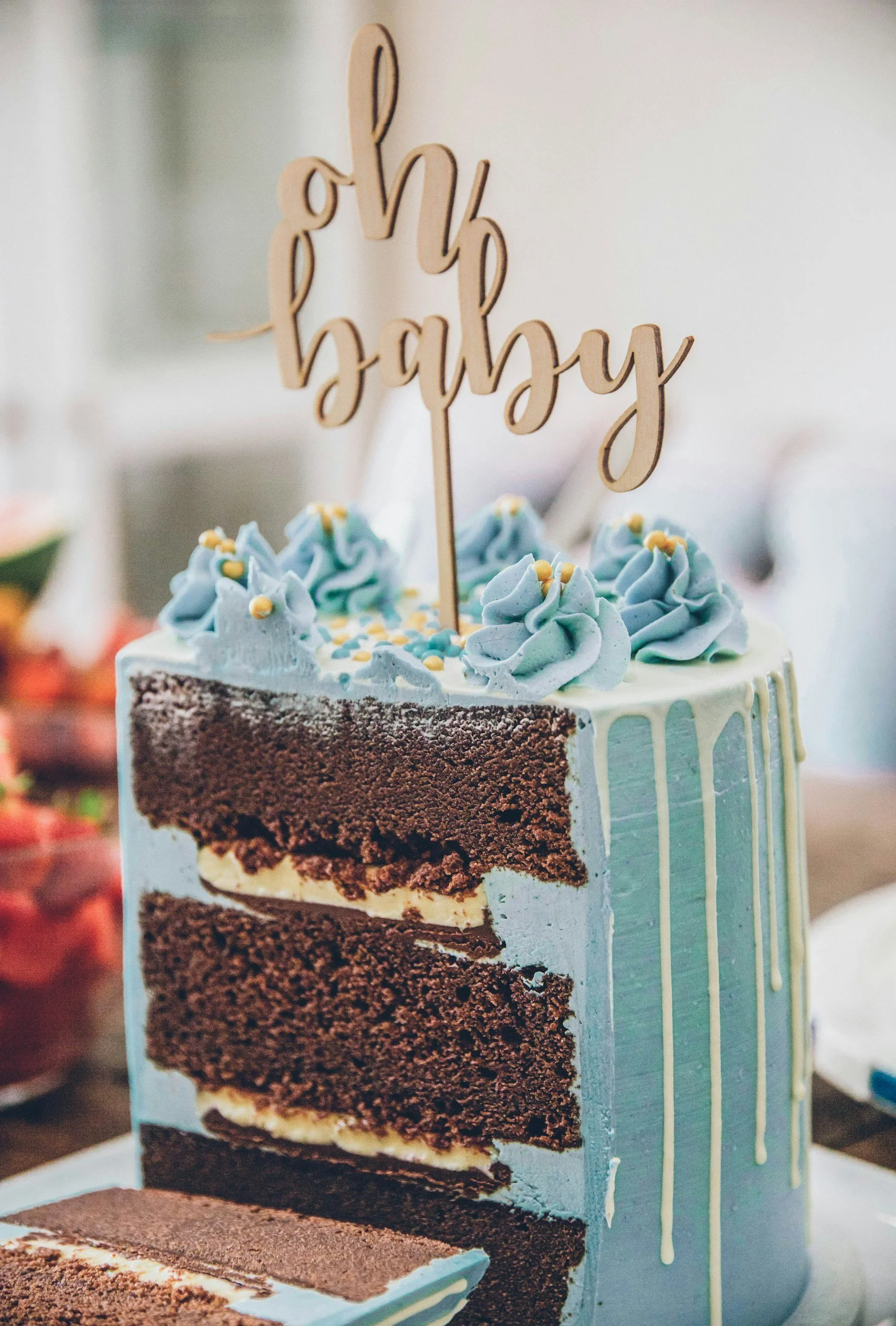
Every baby shower needs a great spread — and a great cake to go with it. ANI handles the catering so you can focus on the moments that matter.
In Summary…
Affordable baby shower catering in Boston is absolutely achievable — if you skip the event companies, choose food that travels well, and book with a restaurant that cooks fresh every day.
ANI Catering & Cafe has been feeding Greater Boston for over 30 years.
Fresh mezze, shawarma, falafel, kabobs, and more — halal-certified, dietary-inclusive, and priced for real budgets.
Small groups welcome.
No minimums to inquire.
Response within 2 hours on business days.

A new arrival deserves a celebration worth remembering. Let ANI Catering take care of the food for your Boston baby shower — fresh, inclusive, and stress-free.
Frequently Asked Questions About Baby Shower Catering in Boston
How much does baby shower catering cost in Boston?
Expect $15–$20 per person for a solid drop-off spread.
A shower of 10–15 people typically runs $150–$250 total.
What food is best for a small baby shower?
Mediterranean and Middle Eastern mezze is the top choice.
It holds at room temperature, covers halal, vegetarian, and gluten-free in one order, and looks beautiful on a table.
How far in advance should I book?
5–7 days is ideal.
Weekend slots fill fast.
48 hours is workable — call directly for anything last minute.
Do I need a staffed caterer for a small shower?
No. Drop-off catering is plenty for 10–30 people.
It's simpler and significantly more affordable.
What's the most affordable catering option for a baby shower?
A restaurant caterer offering drop-off mezze or protein trays.
Budget $15–$20 per person and skip the event company overhead.
Can we prepare you a custom quote for your baby showeR?
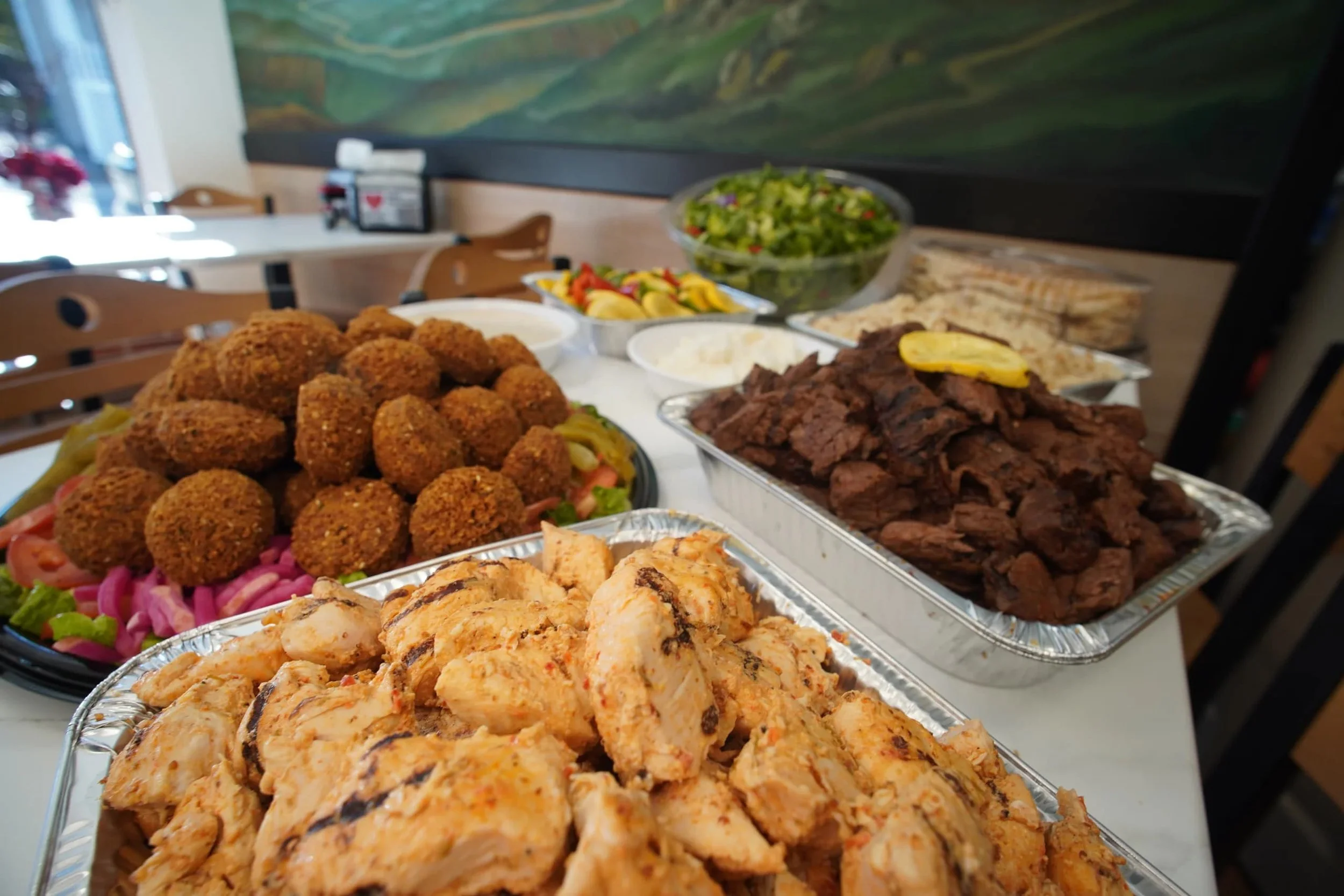
Food That Caters: What It Is, What to Order, and How to Get It Near Boston
Looking for food that caters to your group near Boston? Here's what catering actually means, what foods work best, and how to place your first order without the stress.
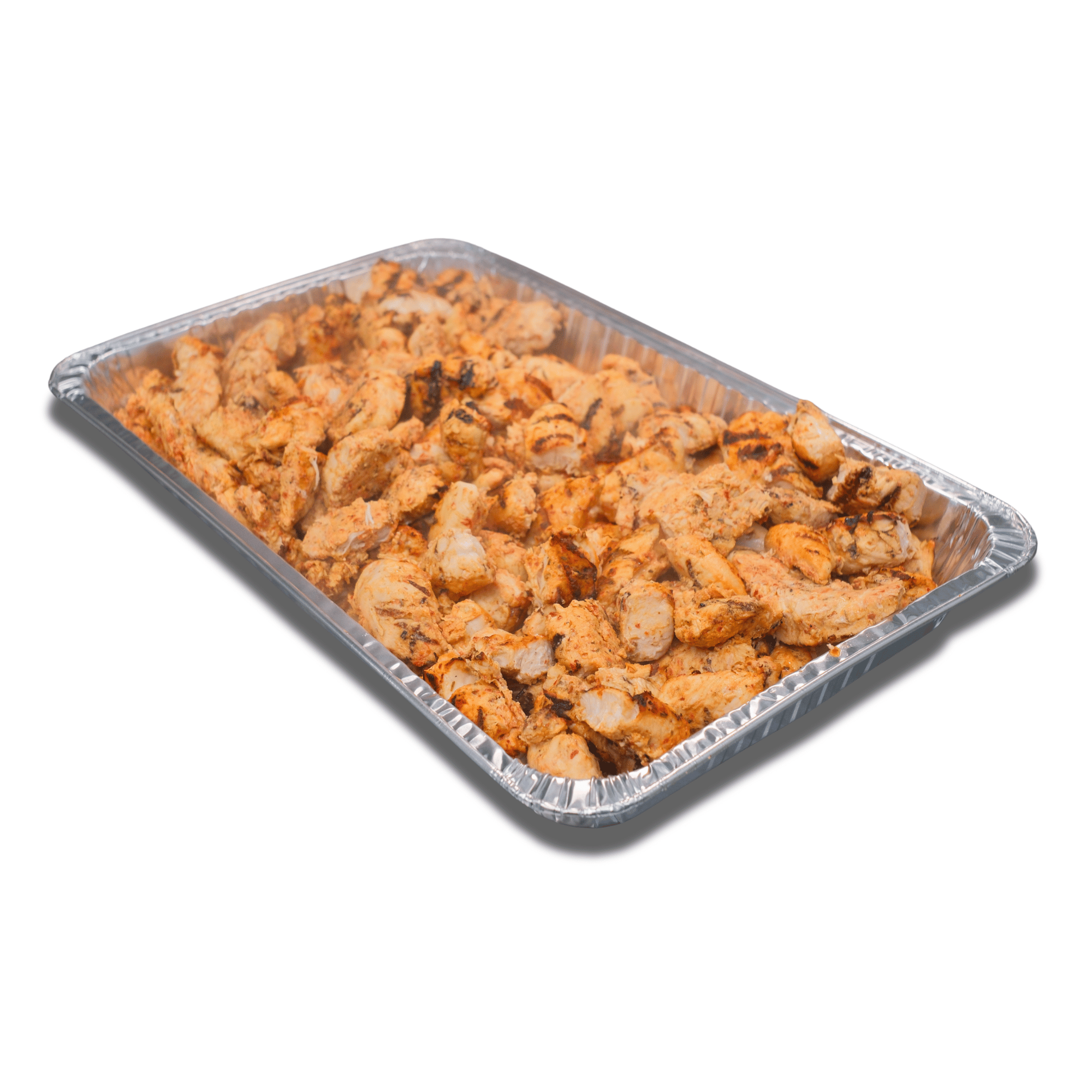
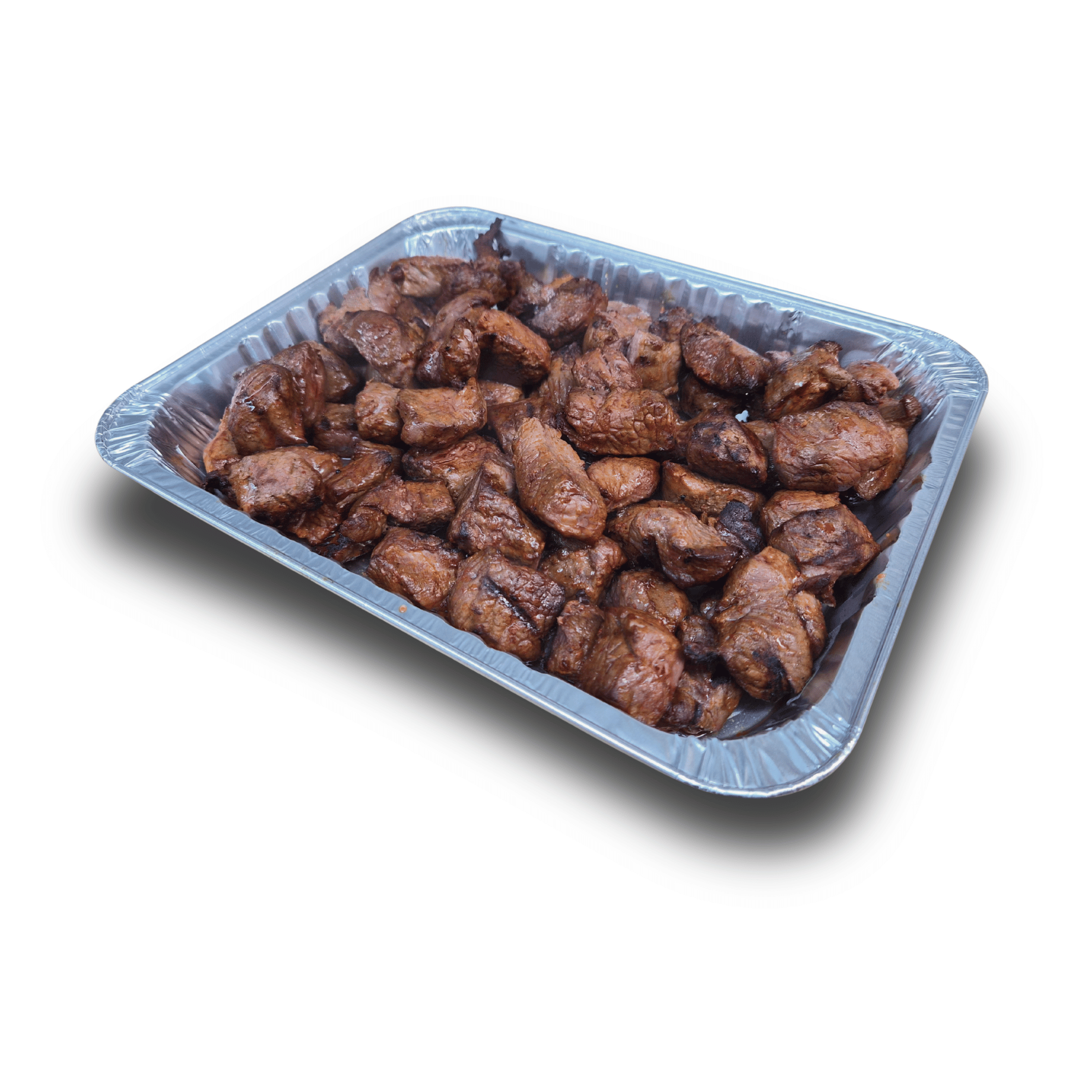
Halal chicken kabob by the tray — marinated, grilled fresh, and portioned for a crowd. The protein that never sits long on a catering table.
You need food for a group.
The food needs to:
1. travel well, stay fresh,
2. smell good in an enclosed room,
3. work for people with different diets.
That's a short list of requirements that rules out a lot of options fast.
For over 30 years, ANI Catering & Cafe has been feeding offices, families, and events across Greater Boston with food that actually holds up — fresh Armenian and Middle Eastern cuisine made from scratch every day.
Here's the honest guide to food that caters well.
What Makes Food "Cater Well"?
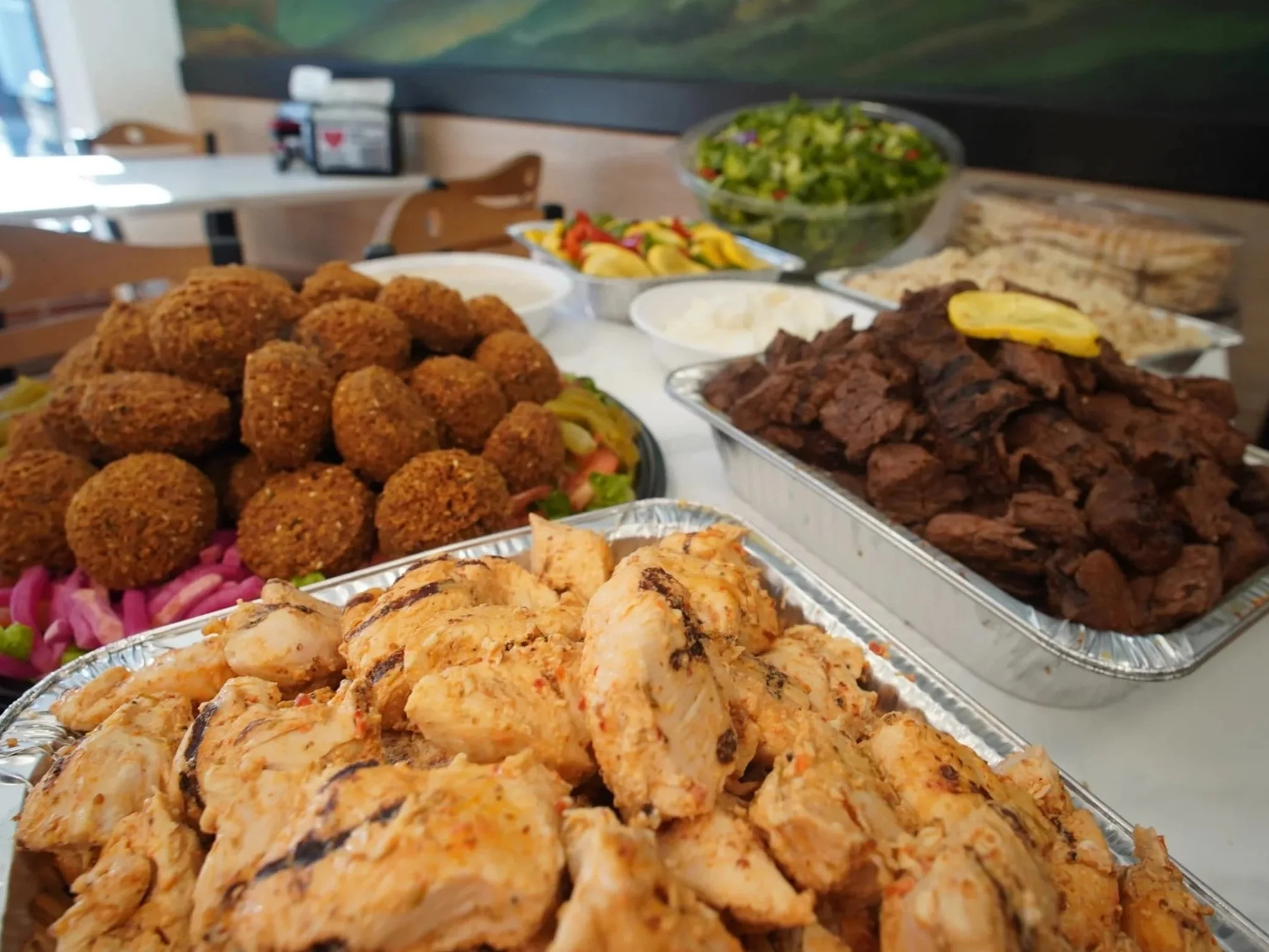
This is what food that caters well actually looks like. Halal chicken, lamb shawarma, house-made falafel, fresh tabbouleh — made in the ANI kitchen and delivered ready to serve.
Not all food survives the journey from kitchen to table.
Good catering food needs to check every one of these boxes:
✔ Holds heat without drying out
✔ Doesn't get soggy or fall apart in transit
✔ Smells good — not overwhelming — in an enclosed space
✔ Stays flavorful at room temperature
✔ Works for multiple dietary needs at once
✔ Looks appealing when the lid comes off
Miss even one of these and someone at the table has a bad experience.
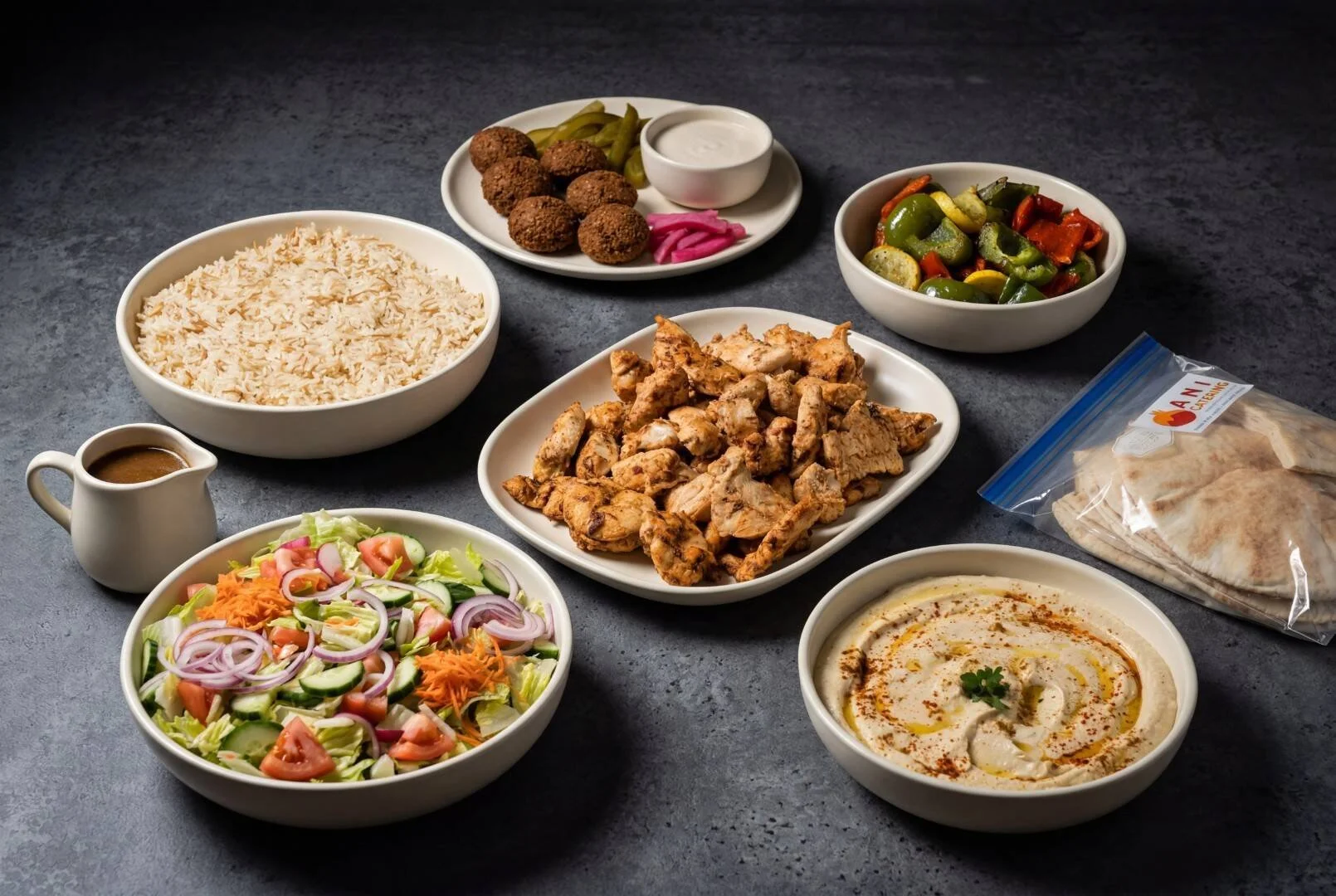
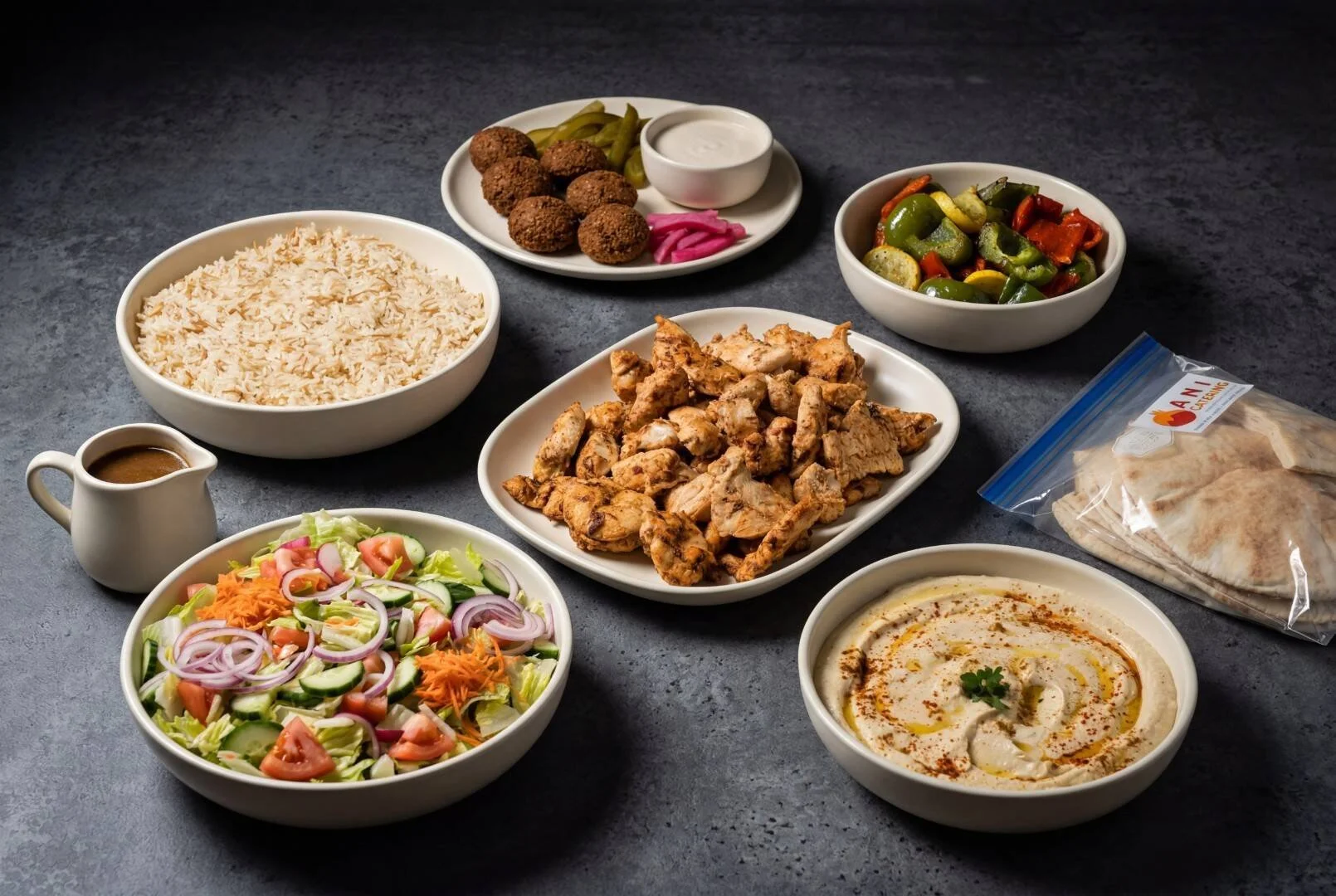
The complete ANI package — every dish that caters well, all in one order. Halal chicken shawarma, rice pilaf, falafel, hummus, fresh salad, roasted vegetables, and Syrian bread. One call, every guest covered.
Foods That Cater Extremely Well:
Middle Eastern & Mediterranean
This is the gold standard for group catering.
Here's why:
Proteins like shawarma, kabobs, and kafta stay juicy and flavorful
Rice dishes absorb seasoning and actually improve as they rest
Mezze spreads — hummus, baba ganoush, tabbouleh, fattoush are served at room temperature by design
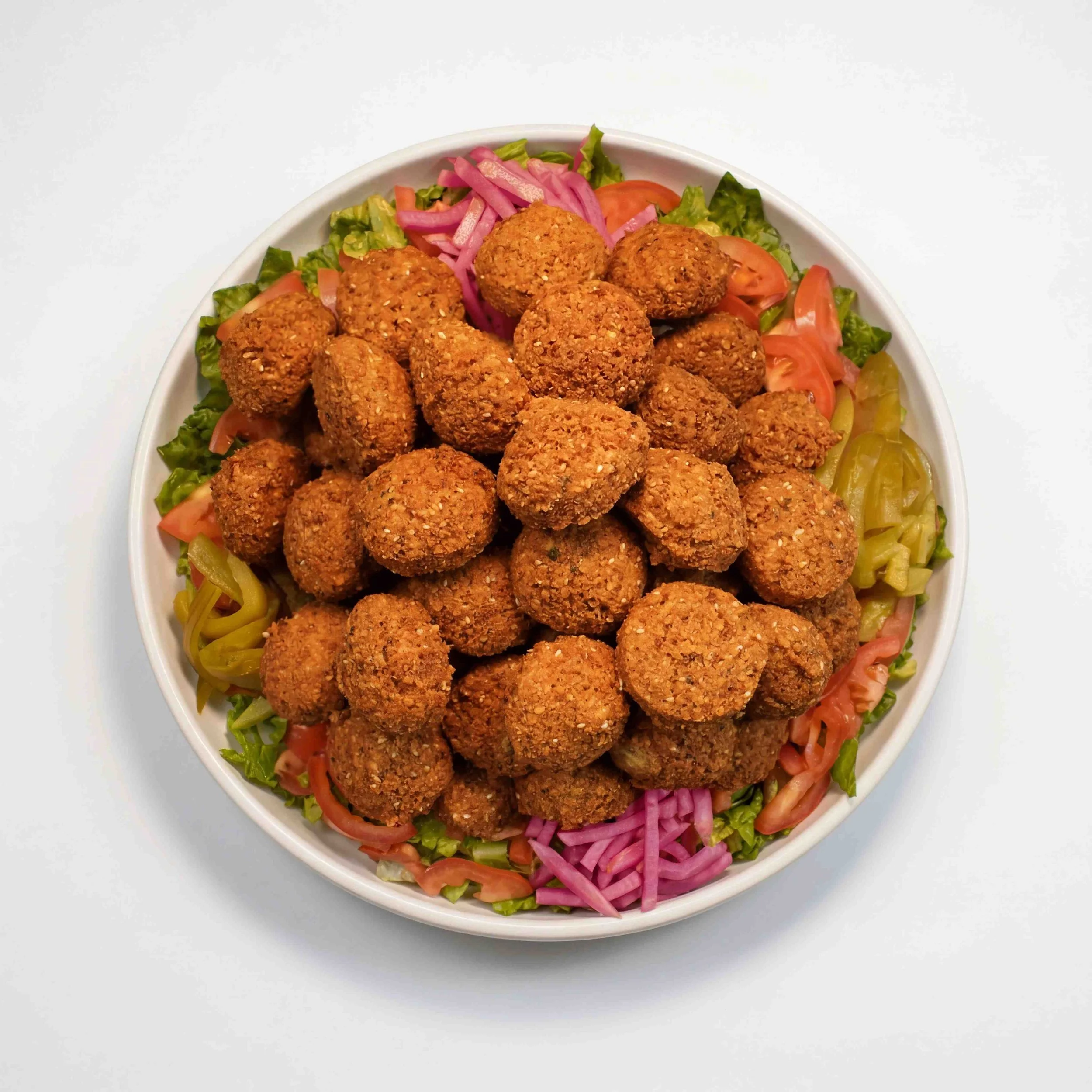
Falafel holds its texture better than most fried foods
The spice profile is warm and aromatic, not sharp or pungent
Almost every dish naturally accommodates halal, vegetarian, or gluten-free diets
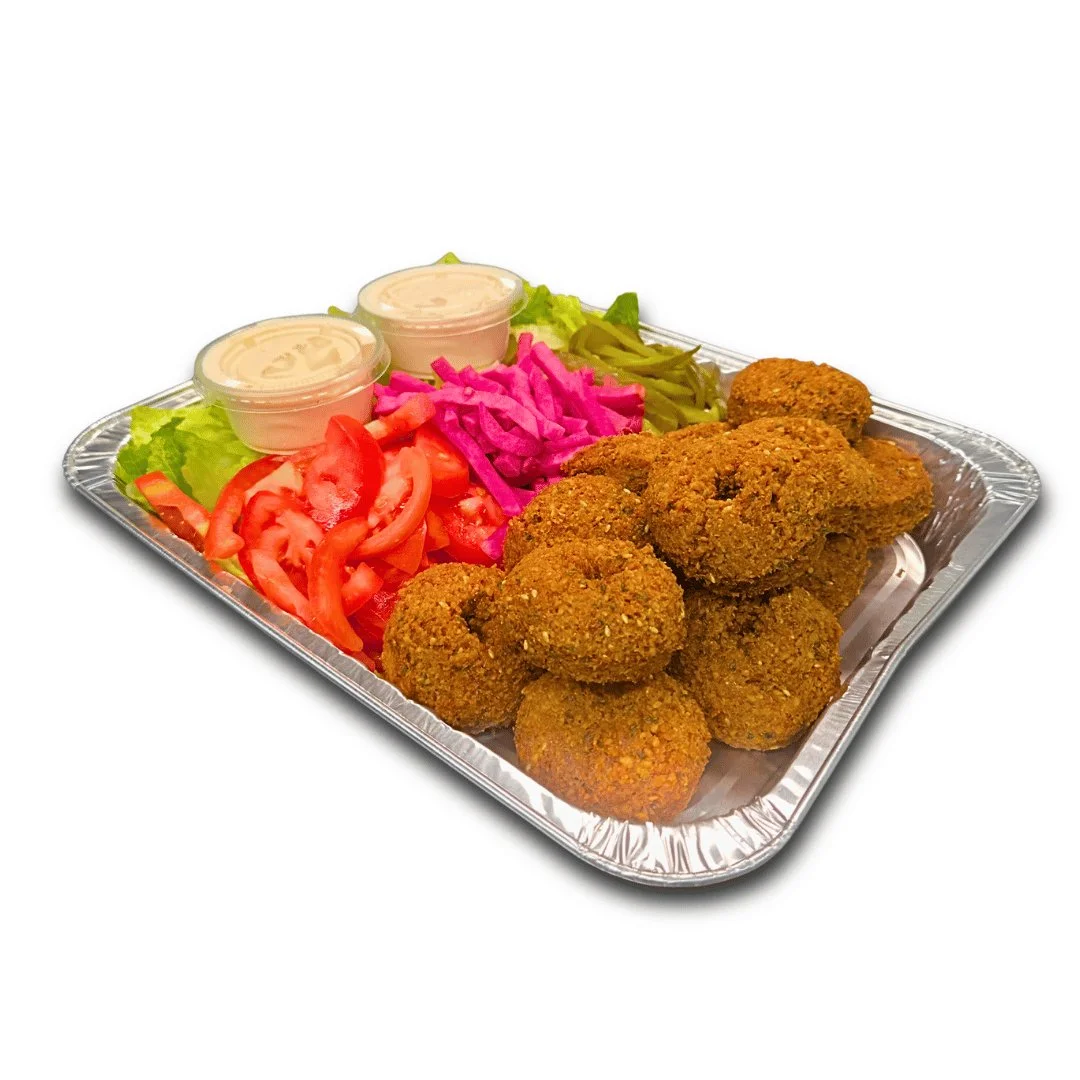
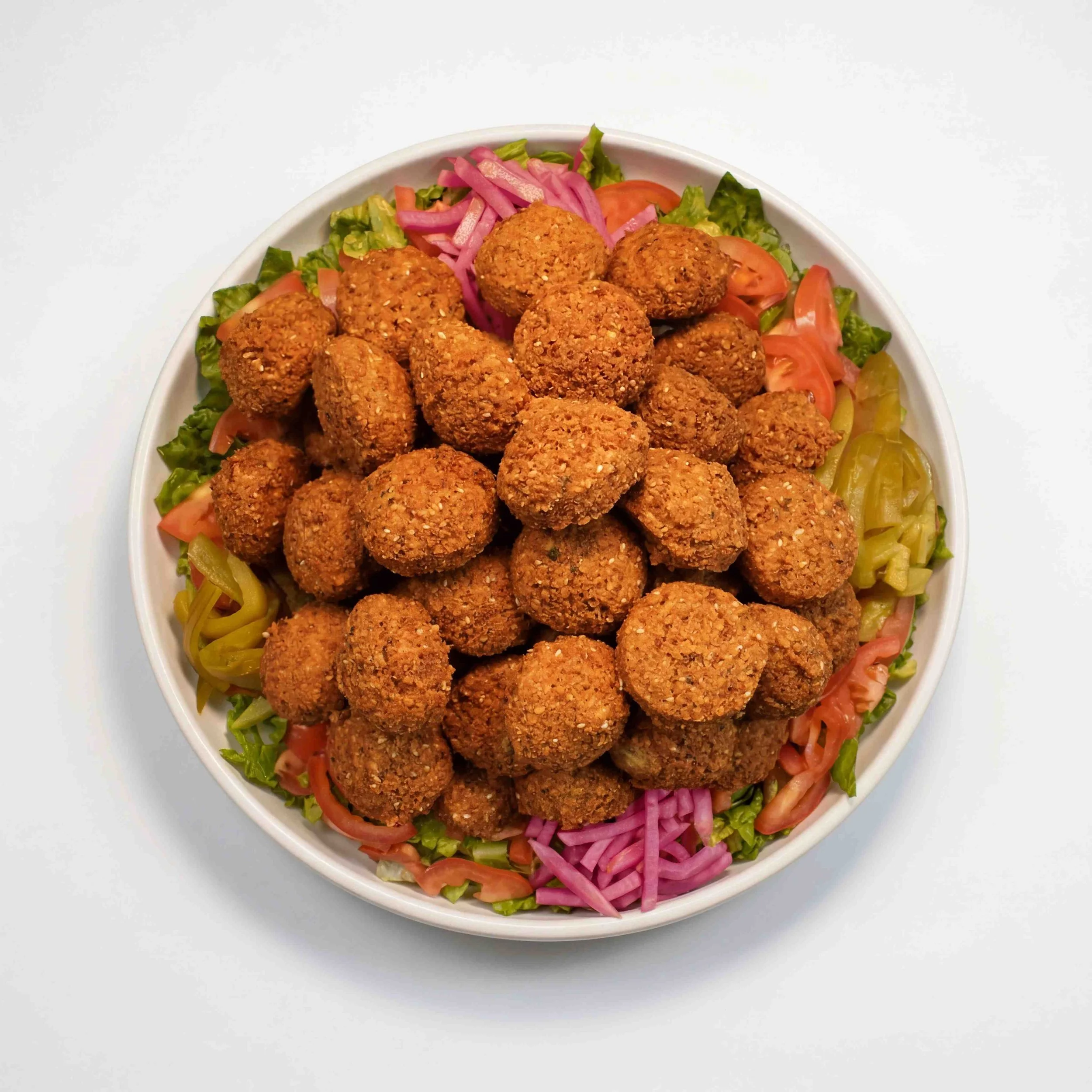
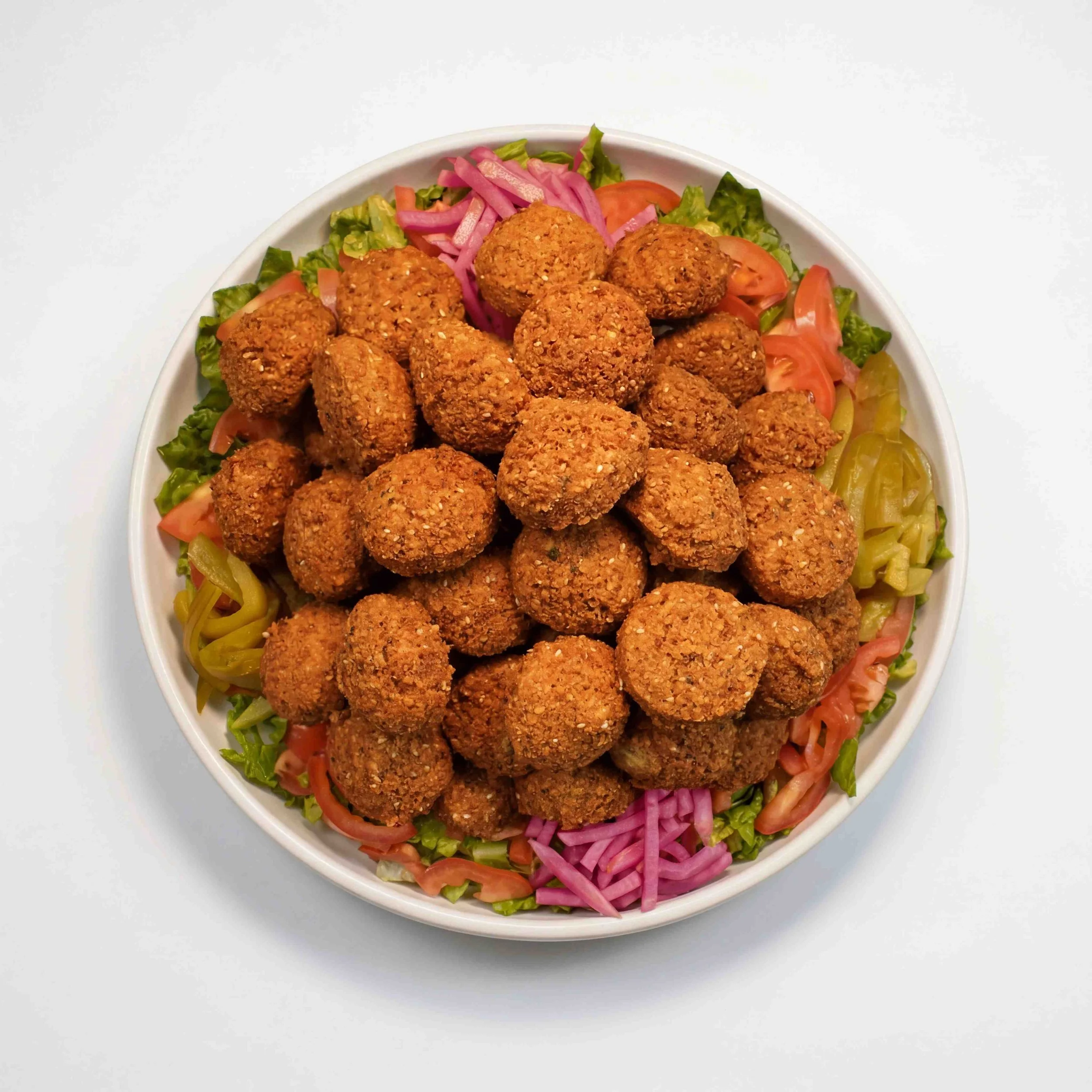
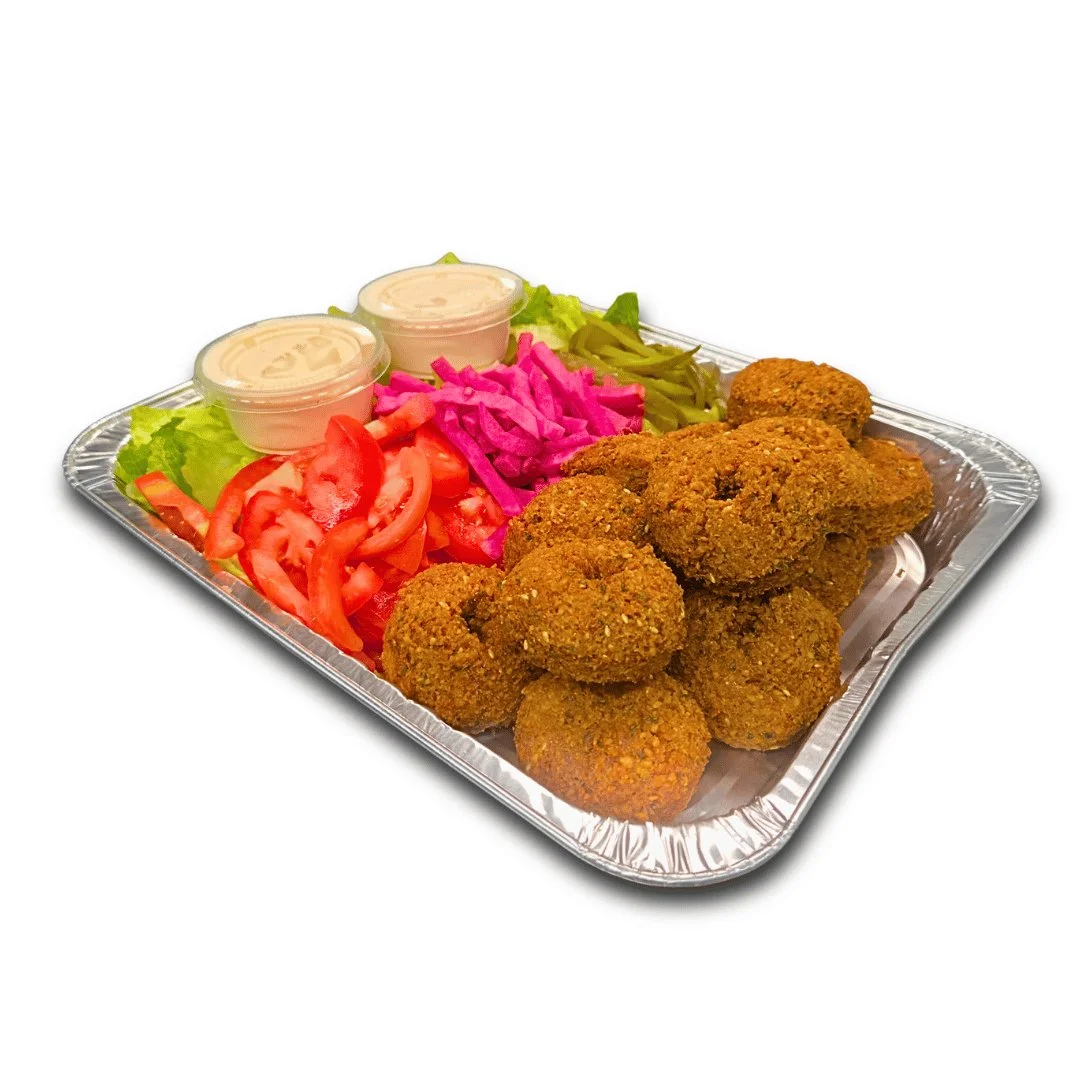
House-made falafel catering tray — crispy, herb-packed, completely plant-based. The single item that handles the most dietary requirements at any event table.
BBQ and slow-cooked meats
Low and slow cooking makes meat more forgiving in transit.
Pulled proteins, brisket, and ribs hold moisture well.
The downside: messy, not office-friendly, and limited vegetarian options.
Italian (pasta-based)
Pasta dishes like baked ziti or lasagna travel well and reheat easily.
They're crowd-pleasing and filling. The downside: heavy, limited dietary variety, and not great for gluten-free guests.
Sandwiches and wraps
Easy to portion, easy to eat.
The downside: bread gets soggy fast if assembled too early, and they go cold quickly.
Foods That Don't Cater Well
Avoid these if you want the food to still be good when it lands:
Anything fried and crispy — fries, fried chicken, spring rolls. Soggy within 20 minutes.
Delicate fish dishes — strong smell, falls apart, goes rubbery fast
Dishes with fresh greens already dressed — wilted salads are sad salads
Anything with a cream sauce — breaks and separates in transit
Sushi — temperature-sensitive, short window, high risk
Burgers — bun goes soggy, patty dries out, messy to eat at a desk
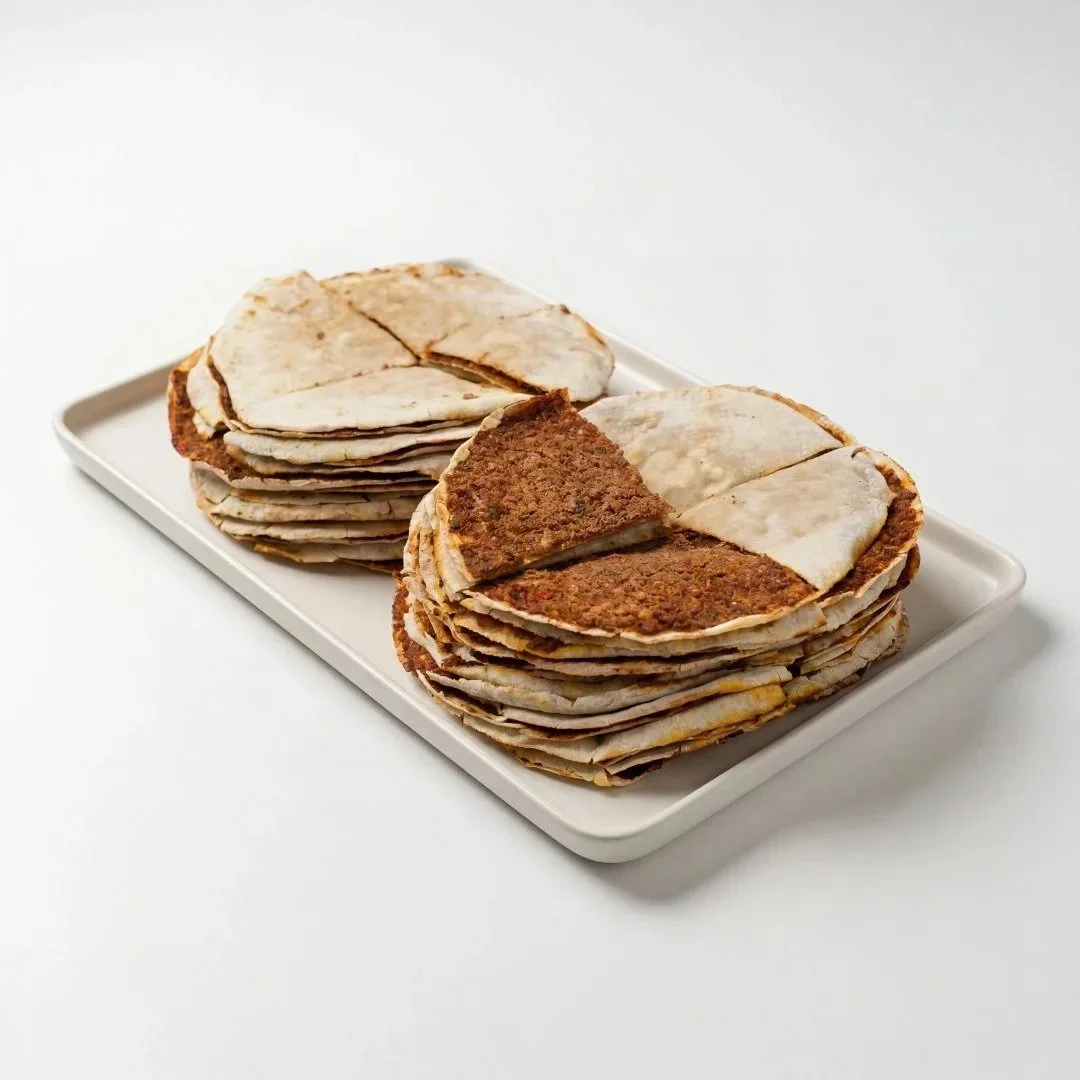
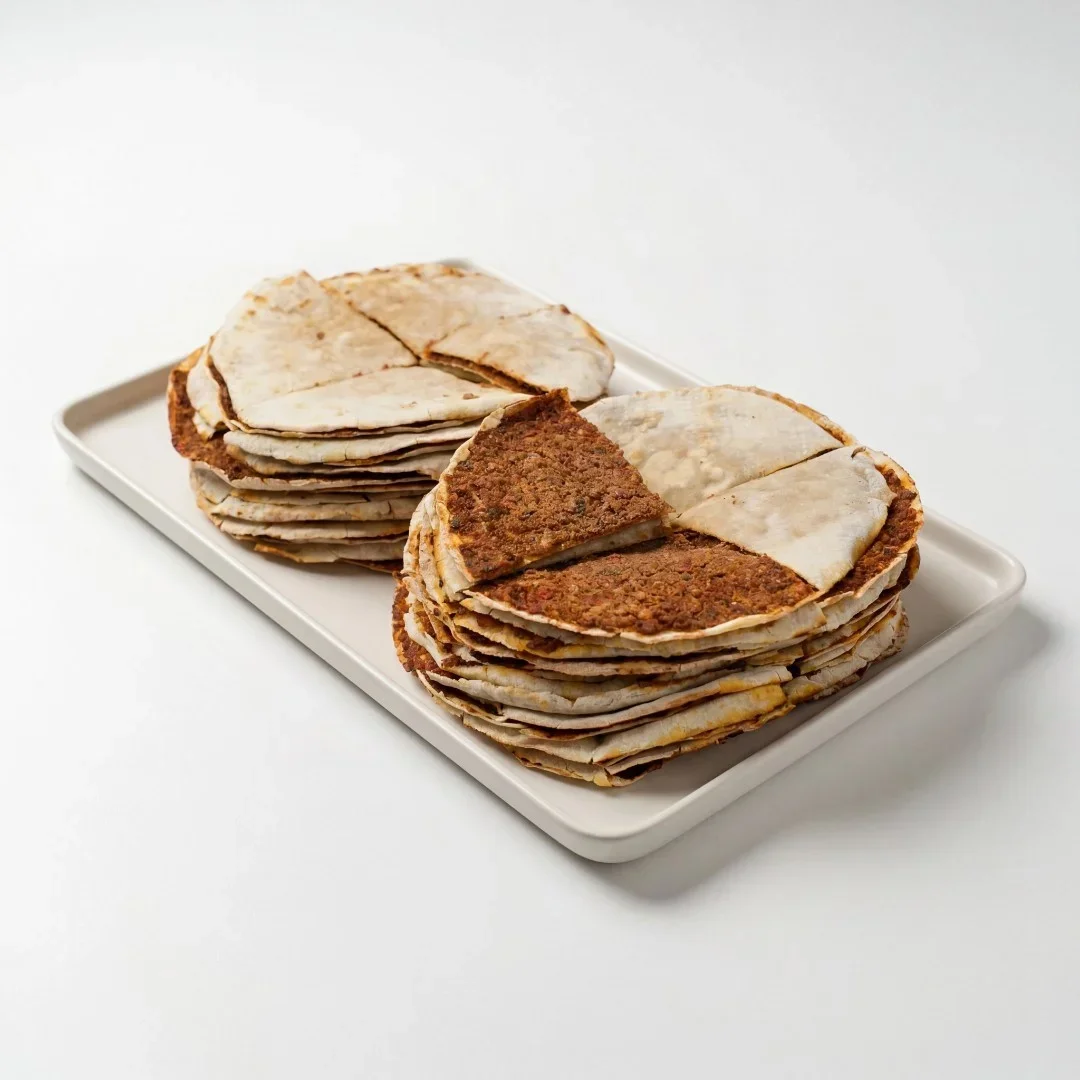
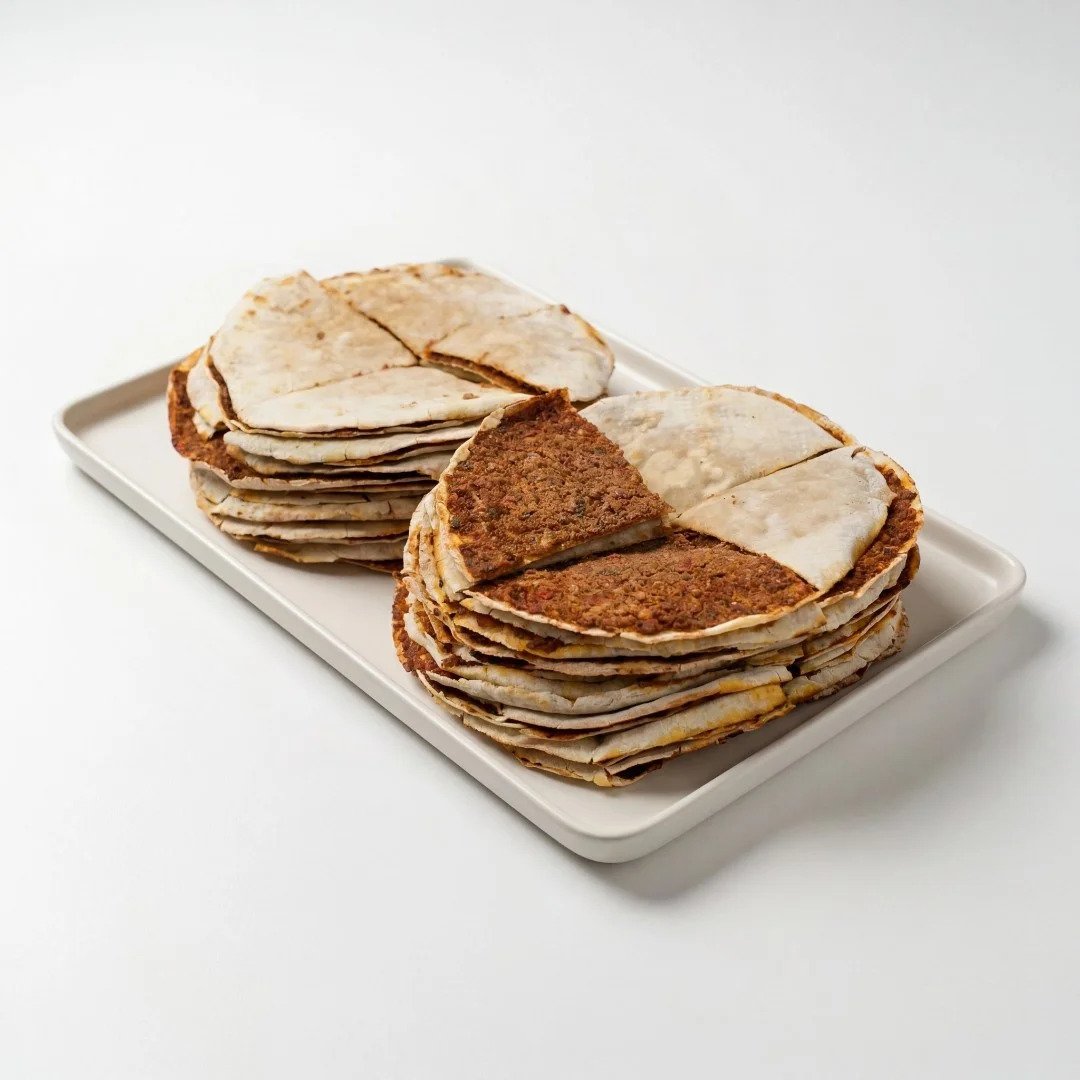
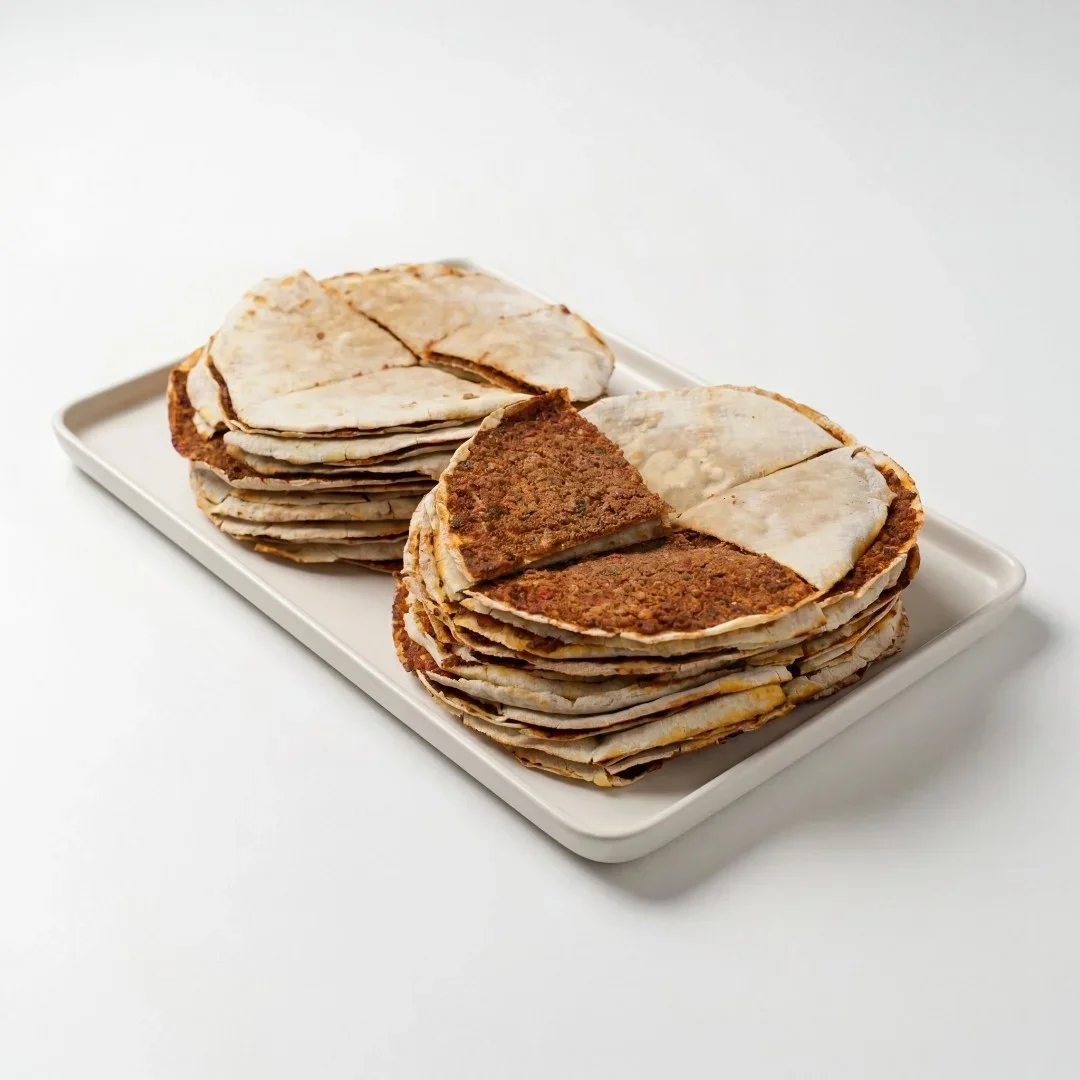
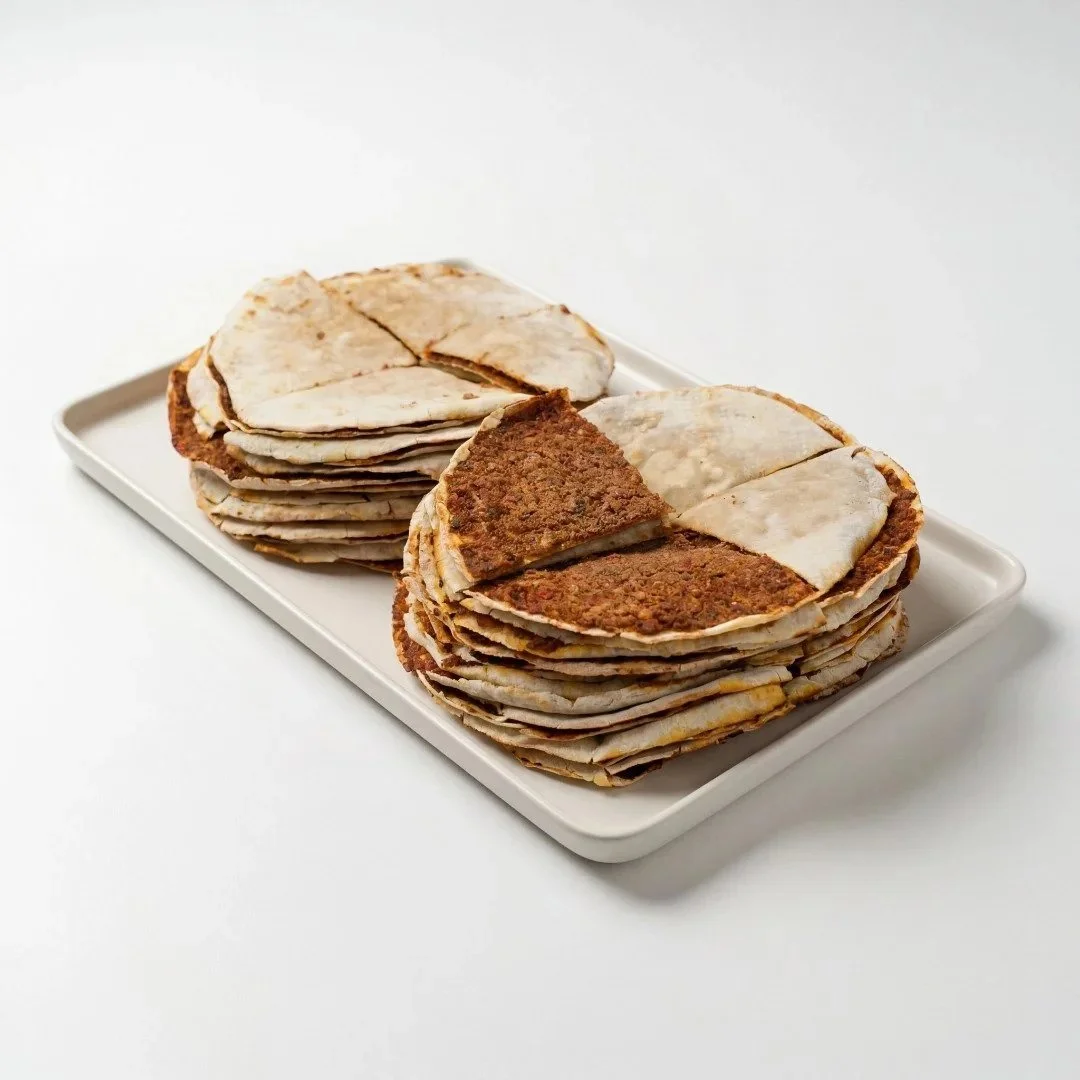
Lahmajoun — Armenian meat flatbread baked fresh in-house. The item that tells every guest immediately this isn't generic catering.
The Dietary Restriction Problem
Here's a real scenario:
you order pizza for the office.
Three people are gluten-free.
Two are vegetarian. One keeps halal.
You've just accidentally excluded six people with one order.
The Smell Factor (Yes, It Matters)
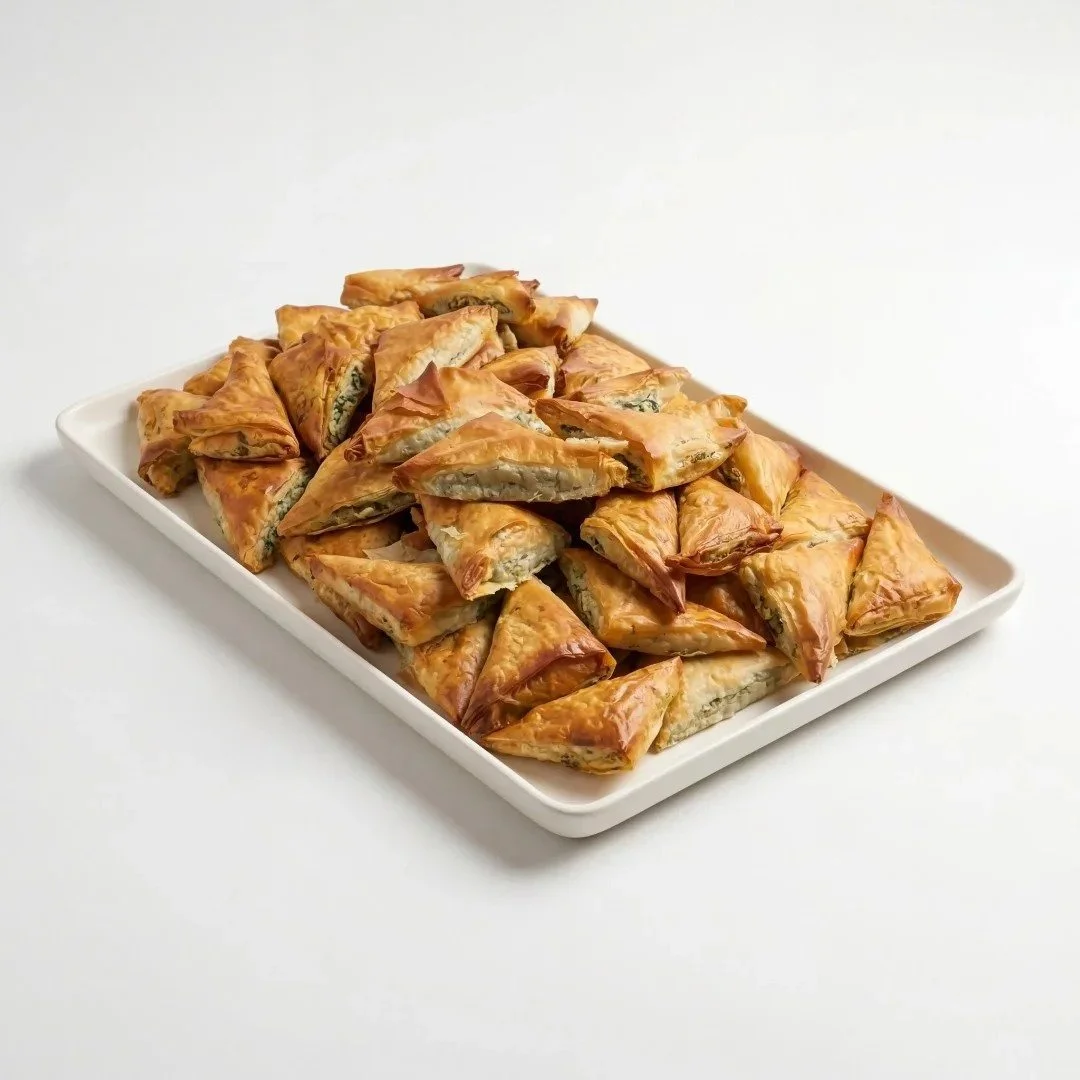
Spinach and cheese phyllo triangles — flaky, golden, baked fresh. The appetizer that disappears before the main course is even set out.
Nobody wants to be the person who made the whole office smell like fish or heavy spices all afternoon.
Foods with neutral to warm aromas work best in shared spaces:
Good: grilled meats, rice, roasted vegetables, herbs like parsley and mint
Neutral: wraps, salads, grain bowls
Avoid: strong fish, heavy curry, anything with a sharp vinegar base
Middle Eastern food sits squarely in the good category. The aroma when the trays open is inviting — not polarizing.
The best catering food solves this without making it complicated.
Middle Eastern cuisine is uniquely built for this. A typical spread from ANI includes:
Halal-certified proteins — every meat item, clearly labeled
Vegetarian options that are actually satisfying — falafel, spanakopita, stuffed grape leaves, mezze
Naturally gluten-free dishes — grilled meats, rice, hummus, salads
Dairy-free by default — most dishes don't rely on cheese or cream
One order. Everyone eats. Nobody feels like an afterthought.
The best food for catering is designed to travel, hold, and please a crowd!
— not food that's just popular on a restaurant menu.
ANI Catering & Cafe has spent over 30 years perfecting exactly that!
Fresh shawarma, falafel, kabobs, mezze spreads, and more — halal-certified, dietary-inclusive, made from scratch every morning, and built to still taste great when the lid comes off at your table.
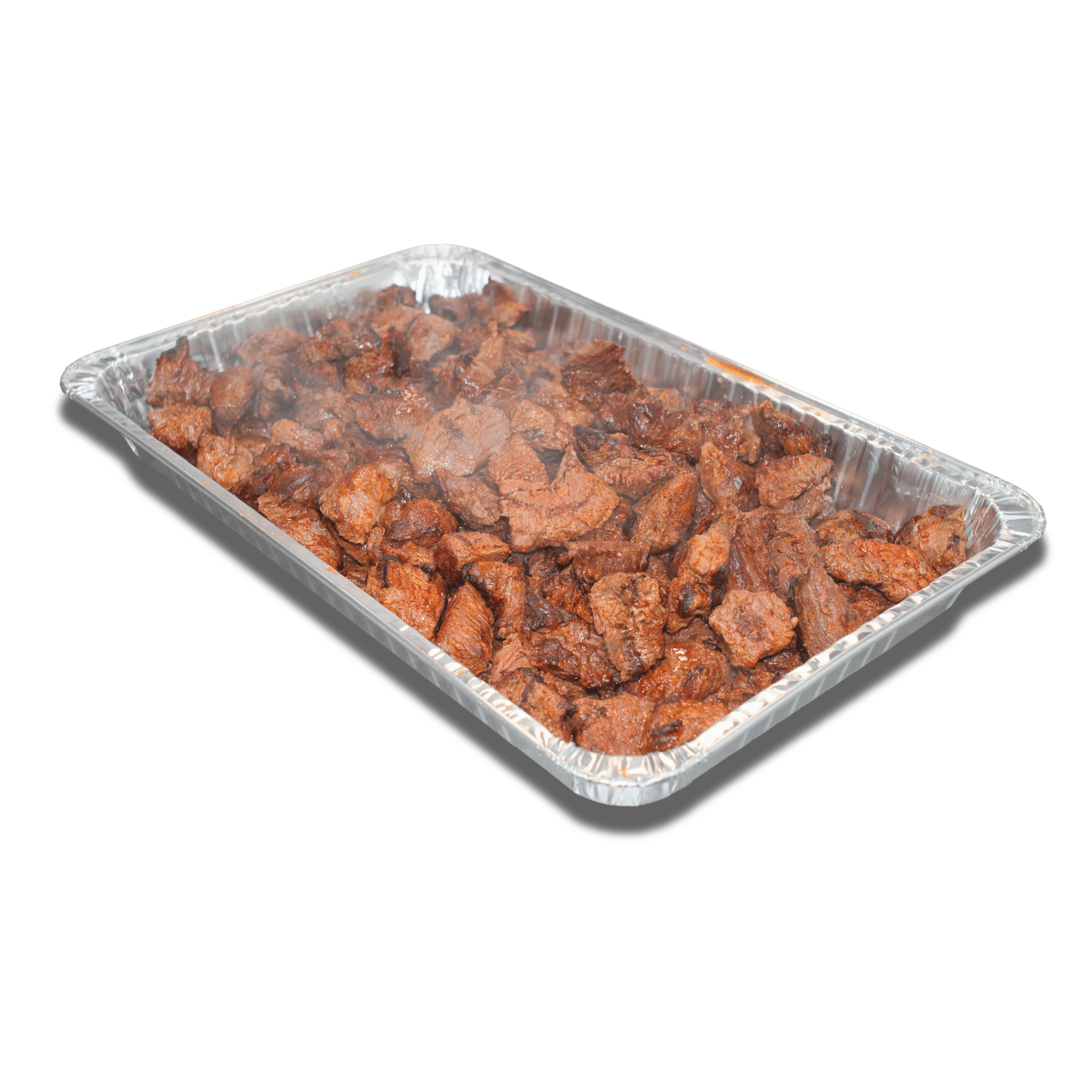
Halal beef kabob by the tray — bold, hearty, and the first thing guests reach for. This is food that caters well and tastes even better.
If you're feeding a group in Greater Boston,
this is the food that gets reordered!
Let’s put something amazing together for your event. Fill out your event details below and let us handle the hard part!
Food & Restaurant Catering Services in Boston
Searching for restaurant catering services near you in Greater Boston? Here's exactly what to confirm before you book — delivery radius, dietary coverage, pricing, and how to get a quote fast.
Every order reviewed, every detail confirmed. Behind every ANI catering delivery is a kitchen team that's been doing this for over 30 years — because restaurant-quality food doesn't happen by accident.
You need food for a group.
You want it from a real restaurant.
And you want someone close enough to actually show up.
That search is really about :
1. confidence,
2. the right menu,
3. the right distance,
4. someone who picks up the phone if theres an issue.
For over 30 years, ANI Catering & Cafe has delivered fresh Armenian and Middle Eastern food to offices, events, and gatherings all across Greater Boston.
Here's exactly what to look for…
Start Here: Confirm the Delivery Radius
ANI Catering restaurant catering services Boston — full Middle Eastern spread with falafel, halal grilled lamb, chicken shawarma, rice pilaf, roasted vegetables, garden salad, and fresh pita bread
Distance matters more in catering than in dining
A great restaurant ten miles away might still charge a steep delivery fee — or not serve your area at all.
Before you fall in love with a menu, ask:
Do you deliver to my zip code?
Is there a delivery fee?
What's the furthest you go?
Most reliable local caterers serve a defined radius — usually 10 to 20 miles. If they won't answer this upfront, move on.
High schools, colleges, and universities all wrap up within the same six-week stretch — which means caterers fill up fast.
A good rule of thumb:
book your caterer at least four to six weeks before the party date.
If you're planning for a weekend in late May or early June, booking in April gives you the best selection and the most flexibility on menu customization.
Waiting until two weeks out limits your options considerably.
If you're still in the early planning stage, you don't need a confirmed headcount to inquire.
Most caterers — including ANI — will give you a preliminary quote range based on an approximate guest count so you can build your budget before the RSVPs come in.
Lahmajoun — Armenian meat flatbread baked fresh in-house. Thirty years on the menu. The item that tells you immediately this isn't generic catering.
Restaurant Catering vs. Kitchen-Only Catering
Not all caterers cook out of a real restaurant.
Some are kitchen-only operations.
High volume, no walk-in customers, no daily accountability.
A restaurant that also caters is different.
Their food has to be good every single day — because their regulars are watching.
That accountability shows up on your plate.
6 Things to Confirm Before You Book
Don't commit until you have answers to all of these:
Dietary coverage — halal, vegetarian, vegan, gluten-free?
Minimum order — dollar amount or headcount?
Lead time — how far in advance do they need?
Setup options — drop-off only, or full setup available?
Reviews — real verified reviews, not just a star rating?
Response time — do they reply within a few hours?
If any of these are hard to get answers on, that's your answer.
Dietary Variety Isn't Optional Anymore.
It’s a requirement!
Spinach and cheese phyllo triangles — flaky, golden, baked fresh. The appetizer that disappears before the main course is even set out.
Ordering for a Boston office?
You'll have dietary needs across the board.
Look for a caterer who covers:
Halal — certified, not just assumed
Vegetarian and vegan — actual options, not just sides
Gluten-free — with clear allergen info
When everyone at the table has something they're excited to eat, the whole event works better.
What Catering Actually Costs Near Boston
Expect per-person pricing between $12 and $25, depending on the menu and setup level.
Most caterers require a minimum — usually a headcount or a dollar amount.
Don't let a minimum stop you from inquiring.
Many local caterers are flexible, especially for first-time customers.
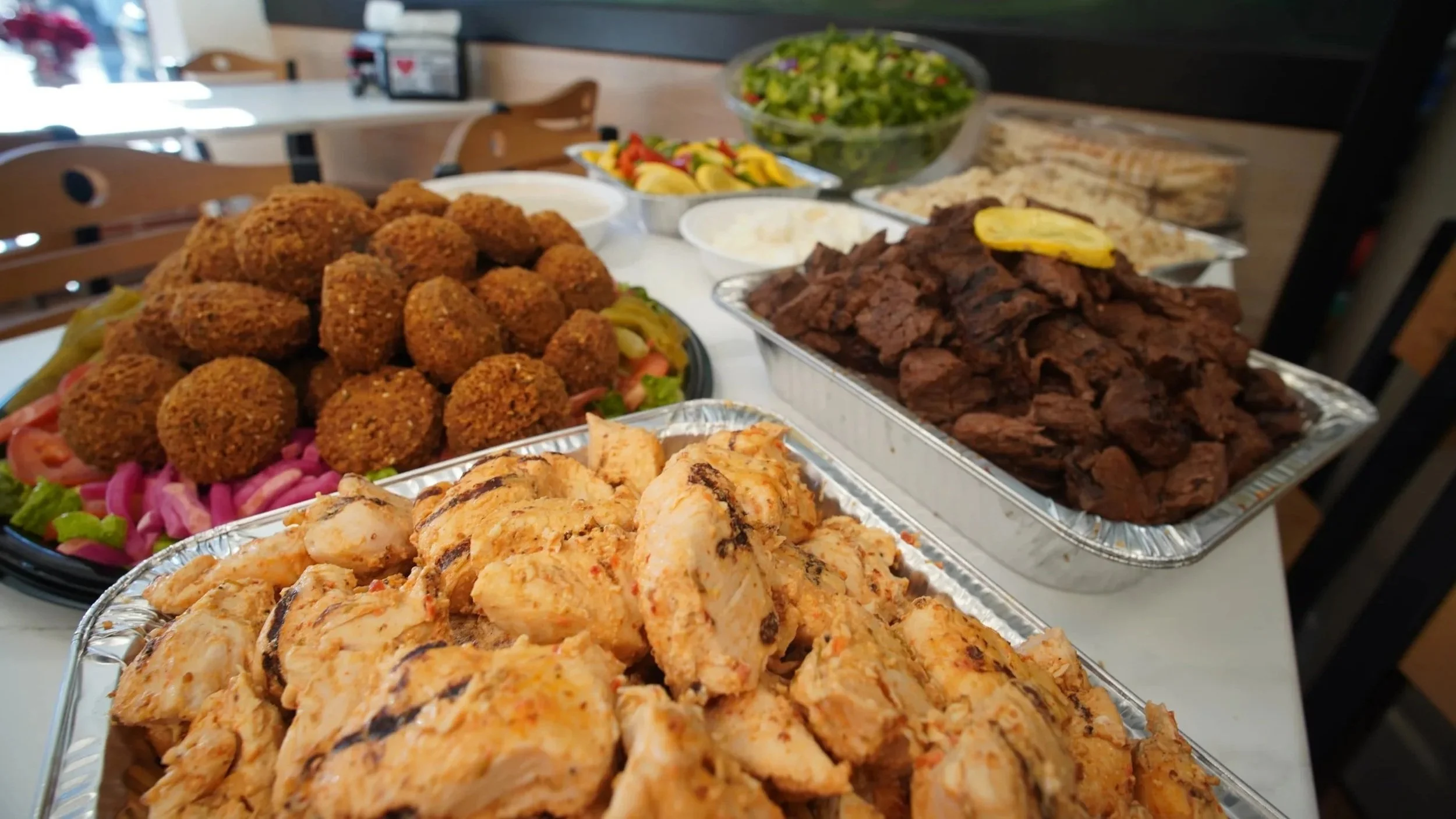
This is what restaurant catering services in Boston should look like. Fresh food, real portions, every dietary need covered — delivered on time and ready to serve.
How to Read Reviews the Right Way
Star ratings are a starting point.
Written reviews are the real signal.
Look for these patterns:
"Delivered on time" — mentioned repeatedly
"Food was fresh" — not just "good"
"We reordered" — the strongest endorsement there is
Look for caterers with strong track records on Google or ezCater — platforms where reviews are tied to real orders.
Fifty consistent reviews over two years beats five perfect ones from last month.
How to Make Your First Inquiry
Most caterers take requests by phone or online form
Have these four things ready:
Your event date
Your headcount
Your delivery address
Any dietary needs
You don't need a final decision. Just enough for a quote.
A responsive caterer replies within a few hours on a business day. If you're waiting more than 24 hours — that delay is a preview of how the order will go.
Finding a great caterer near you comes down to one thing: trust.
Trust that the food will be fresh.
Trust that the driver shows up on time.
Trust that someone answers when you call.
ANI Catering & Cafe has been earning that trust in Greater Boston for over 30 years.
Fresh shawarma, falafel, kafta, and more — halal-certified, dietary-inclusive, and made from scratch every day.
Whether you're feeding a team of 10 or a crowd of 100, we make it easy to get a quote and even easier to reorder.
✔ Delivery radius confirmed
✔ Dietary needs covered
✔ Reviews show on-time delivery
Drop-Off vs. Full-Service: Which Is Right for Your Graduation Party?
Choose drop-off catering if:
You're hosting at home or in a backyard
Your guest count is under 75
You have family or friends who can help set out and replenish trays
Budget is a factor and you want the best food for the dollar
Choose full-service catering if:
You're hosting at a venue that requires staffed service
Your guest count is 75 or more
You want to be fully present with your group or family rather than managing food logistics
The group includes older guests who would appreciate table service
Most parties in Greater Boston go the drop-off route.
It's cost-effective, low-stress, and — with the right caterer — the food quality is identical to what you'd get from a staffed event.
Start Planning your event catering Today!
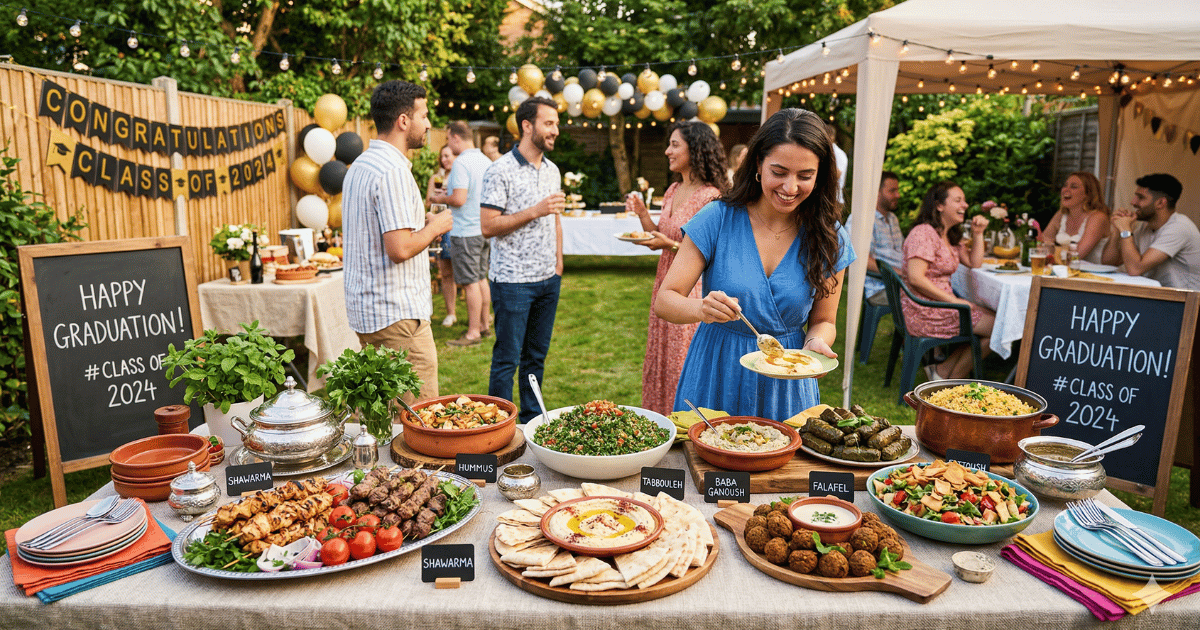
Top Graduation Party Catering Services in Boston
Great graduation party catering doesn't just feed people — it gives them something to talk about. Here's how to pull it off in Boston.
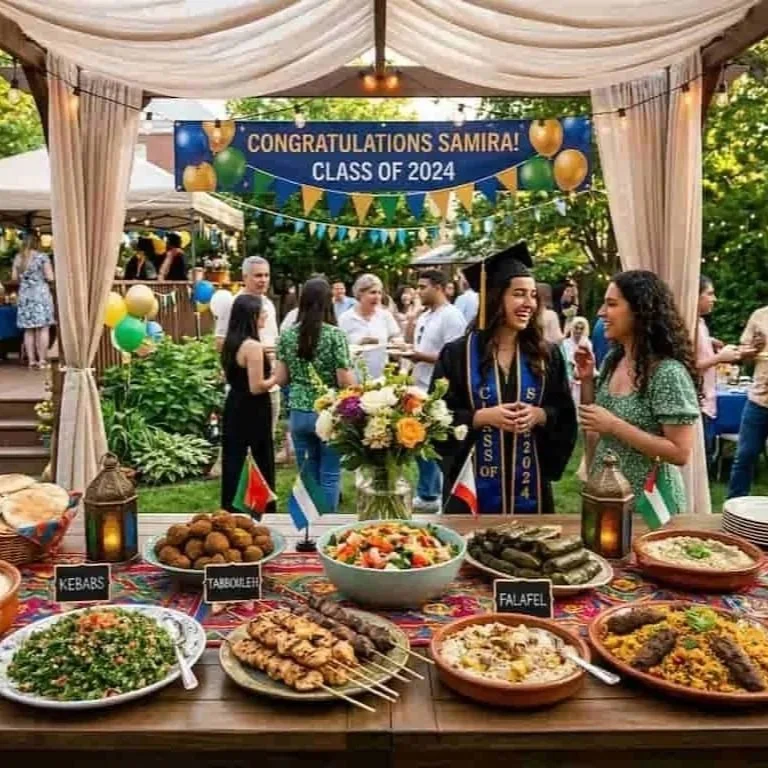
A full Middle Eastern graduation spread covers every guest at the table — halal, vegetarian, vegan, and gluten-flexible
HOW To Feed a Crowd Without the Stress
Graduation parties bring together three generations of family, a dozen dietary requirements, and one very specific window of time to get the food right.
The wrong caterer turns a milestone celebration into a logistics headache!
The right one lets you actually enjoy the party!
ANI Catering & Cafe has been providing graduation party catering services across Greater Boston for over 30 years. Here's everything you need to know before you book.
When Should You Book Graduation Party Catering in Boston?
A Typical ANI Graduation spread — halal proteins, fresh salads, house-made dips, and soft Syrian Bread.
Earlier than you think. Graduation season in Boston runs from mid-May through late June, and it's the busiest catering window of the year.
High schools, colleges, and universities all wrap up within the same six-week stretch — which means caterers fill up fast.
A good rule of thumb: book your caterer at least four to six weeks before the party date. If you're planning for a weekend in late May or early June, booking in April gives you the best selection and the most flexibility on menu customization. Waiting until two weeks out limits your options considerably.
If you're still in the early planning stage, you don't need a confirmed headcount to inquire. Most caterers — including ANI — will give you a preliminary quote range based on an approximate guest count so you can build your budget before the RSVPs come in.
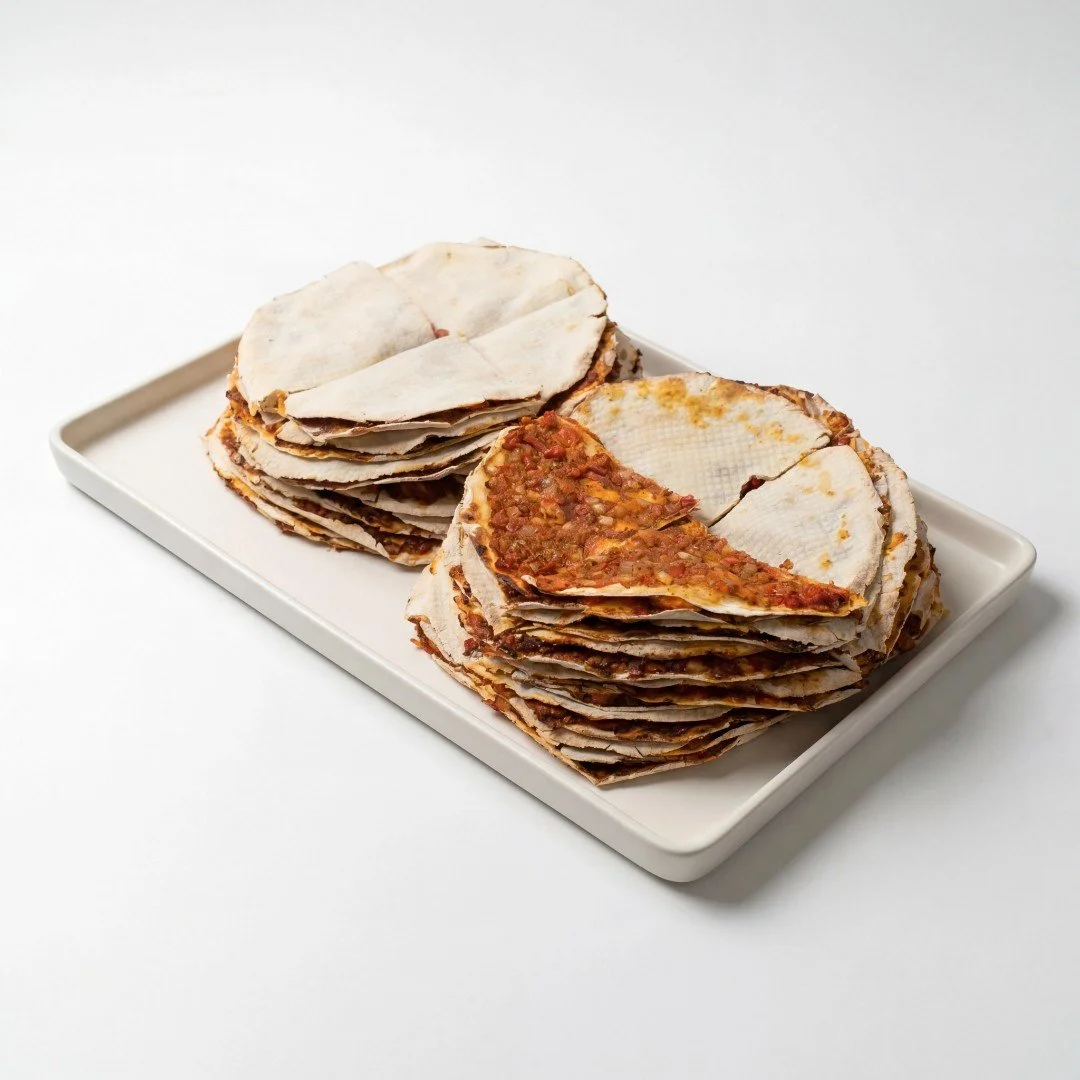
Lahmajoun — Armenian meat / Vegan flatbread (Top requested Catering item)
How Much Does Graduation Party Catering Cost In Boston?
Catering costs for graduation parties vary based on service level, menu complexity, and guest count.
Here's a practical breakdown for Greater Boston:
Drop-off catering (most popular for home and backyard parties): $20–$30 per person. Food is prepared, packaged in serving trays, and delivered ready to set out. No staffing. You handle the table setup.
Full-service catering (best for venues and larger events): $35–$65+ per person. Staff arrive early, set up, replenish during service, and clean up after. Worth it when you have 75+ guests or a venue that requires it.
Tray and platter orders (best for smaller, casual gatherings): Priced by the tray, not per person. A platter of hummus, baba ghanoush, or other Dips and Syrian Bread runs roughly $50–$100 depending on size and serves 10–20 guests.
For a backyard graduation party of 40–60 people, a well-planned drop-off order from a quality caterer typically runs $900 –$1,500 all-in — and that's real Authentic Middle Eastern food, not a few bland trays of pasta and meatballs.
What works best for Graduation Parties in Boston?
Spinach and cheese phyllo triangles — flaky, golden, and gone within the first twenty minutes of every event.
The best graduation party food travels well, serves a crowd efficiently, and satisfies guests across a wide range of dietary needs — because graduation parties are multigenerational, and someone's grandmother and someone's vegan roommate are both showing up.
Middle Eastern and Mediterranean catering checks every one of those boxes.
It's flavorful enough to feel like a real celebration, varied enough to cover dietary requirements without a separate "special" tray, and it holds beautifully on a buffet for the two-hour stretch most graduation parties run.
What astrong graduation party spread looks like:
#1: The anchor proteins
Everything your graduation party table needs — halal proteins, fresh sides, and house-made dips, delivered and ready to serve.
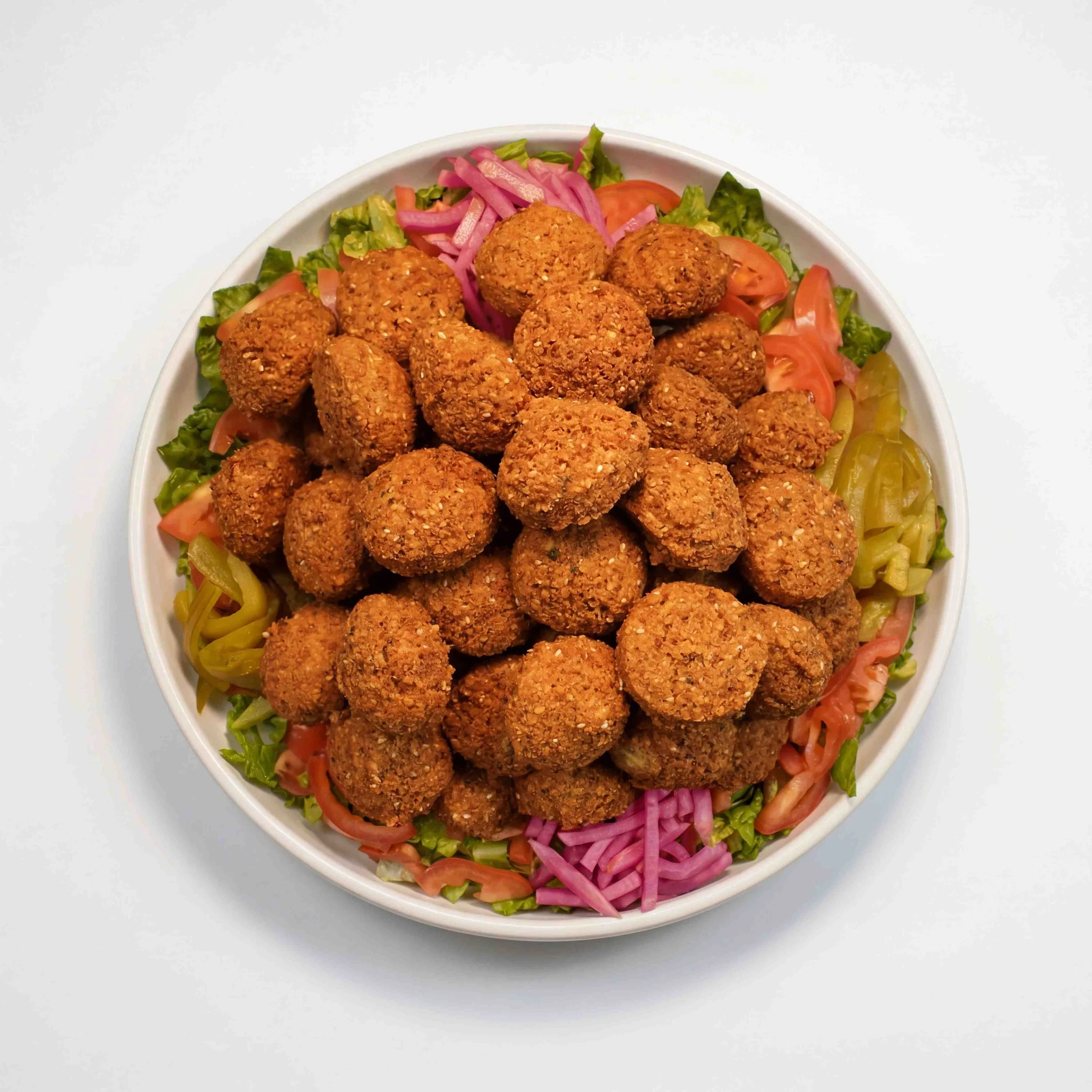
Falafel, Chicken and Beef Kabob are the workhorses of any large party.
They're halal-certified, high-protein, crowd-pleasing, and the first trays to empty at every event.
Plan for a combined 4–5 oz of protein per guest if you're serving other substantial items alongside.
#2: The shareable starters
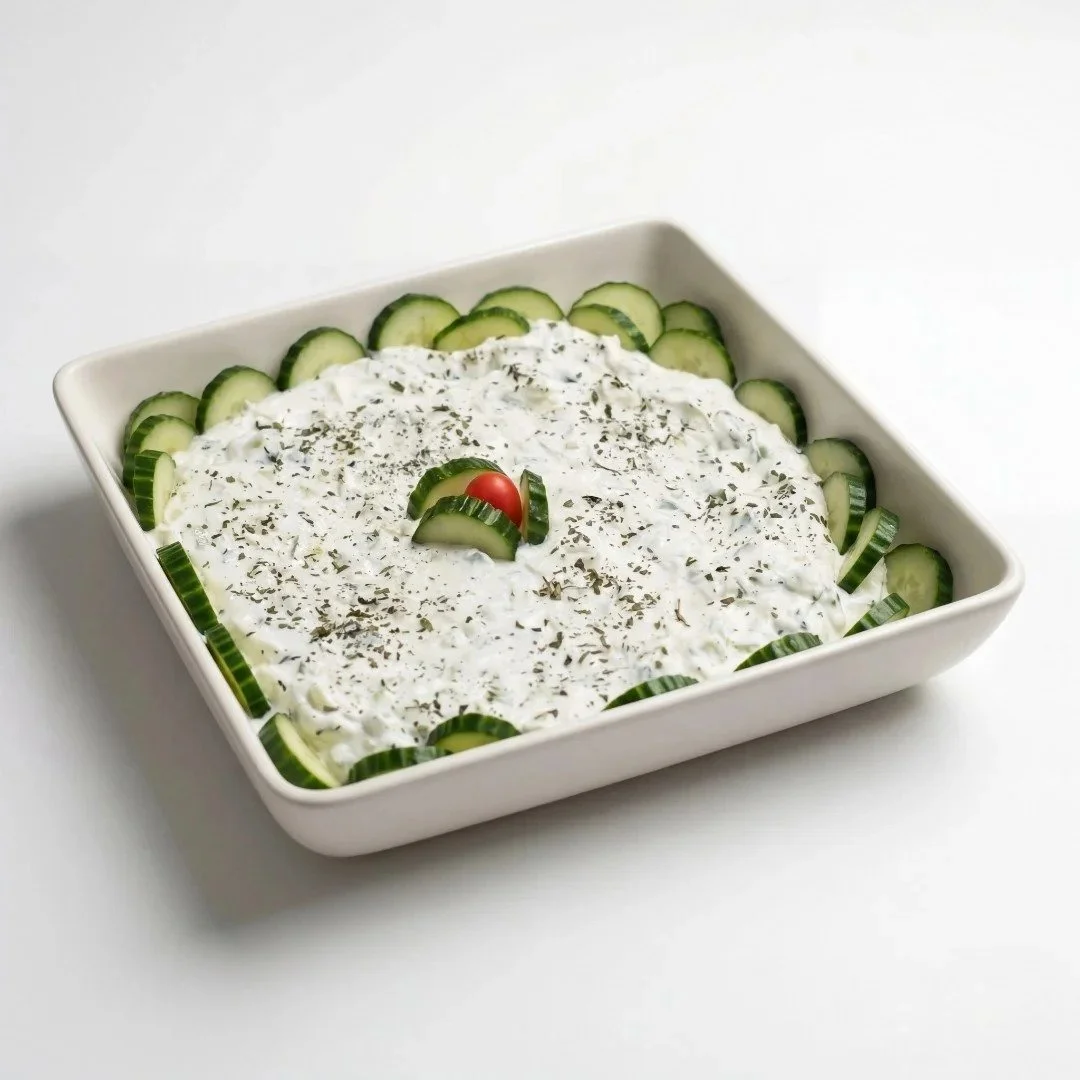
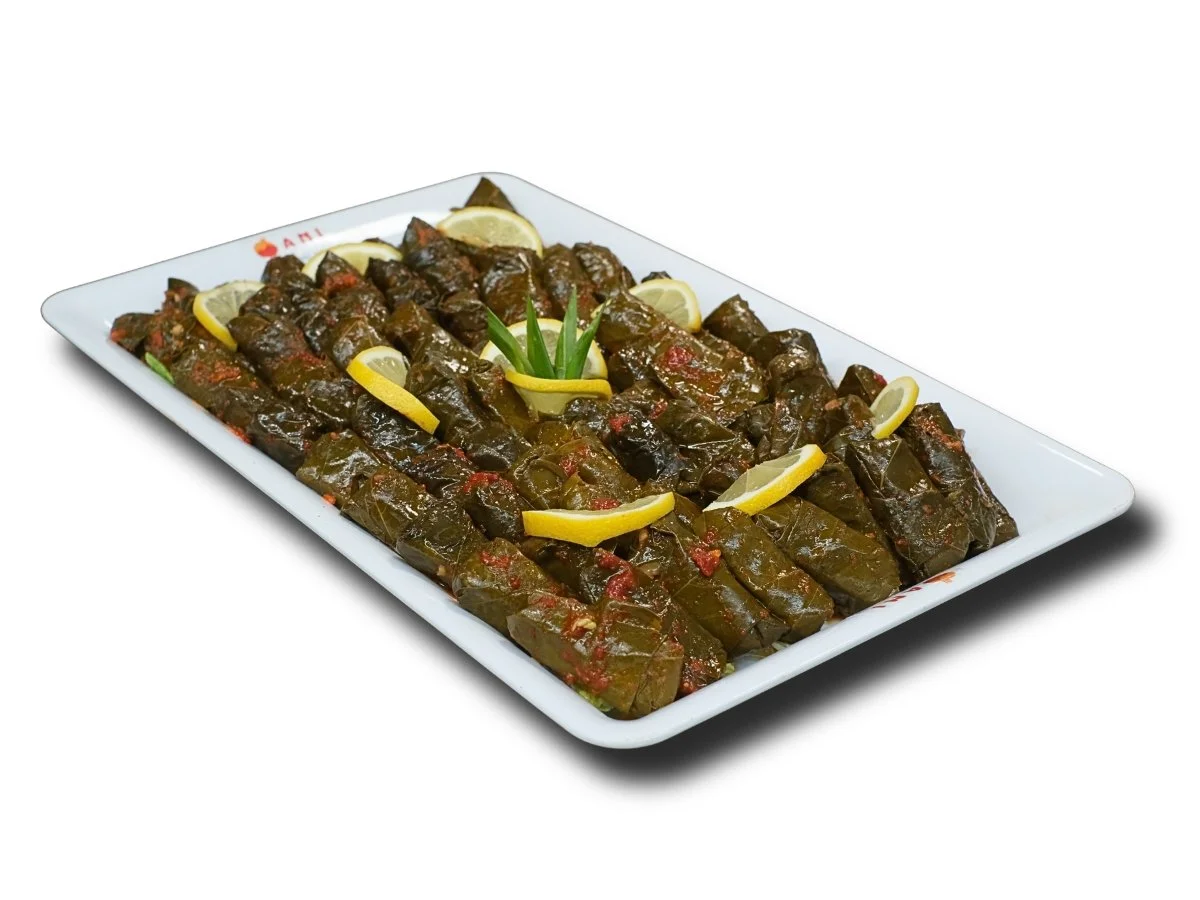
Hummus, tabbouleh, Yogurt Cucumber Salad, and stuffed grape leaves (Yalanchi) turn the table into a spread rather than a cafeteria line.
These items invite guests to graze, which naturally manages crowd flow and keeps the energy up throughout the party.
#3: The dietary-flexible bases
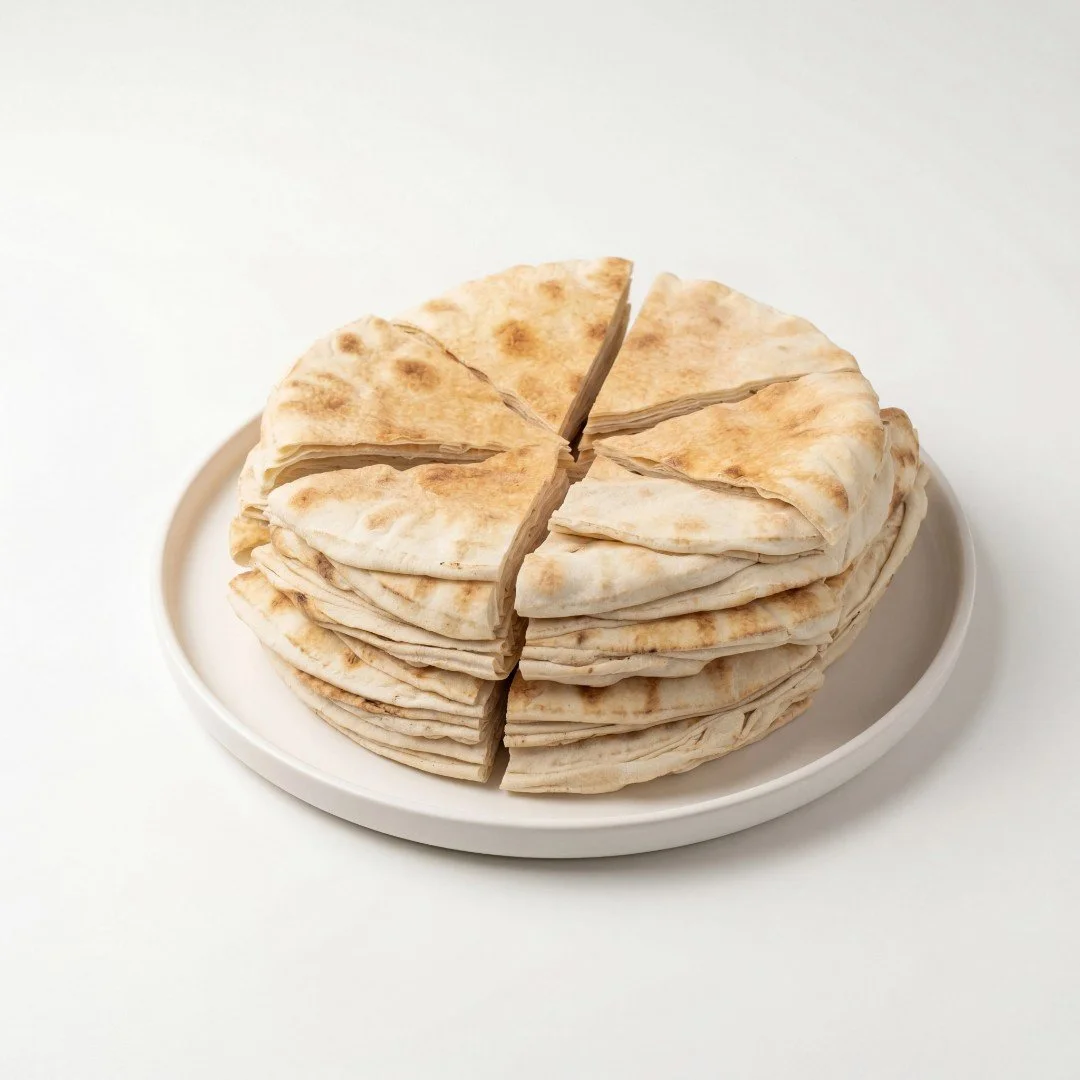
Syrian Bread, Stuffed Grape Leaves, Vegetarian Lamajun, and falafel cover vegetarian, vegan, and gluten-flexible guests without requiring A distinctive separate order and these items are loved by those who don’t have special considerations.
Drop-Off vs. Full-Service: Which Is Right for Your Graduation Party?
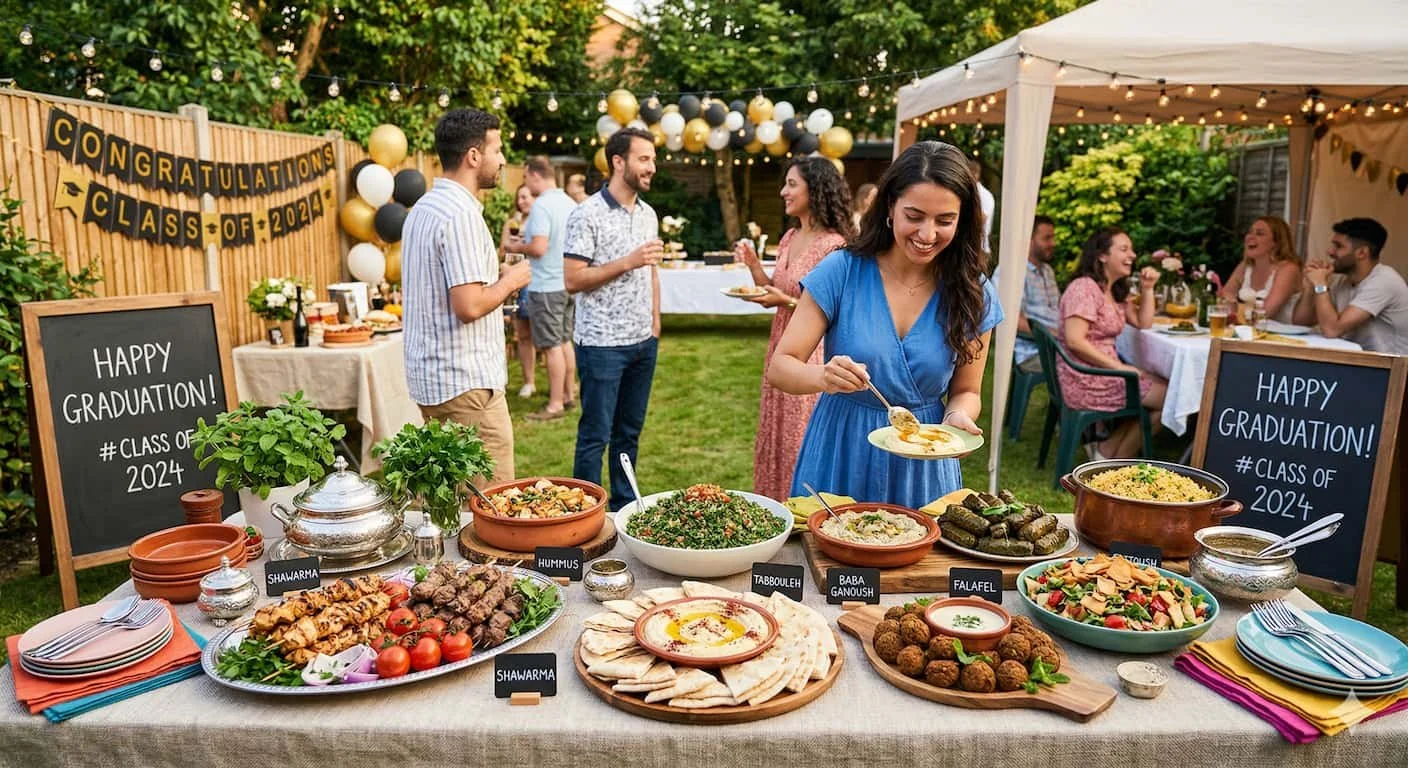
Outdoor graduation party buffet with Chicken and Beef Kabobs, hummus, tabbouleh, baba ghanoush, falafel, and fattoush — graduation party catering services Boston
Choose drop-off catering if:
You're hosting at home or in a backyard
Your guest count is under 75
You have family or friends who can help set out and replenish trays
Budget is a factor and you want the best food for the dollar
Choose full-service catering if:
You're hosting at a venue that requires staffed service
Your guest count is 75 or more
You want to be fully present with your family rather than managing food logistics
The graduate's family includes older guests who would appreciate table service
Most backyard graduation parties in Greater Boston go the drop-off route.
It's cost-effective, low-stress, and — with the right caterer — the food quality is identical to what you'd get from a staffed event.
How to Plan Graduation Party Catering for Dietary Restrictions
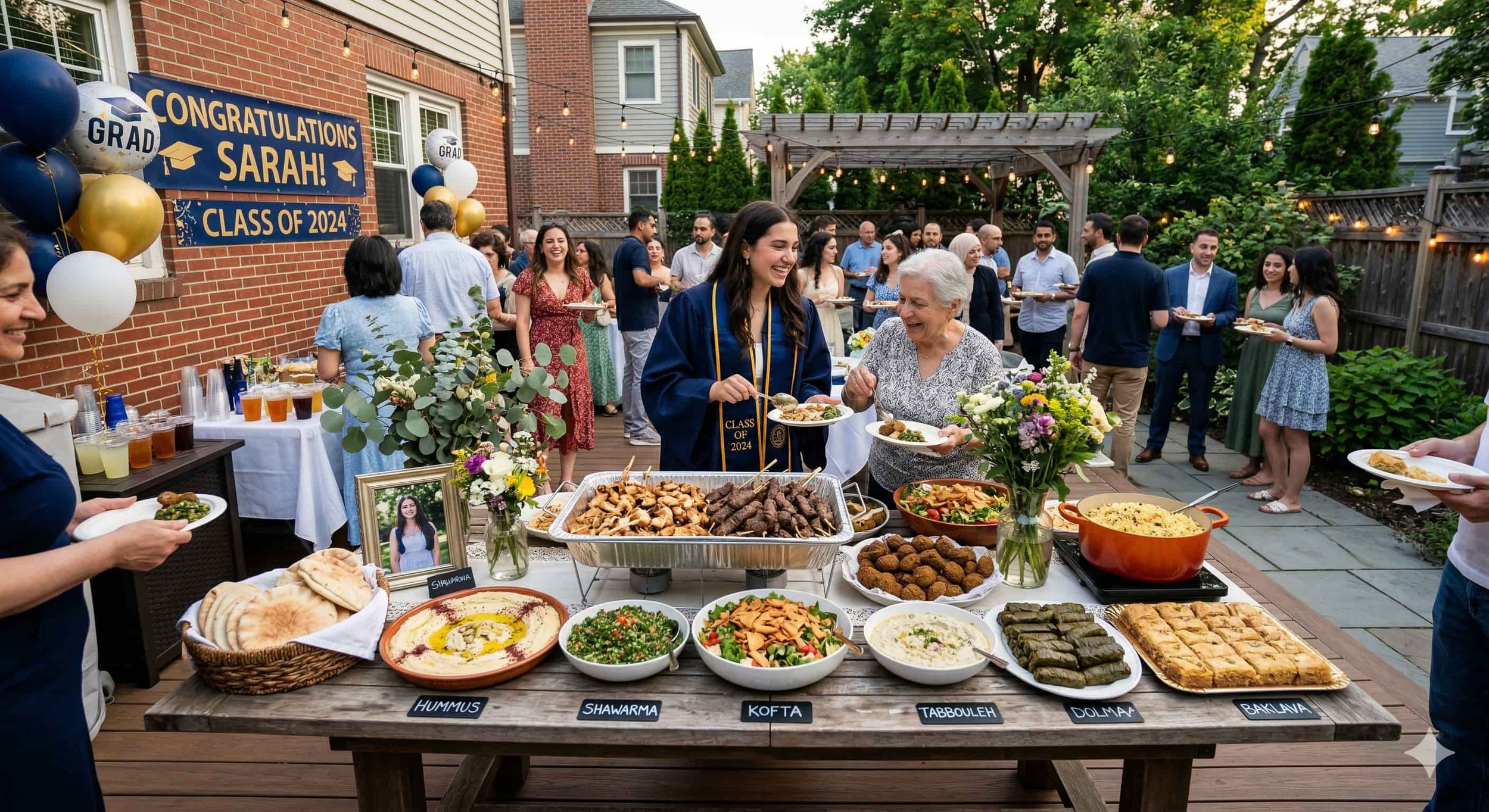
A well-planned Middle Eastern spread naturally covers halal, vegetarian, gluten-flexible, and dairy-free guests
Graduation parties are one of the hardest events to cater for dietary needs because the guest list is almost always a mix of ages, backgrounds, and requirements. Here's a practical framework:
#1: Start with the protein.
Halal-certified meat covers the largest single dietary requirement at most Boston-area parties. If your caterer's meat is halal-certified, you've handled that group without any extra effort.
#2: Build in vegetarian and vegan anchors.
Falafel, hummus, tabbouleh, stuffed grape leaves, and rice pilaf together form a complete vegetarian and vegan meal — not a side dish afterthought. Make sure these items are labeled clearly on the table.
#3: Flag the dairy.
Tzatziki and dishes with yogurt-based sauces should be labeled for vegan and dairy-free guests. This is a small detail that makes a real difference.
#4: Confirm gluten-free options in advance.
Most Middle Eastern dishes are naturally gluten-flexible — rice, grilled meats, hummus, vegetables — but always confirm with your caterer which items are prepared without wheat contact.
A one-page table card listing each dish with dietary tags (V, VG, GF, H) takes ten minutes to make and saves you from fielding questions all party long.
Graduation Party Catering Services in Boston, Cambridge, Watertown, Waltham, and Newton
If you're planning a graduation party anywhere in Greater Boston — Belmont, Cambridge, Watertown, Waltham, Newton, Somerville, Arlington, or the city itself — ANI Catering & Cafe has been doing this for over 30 years!
We offer drop-off catering for backyard parties and smaller gatherings, full-tray orders for DIY setups, and consultation on menu planning if you're not sure where to start. Our food is made fresh, our meats are halal-certified, and we've earned a 4.9-star rating on ezCater because we show up on time with exactly what was ordered.
Quick Takeaways: Graduation Party Catering Services
Book at least 4–6 weeks out — graduation season in Boston fills caterers fast
Drop-off catering runs $14–$22 per person; full-service runs $35–$65+
Middle Eastern spreads travel well, hold on a buffet, and cover halal, vegetarian, and vegan guests in one order
Drop-off is the right call for most Boston backyard graduation parties under 75 guests
Label dietary options at the table — one card saves you hours of answering questions
ANI Catering has no order minimums to inquire — get a quote any time
Start Planning The Graduation Party Today!
Top Same-Day Office Catering in Boston: Why ANI Is the Call Worth Making
When you're scrambling for last-minute catering, it's easy to grab whatever's available and hope for the best. But your team didn't change. The person who keeps halal still keeps halal. The teammate with a gluten sensitivity still can't eat wheat.
Ordering last minute shouldn't mean leaving people out.
Your meeting got moved up. Someone forgot to book. The original caterer just cancelled.
It happens. And when it does, you need food — today, for a group, with dietary needs you can't ignore — and you need someone who can actually pull it off.
Most caterers can't. ANI can.
We've been feeding Boston-area offices from our kitchen in Belmont for over 30 years, and same-day catering isn't an exception for us. It's a regular part of what we do.
Why Same-Day Catering Is Harder Than It Sounds
Most catering operations need 48–72 hours of lead time. Sometimes more.
Here's why:
Food has to be ordered and prepped from scratch
Staffing has to be arranged
Delivery logistics have to be confirmed
Dietary accommodations have to be built in — not bolted on at the end
When you call last minute, most caterers are already committed. Their kitchen is set for the day. You're an interruption.
That's not a criticism — it's just how most catering businesses are built.
ANI is built differently.
We're in Belmont — Which Means We're Close to Everyone
This is the part people don't think about until it matters.
Belmont sits right between Cambridge and Waltham. That means:
Cambridge — 10 minutes
Waltham — 10 minutes
Watertown — 8 minutes
Newton — 12 minutes
Somerville — 15 minutes
Downtown Boston — 20–25 minutes depending on traffic
When you're ordering same-day, every mile matters. A caterer cooking in Quincy or the South Shore has a much harder time guaranteeing an on-time delivery to Kendall Square at noon.
We don't have that problem.
Same-Day Doesn't Mean Settling on Dietary Coverage
This is the assumption that gets people in trouble.
When you're scrambling for last-minute catering, it's easy to grab whatever's available and hope for the best. But your team didn't change. The person who keeps halal still keeps halal. The teammate with a gluten sensitivity still can't eat wheat.
Ordering last minute shouldn't mean leaving people out.
ANI's menu is built around real dietary coverage — not as an afterthought:
Halal meat options, clearly noted
Vegetarian and vegan dishes that are actually filling
Gluten-free options across multiple categories
No cross-contamination surprises — we know our ingredients
When you call us same-day, you're not getting a stripped-down version of what we do. You're getting the same menu, the same care, delivered faster.
What Same-Day Actually Looks Like With ANI
Here's how it typically goes:
You call or message us in the morning
We confirm availability and go over your headcount and dietary needs
We prep fresh from our Belmont kitchen
We deliver on time — to your office, your conference room, your lobby
No catering trays of mystery food. No "we can do a sandwich platter but that's it."
Armenian and Middle Eastern food travels well, reheats cleanly, and feeds a group properly — shawarma, falafel, rice dishes, mezze spreads. It's real food, not an afterthought.
The Offices That Call Us Most
Same-day requests tend to come from a few types of situations:
Last-minute board or investor meetings where someone realized too late that food wasn't arranged
Recurring weekly lunches where the usual order fell through
New office managers who just inherited the catering responsibility and are still figuring out the vendors
Growing teams that outpaced their old caterer's capacity
If any of those sound familiar, you're exactly who we built this for.
Why ANI Is the Strongest Same-Day Option in the Area
Let's be direct about it:
✓ We do same-day regularly — it's not a special exception
✓ We're in Belmont, 10 minutes from Cambridge and Waltham
✓ Full dietary coverage on every order — halal, vegan, GF
✓ Real food cooked fresh, not repackaged platters
✓ 30+ years serving Greater Boston offices
✓ A real person answers when you call
Most same-day catering options in Boston are either unreliable, limited in what they can cover, or too far away to deliver on time.
ANI is none of those things.
Don't Wait to See If Someone Else Can Do It
When you're in a last-minute situation, time is the one thing you don't have.
Call ANI first. We'll tell you honestly within minutes whether we can make it work — and most of the time, we can.
📍 ANI Catering & Cafe — 687 Belmont Street, Belmont, MA 02478 📞 (617) 484-6161
📦 What to Remember
Most caterers need 48–72 hours — ANI regularly handles same-day
Belmont location puts us 10 minutes from Cambridge, Waltham, Watertown, and Newton
Full dietary coverage on every order — halal, vegan, gluten-free
Fresh food cooked in-house, not repackaged platters
Call early in the day for best availability — a real person answers

Office Catering in Boston: Why the Person Who Orders It Deserves More Credit
Success is invisible, but failure isn't.
When it goes right — food arrives hot, everyone finds something they can eat, the meeting moves forward — nobody says a word.
When it goes wrong? You become the story of that meeting.
You carry that possibility every single time you hit submit.
Ordering office lunch sounds simple. It isn't.
You're not a professional event planner. You're an office manager, an EA, or the person who said "sure, I'll handle it" once — and now it's yours. Every team lunch. Every working meeting. Every client drop-in.
ANI Catering has worked with Boston offices for over 30 years. We've heard this story hundreds of times.
It's Never Just Lunch
When you place a catering order, you're quietly managing all of this at once:
Is there enough food for everyone?
Will it arrive on time?
Who's gluten-free? Who keeps halal? Who doesn't eat red meat?
Did the new hire mention a food allergy?
Nobody puts those questions on your calendar. They just land on you.
What looks like a lunch order from the outside is actually a small act of organizational care. When it works, no one notices. When it doesn't — everyone does.
The Visibility Problem
This is the part nobody talks about: success is invisible, but failure isn't.
When it goes right:
Food arrives hot and on time
Everyone finds something they can eat
The meeting moves forward
Nobody says a word
When it goes wrong:
The order is short
Something's missing
A dietary need was overlooked
You become the story of that meeting
You carry that possibility every single time you hit submit.
Why Dietary Accuracy Feels So Personal
Getting someone's dietary needs wrong isn't just a logistical miss. It's a moment of exclusion.
For someone who keeps halal, avoids gluten, or doesn't eat meat — arriving at a team lunch and finding nothing safe to eat is a small but real experience of not being seen.
They probably won't say anything. They'll just remember it.
What that means for you:
Dietary coverage isn't optional — it's the baseline
It has to work for everyone, every time
It shouldn't require you to micromanage every order
The right caterer handles this automatically. That's what you're looking for.
The On-Time Problem Nobody Warns You About
Dietary needs are the anxiety you can see coming.
Late delivery is the one that ambushes you.
Picture this:
Lunch is scheduled for noon
Food arrives at 12:25
Your VP is already in the room
The meeting is already off track
You followed up. You confirmed. It still happened. And now it's your problem.
This is why reliability isn't just a feature — it's the feature. Everything else is secondary if the food shows up late or wrong.
What "Getting It Right" Actually Looks Like
When office catering works the way it should, all of these are true:
✓ Food arrives exactly when you said it would
✓ Every dietary need is covered — vegan, halal, gluten-free, all of it
✓ The quantity is right — no rationing, no scrambling
✓ You're not checking your phone at 11:45 wondering where the van is
That's the standard.
It's not a high bar in concept. But it requires a caterer who takes your logistics as seriously as you do.
What they're really delivering isn't food. It's your professional credibility.
You Deserve a Caterer Who Gets It
The reason so many office managers and admins in Greater Boston stick with ANI after their first order isn't just the food.
It's the experience:
No surprises
No scrambling
No awkward moment at noon when something's missing
If you're the person carrying this responsibility — whether it's your title or just something that landed on your plate — you're doing something that matters.
Finding a caterer you can actually trust is part of doing it well. We'd like to be that for your team.
📦 What to Remember
Ordering office catering carries real, unspoken professional risk
Success is invisible — mistakes are not
Dietary accuracy is a baseline, not a bonus
Late delivery affects your credibility, not just the meal
The right caterer removes the anxiety entirely — not just most of it

How to Choose an Office Caterer in Boston: The Contact Person Test
Most office catering problems aren't about the food. They're about communication. Here's the one question to ask any caterer before you book — and why it matters more in Boston than anywhere else.
Planning office lunch shouldn't mean emailing into a void and hoping food shows up.
You fill out the inquiry form. You hit send. And then you wait.
Three days later you're still not sure if anyone saw your gluten-free note. You don't know who confirmed the order. You don't know if the driver will call when they arrive or just leave it in the lobby.
That stress has a cause. And it's not catering. It's communication.
The difference between a smooth catering experience and a chaotic one almost always comes down to one question: do you have a real person to call?
ANI Catering & Cafe has been helping Boston-area offices answer that question the right way for over 30 years.
Why the General Inbox Is Where Catering Orders Go to Die
Most large catering operations route everything through a shared email or contact form.
Your order joins a queue. The person who reads it Monday may not be the one who processes it Wednesday. By Friday, nobody remembers you asked for two vegetarian trays.
Here's what that looks like in practice:
Last-minute changes get missed
Dietary requests fall through the cracks
Day-of questions go unanswered right when you need answers
When something goes wrong, there's no single person who owns the fix
For a one-time event, you can live with it. For recurring office catering — weekly lunches, monthly meetings, quarterly all-hands — the friction adds up fast.
What a Dedicated Contact Actually Does for You
A dedicated contact isn't just a nicety. It's an operational advantage.
When your caterer assigns you one specific person, that person knows your account. They know:
Your standing order
Your office's dietary breakdown
Which floor the freight elevator stops on
That your last coordinator wanted every tray labeled
On game day — when your delivery is running ten minutes late or three extra people just confirmed — a dedicated contact means one call resolves it.
No hold music. No re-explaining your whole situation to whoever picks up. One person. Done.
The Difference Shows Up Most in Edge Cases
Standard orders are easy. Every caterer can handle "falafel platter for 20, noon delivery."
The real test is everything else:
Dietary change added 24 hours out — a dedicated contact modifies your order fast because they already know what's in it
Headcount jumps the morning of — one call to someone who knows your account, not a ticket submitted to a shared queue
Delivery question at 11:45 a.m. — a direct number, not a general line
Billing question two weeks later — someone who can actually pull up your history
These aren't rare scenarios. For offices ordering catering regularly, this is just Tuesday.
What to Ask Any Caterer Before You Book
Before you commit — especially for recurring orders — ask these four questions directly:
1. Who will be my point of contact? Get a name. A direct number. An email that goes to one person. If the answer is "our team," ask again.
2. How do I reach someone same-day? The answer should be a direct number. Not a support inbox. Not a form.
3. Who handles changes to my order? You want one handoff, not a workflow that passes through three people before anyone acts.
4. What happens if there's a delivery issue? Not "what's your policy" — what actually happens, and who's accountable for fixing it.
A caterer confident in their communication will answer all four without hesitation.
Why This Matters More for Boston Offices
Greater Boston adds its own layer of complexity.
Traffic on the Pike
Construction near Kendall Square
Limited loading dock windows in Cambridge
A Waltham delivery that has to clear Watertown first
A caterer who knows your building, knows your usual delivery window, and has someone actively tracking your order isn't a luxury in this market.
It's the only way recurring office catering actually works without your coordinator spending the morning refreshing their inbox.
The ANI Difference
ANI Catering & Cafe is a family-owned Armenian and Middle Eastern caterer based in Belmont, MA.
We've been delivering to Greater Boston offices — Cambridge, Watertown, Newton, Waltham, Somerville, and beyond — for over 30 years.
When you book with us, you're talking to a person. The same person. Every time.
Our menu covers every dietary need your office will have:
Vegan and vegetarian
Gluten-free
Halal
Dairy-free
Falafel. Shawarma. Hummus. Stuffed grape leaves. Mezze spreads. Grain bowls. Real food your team will actually look forward to.
No minimums to inquire. Responses within 2 business hours. And yes — a real person answers when you call.

How Much Food to Order for 25 People: The Ultimate Boston Corporate Catering Guide
Ordering food for 25 people seems simple until someone goes hungry or half the order ends up in the trash. The right amount depends on more than headcount — meal type, time of day, dietary restrictions, and how many options you're offering all change the math. This guide gives you the exact per-person portion breakdown for a 25-person office lunch, plus the buffer rule that makes sure you never run short.
Ordering food for 25 people sounds straightforward. It's not.
Order too little and people are still hungry at 1pm.
Order too much and you've blown the budget on food that ends up in the trash.
ANI Catering has been feeding Greater Boston offices for over 30 years.
Here's exactly how to calculate the right amount — so you get it right the first time.

The Number Most People Get Wrong
Most people think in trays, not portions.
They order two shawarma platters and assume that's enough. It might be. It might not be — depending on factors they never thought to check.
Here's what actually determines how much food you need:
Meal type — working lunch vs. dedicated sit-down meal
Time of day — lunch vs. late afternoon vs. evening
Crowd composition — big eaters, light eaters, or a mix
How many options you're offering — one protein or three
Dietary restrictions — affects how portions distribute across dishes
Get these five factors wrong and no headcount calculation will save you.
The Baseline: How Much Food Per Person
Use these as your starting point for a standard office lunch.
Proteins (shawarma, falafel, grilled chicken):
4–6 oz per person for a working lunch
6–8 oz per person for a dedicated meal
Sides and dips (hummus, tabbouleh, rice, salad):
3–4 oz per side per person
Plan for 2–3 sides per order
Bread and wraps:
1–2 pieces per person minimum
Add 20% if bread is a primary vehicle for the meal
Dessert:
Not everyone takes it — plan for 60–70% uptake
1 piece or 3–4 oz per person who does
For 25 people specifically:
You're feeding a mid-size group — enough that running out is embarrassing, small enough that over-ordering is wasteful
Build to 27–28 portions minimum to account for bigger appetites and seconds

Factor 1: What Kind of Meal Is This?
This changes everything.
Working lunch (eating at desks, quick break):
People eat less when they're still in work mode
Lighter portions, fewer sides
Plan for 80% of your standard per-person calculation
Dedicated lunch break (everyone stops, sits together):
People eat more when the meal is the event
Full portions, more sides, higher dessert uptake
Plan for 100–110% of your standard calculation
Catered meeting with food on the side:
People graze, not eat
Cut portions by 30–40%
Focus on finger foods and shareable platters over full entrees

Factor 2: Time of Day
11:30am–1pm — peak hunger window. Full portions. People will eat.
1pm–2pm — some people have already eaten. Plan for 85% uptake.
After 3pm — this is snacking territory, not a meal. Cut portions significantly.
Factor 3: How Many Options Are You Offering?
This is where most orders go sideways.
One protein, two sides:
Everyone eats the same thing
Easy to calculate — straight per-person math
Risk: if someone doesn't like or can't eat that protein, they're left with sides only
Two proteins, three sides:
More flexibility, but portions get complicated
Split your protein order 60/40 — more of the crowd-pleaser, less of the secondary option
Sides should be enough that they work as a standalone for anyone skipping protein
Three or more options:
Great for dietary diversity
Hard to predict distribution
Add a 15% buffer across the board when offering this many choices
Factor 4: Dietary Restrictions Change the Math
This is why the dietary survey always comes first.
Here's what dietary needs do to your portion calculation:
5 vegans in a group of 25 means your vegan option needs to fully feed those 5 — not just exist as a side
Gluten-free guests need enough GF options to build a full plate, not just one token item
Halal-only guests need halal proteins portioned as a primary, not an afterthought
The rule: any dietary group that represents 20% or more of your headcount needs its own full portion calculation — not a shared afterthought on the main order.

The Buffer Rule
Always add a buffer.
Here's how to size it:
Known group, predictable eaters — add 10%
Mixed group, some unknowns — add 15%
Client lunch, impression matters — add 20%
You've under-ordered before — add 20% and don't argue with yourself about it
For 25 people, a 15% buffer means you're actually building for 28–29 portions. That's the right number to give your caterer.
Already have your dietary restrictions and headcount sorted? That's the hard part. We'll handle the rest.
Get a free catering quote from ANI → Or call us directly: (617) 484-6161 We respond within 2 hours on business days.
What to Tell Your Caterer
Don't just say "I need food for 25 people."
Tell them:
Exact headcount plus your buffer number
Meal type — working lunch, sit-down, or grazing
Time of day
All dietary restrictions with headcounts per restriction
Number of options you want to offer
Whether you need leftovers to be minimal or if extra is fine
A good caterer will build the order from that information. A great caterer will push back if something doesn't add up.
Quick Reference: 25-Person Office Lunch
| Item | Amount |
|---|---|
| Primary protein | 27–30 portions at 5–6 oz each |
| Secondary protein (if offering) | 15–18 portions at 5 oz each |
| Sides (per side dish) | 27–30 portions at 3–4 oz each |
| Bread / wraps | 30–35 pieces |
| Dessert | 18–20 portions |
| Buffer applied | +15% across all items |

BOARDROOM FEAST WITH CHICKEN KABOB AND FALAFEL FROM ANI CATERING
Summary
Don't think in trays — think in portions per person
Meal type, time of day, and number of options all change your calculation
Any dietary group over 20% of your headcount needs its own portion math
Always add a buffer — 10% minimum, 20% for client meals
Give your caterer a full picture, not just a headcount
ANI Catering takes the guesswork out of this entirely. Give us your headcount, your dietary needs, your meal type, and your date — and we'll build the order correctly from the start. Thirty years of Boston office lunches means we've seen every scenario. We'll make sure no one goes hungry and nothing goes to waste.
Get a free catering quote from ANI → Or call us directly: (617) 484-6161
We respond within 2 hours on business days.
ANI Catering & Cafe is a family-owned Armenian and Middle Eastern restaurant and caterer serving Greater Boston for over 30 years. Based in Belmont, MA — regularly serving offices in Cambridge, Waltham, Newton, Watertown, and surrounding communities. Every diet covered. Every order on time.
The Corporate Catering Order Checklist: Dietary Survey, Headcount, Then Menu
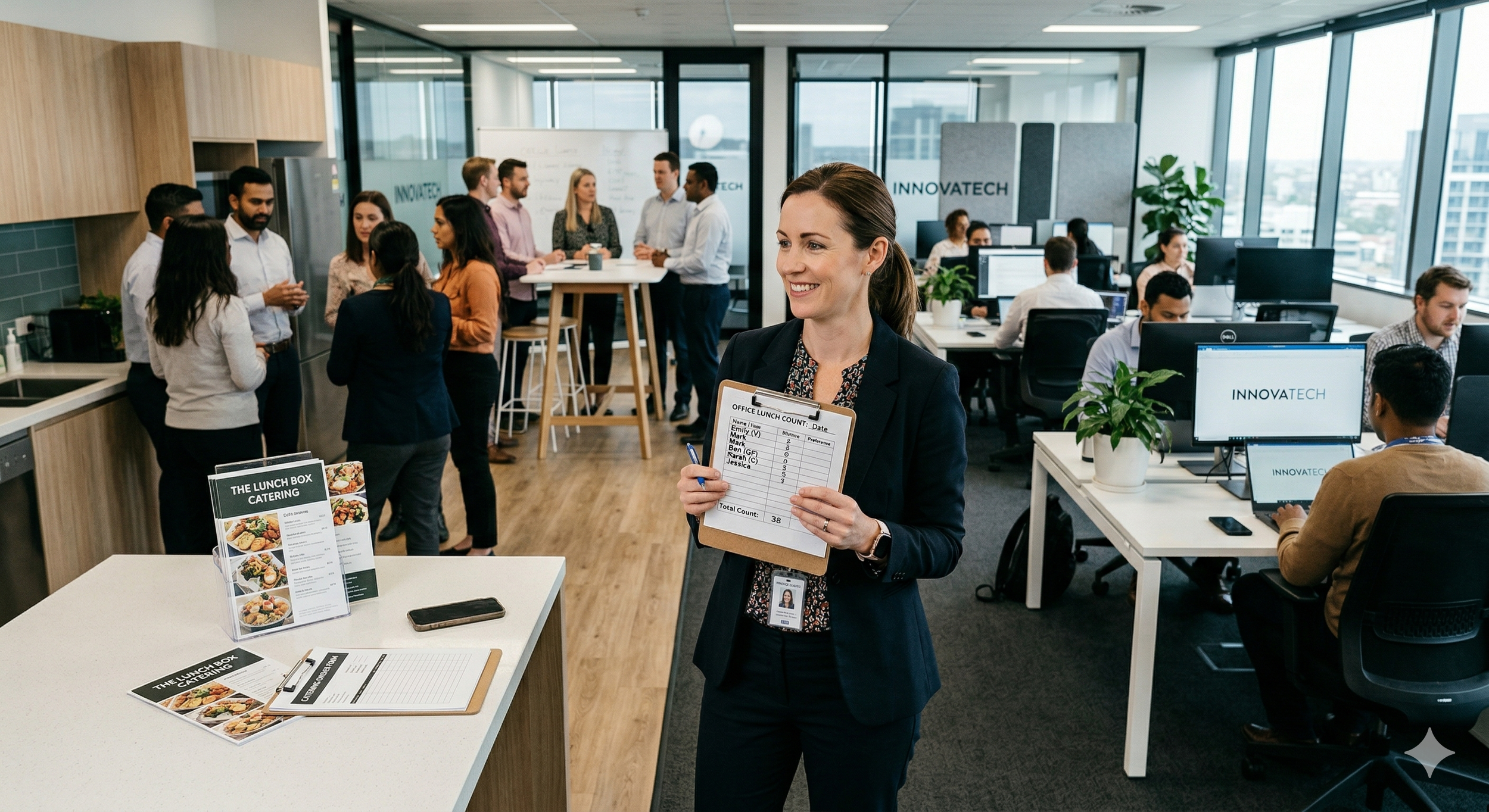
Most corporate catering orders get placed in the wrong order. The menu comes first, the headcount comes second, and the dietary survey — if it happens at all — comes last. By the time the food arrives, someone can't eat half of it. This corporate catering order checklist fixes that. Run your dietary survey first, lock in your headcount second, and choose your menu last. It takes the same amount of time and saves you from every avoidable catering mistake.
ANI CATERING BOARDROOM FEAST PACKAGE
Most office catering orders go wrong before a single dish is chosen.
Someone picks a menu they like, guesses at a headcount, and never asks the team what they can actually eat.
By the time the food arrives, there's always someone who can't eat half of it.
ANI Catering has been handling corporate catering for Greater Boston offices for over 30 years. This is the order of operations we recommend every time — and it's the opposite of how most people do it.

Step 1: Run the Dietary Survey First
This is the step everyone skips. Don't.
Send a poll to your team before you open a single menu.
You need to know what people can actually eat before you decide what to order.
How to run it:
Use a Google Form, a Slack poll, or a reply-all email
Ask specifically for: vegetarian, vegan, gluten-free, halal, kosher, nut allergies, dairy-free
Give it 24–48 hours to collect responses
Aim for 80% participation — you don't need everyone
Why this step comes first:
One serious allergy can make an entire menu unusable
Dietary needs determine which menu categories are even available to you
You can't request substitutions after the food is prepared
"6 people are vegan and 3 are gluten-free" is information that changes your entire order
Common mistakes at this stage:
Assuming you already know what your team eats
Skipping it for small groups ("it's only 12 people")
Sending the survey the morning of the order

Step 2: Lock In the Headcount Second
Once you have dietary data, get a firm number of people being fed. Not a range. Not an estimate.
What to confirm:
Full-time staff physically in the office that day
Any guests, clients, or visitors joining the meal
Remote workers who may be coming in specifically for this event
Add a 10% buffer for last-minute additions
Why headcount comes before menu:
Catering is priced and portioned per person
A menu that works for 20 people is a completely different build for 50
Your caterer needs a real number to give you an accurate quote
Portion sizes differ between a working lunch and a dedicated meal — confirm which this is
What to avoid:
Telling your caterer "somewhere around 30"
Forgetting to count people arriving after the meal starts
Assuming no-shows will balance out the extras
Already have your headcount and dietary needs sorted? That's the hard part done. We'll take it from here.
Get a free catering quote from ANI → Or call us directly: (617) 484-6161
We respond within 2 hours on business days.

Step 3: Choose the Menu Last
Now — and only now — you're readyto look at food.
Use your dietary survey results as a filter, not an afterthought. The menu you choose should cover every restriction on your list without requiring a separate side order for every other person.
What to look for in a menu:
Dishes that are naturally gluten-free or vegan — not modified versions
Proteins available in halal or vegetarian options within the same order
Spreads and sides that work across all dietary needs
A caterer who can tell you exactly which items are allergen-safe
What a good menu selection looks like at this stage:
It covers every dietary need from your survey
It scales cleanly to your confirmed headcount
It fits your per-person budget now that the other two steps are locked in
It doesn't require five separate special-order exceptions
Red flags to watch for:
Only one or two vegetarian options on the entire menu
No halal proteins when your team includes Muslim colleagues
Dishes requiring refrigeration or reheating equipment you don't have on-site
A caterer who can't clearly answer allergen questions

Why Most People Do It Backwards
The instinct is to start with food. Food is the fun part. It's easy to visualize.
Most people open a menu first because it feels like progress
Headcount seems like a detail they can sort out later
Dietary needs feel like edge cases, not structural constraints
The result:
You pick a menu, then realize half the team can't eat it
You order for 40, only 28 show up — or the reverse
You're making emergency calls the morning of the event
None of that has to happen. The fix is just doing it in the right order.
The Three Questions to Ask Before You Do Anything Else
What can everyone eat? — Run the survey.
How many people am I actually feeding? — Get a firm number.
What menu covers both of those answers? — Now look at food.
Three questions. In that order. Every time.

Corporate Catering Order Checklist
Dietary survey → headcount → menu. Always in that order.
Skipping the dietary survey is the most common catering mistake in office settings.
Your headcount determines your budget, portion size, and your caterer's capacity.
The menu is a decision you make with information — not before you have it.
A good caterer will help you navigate all three steps once you come to them prepared.
ANI Catering makes this part easy. Send us your headcount, your dietary needs, and your date. We'll come back to you with a menu that works for everyone in the room — built from 30 years of feeding Boston offices just like yours. Every diet covered. Every order on time.
Get a free catering quote from ANI → Or call us directly: (617) 484-6161
We respond within 2 hours on business days.
ANI Catering & Cafe is a family-owned Armenian and Middle Eastern restaurant and caterer serving Greater Boston for over 30 years. We're based in Belmont, MA and regularly serve offices in Cambridge, Waltham, Newton, Watertown, and surrounding communities.

Why 40 Reviews at 4.9 Stars Beats 400 Reviews at 4.2 Stars for Office Catering in Boston
More reviews does not mean better catering. A 4.2-star average means 1 in 5 people had a bad experience. Here is the math Boston office managers need to know before booking their next team lunch.

The number on the screen is not the story
When you're searching for office catering in Boston, every caterer shows up with a star rating and a review count. Your instinct is to sort by total reviews — the bigger the number, the more trustworthy the vendor.
That instinct costs people good lunches every week.
A high review count tells you one thing: this caterer has been around a while. It tells you nothing about whether your delivery will arrive on time, whether the gluten-free order will be correct, or whether anyone will pick up the phone when you need to make a last-minute change.
ANI Catering has been serving Greater Boston offices for over 30 years. In that time, we've watched businesses get burned by vendors with hundreds of reviews and a quietly problematic track record — and we've learned exactly what to look for before you place an order.
Why a 4.2-star average is a real problem for office catering
Let me show you the math nobody talks about.
A 4.2-star average means roughly 1 in 5 people had a bad experience. Think about what that means for catering:
Food showed up cold
Driver was 20 minutes late
Someone's gluten-free order got mixed up
The wrong tray went to the wrong table
That is a 20% chance of a problem. At your office lunch. In front of your colleagues.
Now look at 4.9 stars. That is 38 or 39 people out of 40 who had a genuinely great experience. One or two who did not. That is a tight, careful operation. That is who you want walking into your office.

Big caterers do a lot of events. They collect a lot of reviews fast.
And yes — they also have a lot of bad days that get buried under all those stars.
When you are doing 50 jobs a week, a few disasters a month just... average out. You would never know from the number alone.
A caterer with 40 reviews earned every single one. They cannot hide behind volume. Every event matters to them. That shows up in the food. It shows up in the service. It shows up in whether they remember your dietary requests without being asked twice.
💬 Thinking about your next office lunch?

What 4.9 stars actually looks like in real life
Read the reviews on a 4.9-star caterer. You'll see a pattern:
"They remembered our gluten-free guests."
"Food was still hot when we ate at 1pm."
"Showed up early and set everything up before the meeting started."
"The driver called ahead to confirm the delivery entrance."
Now read the reviews on a 4.2. Even the good ones have a "but."
"Great food but the driver was late."
"Everyone loved it but they forgot the vegetarian option."
That "but" is the problem. In catering, the "but" is what people remember — and it's what they tell their manager when you ask how the lunch went.

How to actually compare caterers before you book
Do not look at the number!
Do this instead:
1. Filter to the most recent 20 reviews — ignore the all-time average. A caterer from five years ago is a different operation than the caterer you're hiring today. Staff changes. Standards drift. Only recent reviews tell you what you're actually getting.
2. Read the text, not just the stars. A generic five-star review with no detail tells you nothing. Look for specifics: dietary accuracy, on-time delivery, communication, food quality at the time of eating — not in a test kitchen.
3. Look for these four signals specifically:
On-time delivery (or better: early arrival)
Dietary accuracy — gluten-free, halal, vegan handled correctly
Proactive communication before the event
Food that arrived hot and was still good when people ate
4. Sort by "most critical" and judge the response. One detailed negative review about a late delivery tells you more than ten five-star ratings that just say "great food." More importantly: did the caterer respond? How? That tells you everything about how they handle problems in real time.
💬 ANI has a 4.9 on ezCater and a 4.8 on Google.
Read our reviews — then get a free quote for your office.
When volume actually does mean something
I want to be fair. If a caterer has 400 reviews and a 4.9 — that is the gold standard. Consistent excellence at scale. If you find that, book them.
The issue is that most high-volume vendors in the Boston corporate catering market are sitting at 4.1 to 4.4. That range sounds fine until you do the math and realize you're rolling the dice on 1-in-4 or 1-in-5 outcomes every time.

Why people still default to the bigger number
There's a real psychological pressure in corporate purchasing. You pick the well-known caterer with 400 reviews and something goes wrong — it's not your fault. You picked the safe option.
You pick the smaller 4.9-star caterer and something goes wrong — suddenly it was your call to defend.
Here's the answer to that: 39 five-star reviews is a defensible choice.
You did your research. The score is honest. You can point to it.
What you cannot defend is choosing a caterer with a known 20% problem rate and acting surprised when you land in that 20%.
If you want a shortcut for your next Boston office order, here it is. A 4.9 average from a caterer with 30-plus verified reviews is worth far more than a 4.2 from someone with 400. Read the text. Look for the "but." Filter to recent. And book the one where people consistently say the food arrived hot, the order was right, and someone actually answered the phone.
That's the standard we hold ourselves to at ANI Catering — a 4.9 on ezCater across dozens of verified Boston office orders, and a 4.8 on Google. We're not perfect, but we're close, and the reviews say why.
💬 We make it easy to say yes — and easy to defend that decision.

Quick takeaways:
A 4.2-star average means roughly 1 in 5 experiences had a problem
High review volume can hide inconsistency — high star ratings signal discipline
Read review text, not just stars — look for the "but"
Filter to most recent 20 reviews before you trust any score
40 reviews at 4.9 is a tighter, more honest signal than 400 reviews at 4.2
Ready to make your next office lunch the one everyone talks about?
We are ANI Catering — a family business in Belmont, serving Greater Boston for over 30 years. Every diet covered. Always on time. A real person answers when you call.
Get a Free Catering Quote →
Or call us directly: (617) 484-6161 No minimums to inquire. Response within 2 hours on business days.
Why Buffet Style Catering Works Better for Diverse Office Teams Than Boxed Lunches
Boxed lunches look organized. But they force one person to predict every dietary combination in the room — and they always get at least one wrong.
The person who is vegan but has a sesame allergy. The guest who keeps halal and is also gluten-free. The nut-free colleague who actually eats everything else.
A labeled buffet lets every person build exactly the plate that works for them. Here's why that matters — and how we set it up so nobody has to ask a single question.

Boxed lunches look organized on paper.
Everyone gets the same thing. Neat. Tidy. Simple.
But here's the problem nobody talks about until the food arrives:
The person who is gluten-free but not vegan didn't want the tahini. The person who keeps halal also has a sesame allergy. The person who is vegan eats nuts but the nut-free guest can't sit near them. And nobody told you any of this when you placed the order.
A boxed lunch can't solve this.
A buffet can.
Here's why — and why at ANI, family-style service is almost always the better choice for diverse office teams.
ANI Catering & Cafe has been feeding Boston-area office teams for over 30 years. We've seen every dietary combination imaginable — and we've learned that the best way to handle all of them at once is to let your team build their own plate.
The problem with boxed lunches for diverse teams
A boxed lunch is a fixed decision made by one person — you — on behalf of everyone.
That's a lot of pressure.
And no matter how carefully you build it, a pre-arranged box forces you to make assumptions.
The assumptions that always go wrong:
"The vegan box should have tahini" — except one vegan guest has a sesame allergy
"The gluten-free box doesn't have pita" — but that guest actually eats pita, they just avoid wheat pasta
"The halal box has the same sides as everyone else" — except those sides were cooked with wine
"The nut-free guest will be fine with the vegetarian box" — except it contains pine nuts
Each one of these is a real scenario.
Each one turns into an awkward moment at the lunch table.
Someone pushes food around their plate. Someone eats half a meal. Someone quietly goes back to their desk and orders DoorDash.
And you — the person who spent an hour organizing this — feel terrible about it.
Why dietary restrictions don't fit neatly into categories
Here is the thing about dietary restrictions that makes boxed lunches genuinely difficult:
They don't come in clean, separate boxes. They come in combinations.
Think about the real combinations you encounter in any diverse office:
Vegan — but has a sesame allergy
Gluten-free — but halal too
Vegetarian — but nut-free
Halal — but also dairy-free
Vegan and gluten-free — but wants pita bread
Nut-free — but eats everything else including meat
Dairy-free — but not fully vegan, eats fish
Now try building a pre-arranged box for each of those combinations.
You'd need a different box for every single person.
It becomes a logistical nightmare — and it still won't be right, because someone always has a combination you didn't account for.
What a buffet actually does differently
A buffet doesn't try to predict what each person needs.
It gives every person the information and the access to decide for themselves.
Here's what that looks like in practice:
Every dish is labeled clearly — vegan, gluten-free, halal, contains sesame, contains nuts, contains dairy.
Every dish is served separately — not mixed together, not pre-combined.
Every person walks down the table and builds exactly the plate that works for them.
The vegan with the sesame allergy skips the tahini and loads up on falafel, grape leaves, and tabbouleh.
The halal guest with the dairy allergy takes the kabobs, the rice, the roasted vegetables — and skips the yogurt sauce.
The nut-free guest sees "contains pine nuts" on the muhammara label and moves past it without incident.
Nobody had to tell you about their combination in advance. Nobody had to trust that you got their box right. Nobody is pushing food around their plate wondering what's in it.
They just — ate lunch.
The combinations our buffet handles that no box could
Let me give you real examples from orders we've done.
The vegan who doesn't eat sesame: In a boxed lunch, this person gets a vegan box that almost certainly contains hummus or tahini. At our buffet, they skip the hummus, take the falafel, the grape leaves, the imam bayildi, the tabbouleh, and the rice. Full plate. No sesame. No conversation required.
The halal guest who is also gluten-free: In a boxed lunch, you need a special halal AND gluten-free box. Did you remember to tell the caterer both restrictions? Did the caterer actually honor both in the same box? At our buffet, the halal kabobs are labeled halal. The rice is labeled gluten-free. The salad is labeled gluten-free. They build their own plate and every item they pick is safe.
The nut-free guest who eats everything else: In a boxed lunch, you'd probably give them the vegetarian box to be safe — except they eat meat and feel shortchanged. At our buffet, they see clear nut labels on anything that contains nuts. They avoid those items. They eat the kabobs, the rice, the hummus, the pita, the salad. Full meal. No nuts. No compromise.
The person who is gluten-free by preference but actually wants pita: This one sounds small but it matters. In a boxed lunch, their gluten-free box has no pita. At our buffet, they see the pita on the table, they know they're gluten-sensitive by preference rather than medical necessity, and they take one piece if they want it. Their choice. Their call.
The packaging that makes it work
A buffet only works as well as the way it's organized.
Unlabeled trays, shared utensils, and mixed dishes turn a buffet into a guessing game — which is worse than a boxed lunch because now nothing is safe for anyone.
Here's how we set up every ANI buffet order:
Every dish arrives in its own separate container
Every container is labeled with dietary attributes — vegan, gluten-free, halal, contains sesame, contains nuts
Serving utensils are individual per dish — no shared spoons
Gluten-containing items like pita are positioned separately from gluten-free dishes
Halal proteins are clearly identified and kept separate from anything else
What this means for you:
You set the table the way we organize it.
You point to the labels.
You step back.
Your team serves themselves.
No questions. No incidents. No one going hungry.
When does a boxed lunch make sense?
To be fair — boxed lunches have their place.
They work well when:
You have a small team with simple, known dietary needs
Your team is eating at their desks and portion control matters
You're serving a hybrid office and need individual sealed meals for people arriving at different times
You have a team with zero dietary overlap and pre-arranged boxes are genuinely easier
For those situations, we do individual portions too — and we label every one of them.
But for a diverse office team with multiple overlapping restrictions?
The buffet wins every time.
Not because it looks better on the table.
Because it puts the decision in the hands of the person who actually knows what they can eat.
The bottom line
A boxed lunch says: we tried to anticipate your needs.
A labeled buffet says: we gave you everything you need to take care of yourself.
For a team with four different dietary restrictions across fifteen different combinations — the second one is always the right call.
One organized, labeled buffet.
Every person builds their own plate.
Everyone eats well.
That's the goal.
THE SHORT VERSION
Boxed lunches force one person to predict every dietary combination in advance — and they always get at least one wrong
Dietary restrictions come in combinations: vegan but sesame-free, halal but also gluten-free, nut-free but not vegetarian — no pre-arranged box handles all of these
A labeled buffet lets every guest build exactly the plate that works for their specific combination
The buffet only works if every dish is labeled, separated, and served with individual utensils — that's how ANI packages every order
Boxed lunches work for simple, uniform teams — buffet works for diverse teams with overlapping restrictions
Put the decision in the hands of the person who actually knows what they can eat
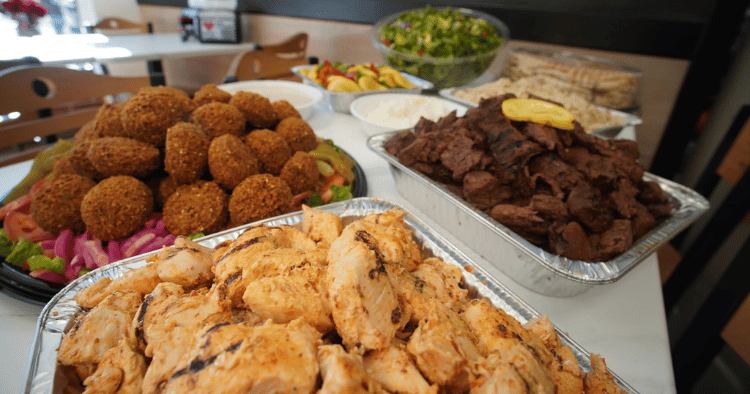
Why ANI Catering Covers All 4 Major Dietary Restrictions
Most caterers say they handle dietary restrictions. What they mean is: they have a salad.
At ANI, it runs deeper than that. Our meats are halal certified. Our falafel and sides are gluten-free. Our vegan dishes are the ones people actually fight over. And every order is packaged so your team can serve themselves without asking a single question.
Here's exactly how we do it.
Most caterers say they handle dietary restrictions.
What they mean is: they have a salad.
At ANI, when we say we cover every diet — we mean it in a way that's built into how we cook, what we source, and how we package every single order.
Here's exactly why, and what that looks like on your conference room table.
ANI Catering & Cafe has been feeding diverse Boston-area office teams for over 30 years. Dietary inclusion isn't something we added to our menu — it's how our cuisine was built.
The four restrictions. Why they matter. How we cover them.
Let's go through each one.
Not in a corporate, check-the-box way.
In a real way — the way I'd explain it to you if you called me directly.
1. Gluten-free — real options, not just "we can remove the bread"
Gluten-free catering is one of the most mishandled categories in the industry.
Most caterers offer one or two items and call it covered.
We do it differently.
At ANI, gluten-free runs through the entire menu:
Our falafel is gluten-free. Made from chickpeas, herbs, and spices — no wheat, no fillers, no shortcuts. Crispy, satisfying, and genuinely safe for guests avoiding gluten.
Our meats are gluten-free. Grilled kabobs, shawarma, and roasted proteins seasoned with spices — not flour-based marinades or sauces with hidden gluten.
Our sides are gluten-free. Hummus, baba ghanoush, tabbouleh, rice dishes, roasted vegetables — the foundation of our menu is naturally free of wheat.
This isn't accommodation by subtraction.
We didn't take a wheat-heavy menu and remove things.
The food was already built this way.
What this means for your order:
Your gluten-free guests aren't picking around the table looking for one safe item.
They have a full plate. A real meal. Multiple choices.
2. Halal — certified, not assumed
This is the one most caterers get wrong.
They hear "halal" and think it means no pork.
It doesn't. Halal certification covers the entire sourcing and preparation process — how the animal was raised, how it was slaughtered, how it was handled from farm to kitchen.
At ANI, all of our meats are halal certified.
Not halal-friendly. Not "we don't use pork."
Certified. Verified. The real thing.
What that covers in our menu:
Chicken shawarma — halal certified
Beef and chicken kabobs — halal certified
All ground meat preparations — halal certified
What this means for your Muslim colleagues:
They walk into your catered lunch and they don't have to ask.
They don't have to quietly skip the protein and fill up on sides.
They see the label. They know. They eat.
That moment — being able to eat confidently at a work lunch without interrogating the caterer — matters more than most people realize.
We've been halal certified for years because our community expects it and our guests deserve it.
3. Vegan and vegetarian — actual dishes, not afterthoughts
Here is my honest frustration with how most corporate catering handles vegan and vegetarian guests:
A fruit cup is not a meal. A plain salad is not a meal. A bread roll with butter removed is not a meal.
These are afterthoughts dressed up as accommodation.
At ANI, our vegan and vegetarian options are the dishes we're most proud of.
This is Middle Eastern cooking. Vegetables, legumes, and herbs are not the supporting cast — they are the main event.
Here's what vegan and vegetarian guests actually get at an ANI catered lunch:
Falafel — crispy, herb-packed chickpea patties that have been the centerpiece of Middle Eastern tables for generations. Naturally vegan. Naturally gluten-free. Genuinely delicious.
Grape Leaves — stuffed with spiced rice and herbs, slow-cooked in lemon and olive oil. Vegan. Elegant. The dish that always surprises people who've never had them.
Muhammara — a roasted red pepper and walnut dip with a deep, smoky flavor that makes hummus feel basic by comparison. Vegan. Bold. Completely addictive.
Imam Bayildi — slow-braised eggplant with tomatoes, onions, and olive oil. A dish so satisfying that meat-eaters reach for it first. Named, according to legend, after an imam who fainted when he tasted it. Vegan. Gluten-free.
Hummus, baba ghanoush, tabbouleh — the foundation. Made from scratch, every time, the way they're supposed to be made.
What this means for your vegan and vegetarian guests:
They don't get one option.
They get a spread.
They fill their plate the same way everyone else does — with food they actually want to eat.
4. Packaging and separation — the detail that ties it all together
Here's something most people don't think about until it goes wrong:
Even perfect food becomes a problem if it's not organized correctly.
Shared tongs contaminate gluten-free dishes. Unlabeled containers leave guests guessing. Mixed platters make it impossible for someone to know what's safe.
At ANI, we package and organize every corporate order so your guests can serve themselves with confidence.
Here's how we do it:
Every item is packaged and labeled clearly — dietary tags on every container
Dishes are organized and separated so guests can see exactly what's in front of them
Gluten-free items are kept separate from bread and pita
Halal proteins are clearly identified
Vegan and vegetarian options are labeled and positioned so they're easy to find
What this means for you as the person who ordered:
You don't spend the lunch fielding questions.
You don't have to stand at the table explaining what everything is.
You set it out, point to the labels, and let your team serve themselves.
That's the goal.
A table that organizes itself — so you don't have to.
Why this all matters in one place
Let me put this simply.
When you order from ANI for your office, here is what happens:
Your gluten-free guests have a full plate of real food
Your Muslim colleagues eat confidently without having to ask
Your vegan and vegetarian teammates get dishes they'll actually talk about
Everyone else gets introduced to food they've probably never tried — and loves it
One order. One caterer. Every diet covered.
No sad salads. No fruit cups. No one standing at the table looking for something safe to eat.
That's not a promise we make because it sounds good.
It's how we've been operating for over 30 years.
THE SHORT VERSION
ANI's falafel, meats, and sides are gluten-free — not by modification, by design
All ANI meats are halal certified — not halal-friendly, actually certified
Vegan and vegetarian guests get real dishes — falafel, grape leaves, muhammara, imam bayildi, hummus, baba ghanoush — not afterthoughts
Every order is packaged and labeled so guests can self-serve by dietary preference without asking anyone anything
One ANI order covers all four major dietary restrictions simultaneously

The Only 4 Dietary Restrictions That Cover 95% of ANY Office Team
After 30 years of feeding office teams across Greater Boston, here's what I know: you don't need to solve fifteen dietary problems to place a successful catering order.
You need to get four things right.
Vegetarian, vegan, gluten-free, and halal. Cover those four and you've covered 95% of any office team — tech companies, biotech firms, law offices, all of it. Here's exactly how to handle each one.
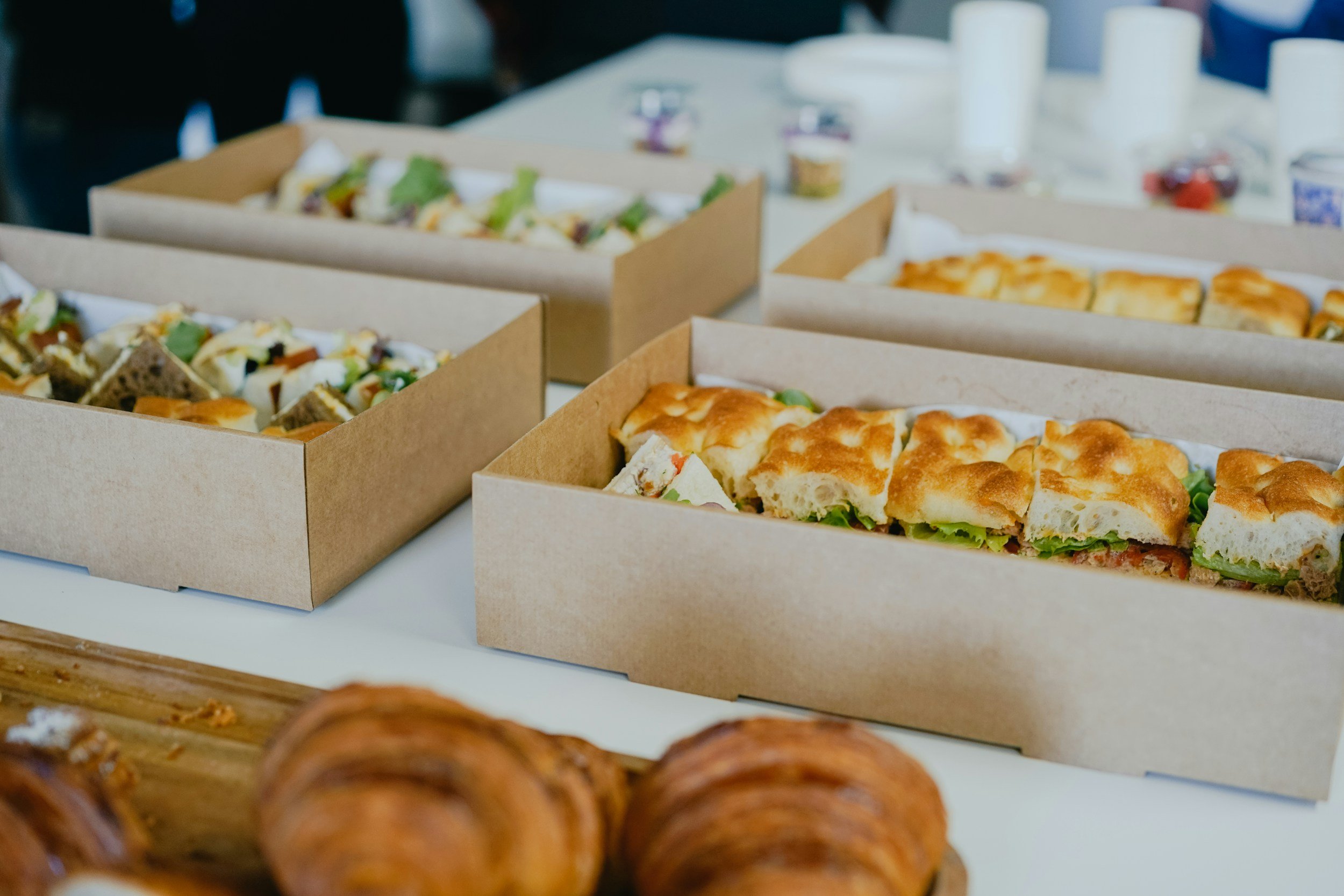
Every week I talk to office managers who are stressed out about food.
They're convinced they need to solve fifteen different dietary problems before they can place a catering order.
They don't.
After 30 years of feeding office teams across Greater Boston, I can tell you this with confidence:
Get four things right and you've covered almost everyone at the table.
That's it. Four.
Let me show you what they are and exactly how to handle each one.
At ANI Catering & Cafe, we've been feeding diverse Boston-area offices for over 30 years. Dietary restrictions aren't a problem we work around — they're something our menu was built for from day one.
The four restrictions that actually matter
Here they are, straight up:
Vegetarian
Vegan
Gluten-free
Halal
That's your list.
Cover these four and you will feed the overwhelming majority of any office team in Greater Boston — tech companies, biotech firms, law offices, hospitals, startups, all of it.
Everything else — keto, paleo, low-FODMAP, dairy-free by preference — is either covered by one of these four already, or it represents one person in fifty who can usually find something that works within a well-planned spread.
Let me break each one down.
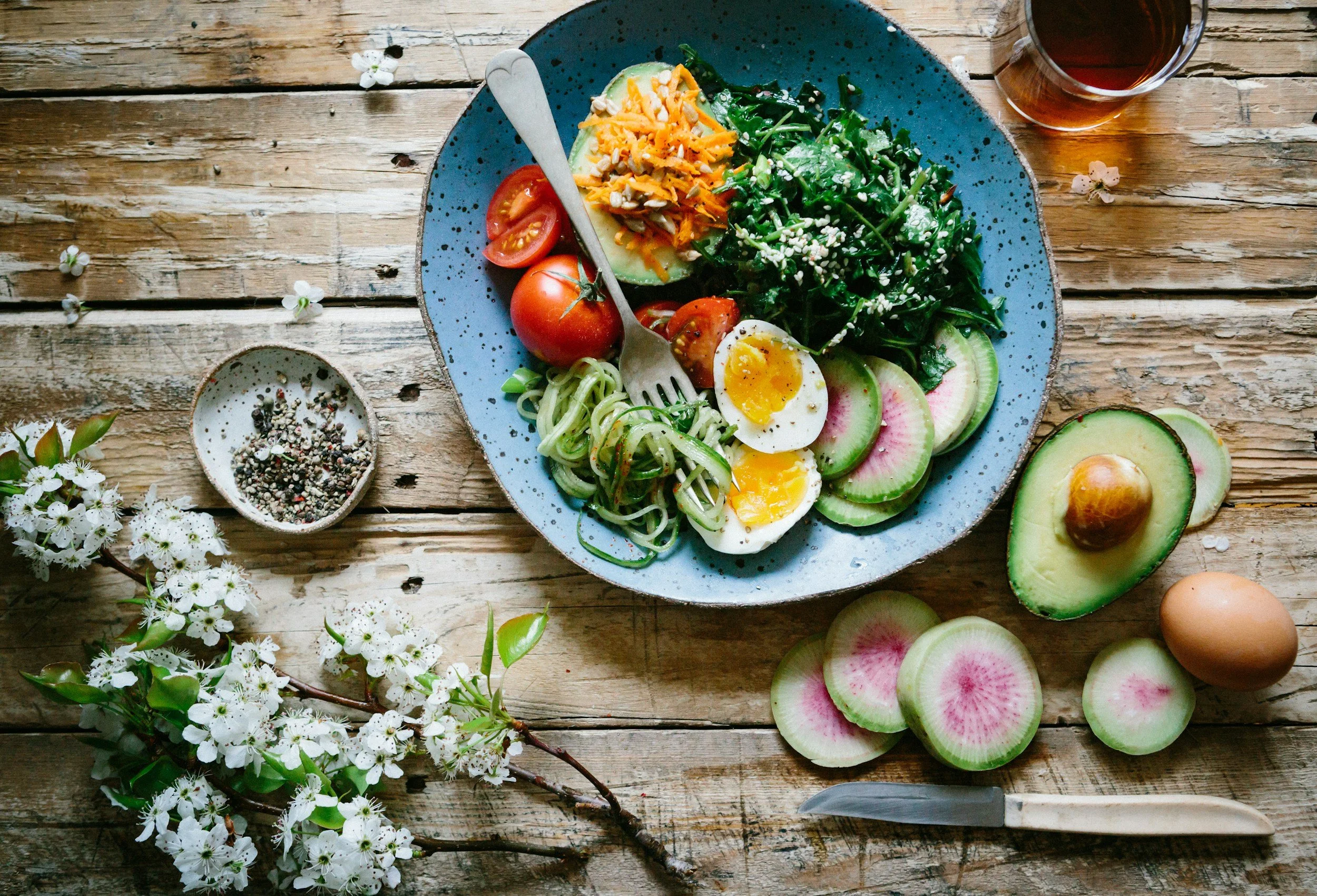
1. Vegetarian — the most common, the easiest to get wrong
More people are vegetarian than you think.
In a team of 25 people in Greater Boston, you're likely looking at 3–5 vegetarians minimum. In tech and biotech offices, often more.
What vegetarian actually means:
No meat
No fish or seafood
Eggs and dairy are fine
What gets it wrong:
Assuming the salad counts as a vegetarian meal
Offering one sad pasta option while everyone else gets protein
Forgetting that vegetarians want a full, satisfying plate — not a side dish with some lettuce
What gets it right:
A real protein source — falafel, lentils, paneer, legumes, eggs
Multiple options, not one
Food that was designed to be vegetarian, not food that had the meat removed
Here is something I tell people all the time:
Vegetarian food is not lesser food. In Middle Eastern cooking, the vegetarian dishes are often the centerpiece. Hummus, falafel, stuffed grape leaves — these aren't sides. They're the main event.
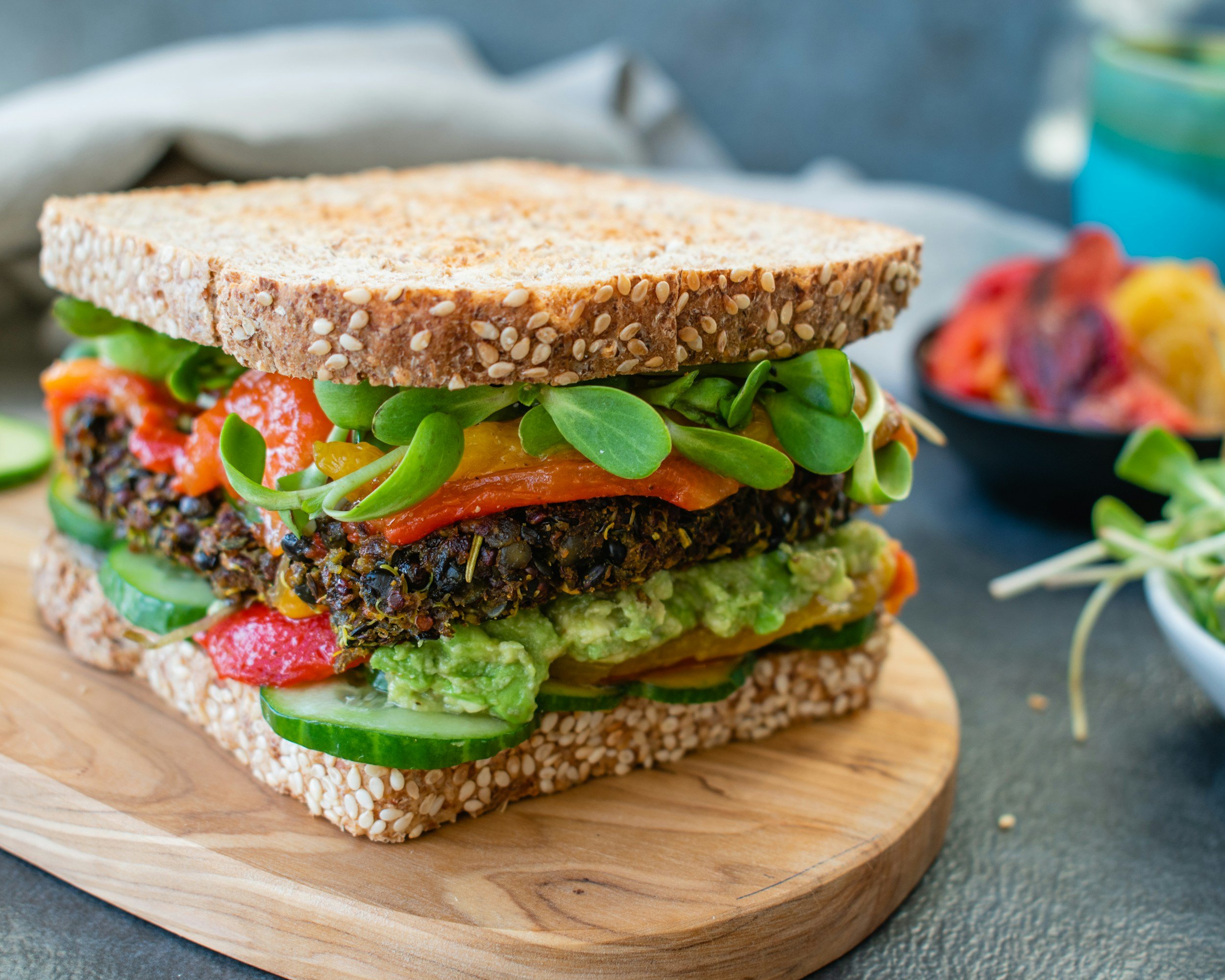
2. Vegan — trickier than vegetarian, more common than you expect
Veganism has grown significantly in the last five years.
In a diverse Boston-area office, you're almost certainly going to have at least one or two vegan employees. In younger teams and tech companies, sometimes several.
What vegan actually means:
No meat, no fish
No dairy — no cheese, no butter, no cream
No eggs
No honey
Where people mess this up:
Ordering a vegetarian spread and assuming vegans are covered
Putting butter or ghee in the rice without mentioning it
Offering a "vegan option" that's just plain vegetables with no protein, no fat, no substance
What gets it right:
Legumes — chickpeas, lentils, fava beans
Falafel — naturally vegan when made properly
Olive oil-based dishes rather than butter or cream
Hummus, baba ghanoush, tabbouleh — all naturally vegan
A full plate, not an afterthought
Here is the honest truth about Middle Eastern food and veganism:
Our cuisine has been accidentally vegan-friendly for thousands of years. Before "plant-based" was a trend, we were cooking with chickpeas and olive oil and calling it Tuesday.
Cover your vegan guests properly and you'll get a thank-you email. Serve them plain steamed broccoli and you'll lose a customer forever.

3. Gluten-free — the one with the highest stakes
This one you need to take seriously.
Some people avoid gluten by preference. That's fine — easy to work around.
But some people have celiac disease. For them, gluten isn't a preference. It's a medical necessity. Even trace amounts cause a real physical reaction.
What gluten-free actually means:
No wheat, no barley, no rye
No regular pasta, no regular bread, no flour-based sauces
Cross-contamination matters for celiac guests — shared utensils and surfaces count
What gets it wrong:
Offering "gluten-free options" that were prepared on the same surface as gluten-containing food
Assuming rice dishes are automatically safe without checking sauces and marinades
Forgetting that pita bread on a shared platter contaminates everything it touches for a celiac guest
What gets it right:
Naturally gluten-free dishes — grilled proteins, rice, legumes, fresh salads
Clear labeling on every container
Keeping gluten-free items physically separated from bread and pita
When in doubt, ask your caterer directly: "Is this dish prepared separately from gluten-containing items?"
The question to ask every caterer:
"Do you have a protocol for celiac guests or is this just gluten-friendly?"
Those are two different things. A good caterer knows the difference immediately.
4. Halal — the most overlooked and the most important to get right
This one surprises people.
Boston has a large and growing Muslim population. Cambridge and Waltham specifically have significant Muslim communities working in tech, biotech, medicine, and academia.
In your office right now, there is almost certainly someone who keeps halal — and they've probably quietly been picking around the food at catered lunches for months without saying anything.
What halal actually means:
Meat must be slaughtered according to Islamic guidelines
No pork or pork-derived products
No alcohol in cooking
The entire preparation process matters — not just the meat itself
What most caterers get wrong:
Assuming "no pork" covers it
Using wine or beer in sauces without mentioning it
Not being able to confirm whether their supplier is halal-certified
What gets it right:
Halal-certified meat from a verified supplier
Being able to say clearly and confidently: "Yes, our meat is halal certified"
No hidden pork products in sauces, stocks, or seasonings
Here is what I want you to understand about this one:
When a Muslim employee walks into a catered lunch and sees halal-certified food labeled clearly — that moment matters to them. It tells them their employer thought about them specifically. That's not a small thing.
ANI has been halal-certified for years. It is not an accommodation we added. It is how we operate.
How these four work together
Here is the beautiful thing about these four restrictions:
They overlap almost perfectly.
A well-built Mediterranean or Middle Eastern spread covers all four simultaneously without anyone having to order something special.
Think about it:
Falafel is vegetarian, vegan, and gluten-free
Grilled kabobs are halal and gluten-free
Hummus is vegetarian, vegan, and gluten-free
Tabbouleh is vegetarian, vegan, and gluten-free
Rice dishes are vegetarian, vegan, gluten-free, and halal
One cuisine. One order. Four restrictions covered.
No separate meals. No special requests. No one eating a fruit cup while everyone else has a real lunch.

The one thing to do before your next catering order
Send this four-question survey to your team right now:
Are you vegetarian?
Are you vegan?
Do you need gluten-free options?
Do you require halal food?
That's it.
Four questions. Five minutes.
You will know exactly what you're working with before you call a single caterer.
And when you do call — make sure they can answer yes to all four without hesitation.
If they can't, keep looking.
THE SHORT VERSION
Four restrictions cover 95% of any office team: vegetarian, vegan, gluten-free, halal
Vegetarian means a real protein source — not a salad
Vegan means no dairy or eggs either — not just no meat
Gluten-free has two levels: preference and medical — treat every case as medical
Halal means certified — not just "no pork"
Mediterranean and Middle Eastern cuisine covers all four simultaneously in a single order
Survey your team with four questions before you touch a menu
Ready to make your next office lunch the one everyone talks about?

Halal Catering in Boston — What You Should Know Before You Order
Not every caterer who says "halal" means it. Here is what to look for — and why a 30-year Armenian-Syrian family business in Boston might be exactly what you have been looking for.
Double-click to edit...

Finding halal catering in Boston is not easy.
You call around. You ask questions. You still are not sure…
Is this really halal? Or just someone saying the word?
We understand.
Here is what you should know before you order catering in Boston.
1. Not everyone who says "halal" means it.
Some places put the word on their menu. That is it. No sourcing. No standards. Just a word.
Real halal is not just about the meat. It is about respect. For the food. For the people eating it. For God.
We take it seriously. All our meats are certified halal. We source carefully. We handle everything the right way. If it does not meet the standard, it does not come through our kitchen.
2. Armenian food and Arab food come from the same table.
My family is Armenian. From Syria. We grew up eating the same things you grew up eating.
Shawarma. Falafel. Kabob. Hummus. Rice with vermicelli. Food that takes time and love.
We did not learn this food from a cookbook. We learned it from our mothers. That is why it tastes the way it does.
3. Thirty years in Boston means something.
ANI has been serving Greater Boston since 1993.
You do not last thirty years by being average. You last by being consistent. By showing up. By making food people want to come back for.
Our customers are office managers, families, schools, hospitals, and community events. They come back. Every time.
4. Quality first. Speed second. Both at the same time.
We built ANI to do two things well.
First — make food that is genuinely good. Not catering food. Real food.
Second — make ordering easy. You should not have to plan three weeks ahead. You should not need to make five calls. One call. One email. We handle the rest.
Corporate lunches. Family gatherings. Office events. Big or small. We are ready.
5. Every diet is covered. Not just halal.
Your team is not all the same. We know that.
Halal. Vegetarian. Vegan. Gluten-free. We make food that works for everyone at the table. You order once. Everyone eats well. Nobody is left out.
6. You deserve a real person to talk to.
When you call us, someone answers.
Not a form. Not a robot. A person who knows the menu, understands what you need, and will help you figure out the right order for your group.
That is how we have always done it. That is how we will always do it.
7. We are not a big company. That is a good thing.
Big catering companies move fast. They do not always know your name. They do not always care about the details.
We are a family business. We care about every order. Because every order has our name on it.
ANI Catering & Cafe. 687 Belmont Street, Belmont, Massachusetts.
Serving Greater Boston for over 30 years. Call us. We will take care of you.
See Our Catering Platters —>

Same-Day Catering in Boston: ANI Has You Covered
When your catering falls through or a meeting lands on your calendar with 24 hours notice, most caterers can't help. ANI Catering in Belmont can. We cook fresh every day, we're minutes from Cambridge and Waltham, and real people answer the phone.
Sometimes the meeting gets moved up. Sometimes someone forgets to book the caterer. Sometimes a client visit lands on your calendar with 24 hours notice and 30 people to feed. It happens — and when it does, most caterers can't help you.
ANI Catering & Cafe has been serving Greater Boston for over 30 years. Same-day and last-minute catering is something we've always handled. Here's what you need to know.

Why Last-Minute Catering in Boston Is So Hard to Find
Most catering operations require 48 to 72 hours minimum notice — sometimes more. Their prep schedules are locked in days ahead, their delivery windows are fixed, and a same-day request simply doesn't fit the model.
ANI is different. Because we cook fresh every day out of our kitchen in Belmont, we're already preparing food when your emergency call comes in. We're not defrosting or reordering — we're cooking. That's the structural advantage of a family-owned kitchen that's been running the same operation for three decades.
If you're in Cambridge, Waltham, Newton, Watertown, or anywhere in the Greater Boston corridor, you're close enough that same-day is genuinely possible. Call us directly and we'll tell you honestly what we can do.
What "Same-Day" Actually Means at ANI
Same-day catering doesn't mean you get a lesser version of the food. It means you called us the morning of and we made it work. The hummus is still house-made. The falafel is still cooked fresh. The chicken kabob is still marinated the way it's always been.
What changes with same-day orders is the conversation — we need to know your headcount, your dietary requirements, your delivery address, and your window as early in the day as possible. The earlier you call, the more options you have. A 7am call for a noon delivery is a very different situation than a 10am call for an 11:30 delivery.
We'll always be straight with you about what's possible. If we can do it, we'll tell you. If the timing genuinely doesn't work, we'll tell you that too.
The Most Common Last-Minute Catering Situations We Handle
You'd be surprised how often these happen:
A client meeting gets upgraded to a working lunch the night before. An all-hands gets moved up by two days. A team celebration gets organized on a Tuesday for that same Thursday. A vendor visit lands with less than 24 hours notice. A previous caterer cancels and someone needs a replacement fast.
All of these are situations we've handled many times. The office admins and executive assistants who call us in a panic tend to become our most loyal repeat customers — because we came through when it mattered.

Why Location Makes All the Difference
A same-day order from a caterer on the other side of the city is a gamble. Traffic, distance, and delivery windows make it genuinely risky. ANI's kitchen is at 687 Belmont Street in Belmont — which puts us within easy reach of the entire Boston office corridor without crossing the city.
Cambridge is roughly 10 minutes away. Waltham is 10 minutes in the other direction. Newton, Watertown, Arlington, and Lexington are all close. That proximity isn't just convenient — for same-day catering, it's the difference between it working and it not working.
What to Have Ready When You Call
To turn your last-minute request around as fast as possible, have these four things ready:
Your headcount — approximate is fine, but the closer the better. Your dietary needs — any halal requirements, vegetarians, vegans, or allergies we should know about. Your delivery address and any building access notes. Your hard deadline — the time the food needs to be there, not the time you'd like it.
The more of this you have ready when you call, the faster we can confirm and get moving. ANI is 100% halal, so if that's a requirement for your team, you're already covered without needing to ask.
We'll Always Be Honest About What's Possible
This matters. A caterer who takes your same-day order and then delivers late, delivers less, or delivers something that doesn't match what was discussed is worse than no caterer at all. We won't do that.
If we can handle your order to the standard ANI is known for, we'll take it. If the timing is too tight to do it right, we'll tell you that upfront so you can make other arrangements. After 30 years in this business, our reputation is worth more to us than any single order.
Why Boston Offices Call ANI First for Last-Minute Catering: The Short Version
✓ Fresh food cooked daily — we're already in the kitchen when you call ✓ Belmont location puts us minutes from Cambridge, Waltham, Newton, and Watertown ✓ 100% halal kitchen, every diet covered, no special requests needed ✓ Honest about what's possible — we won't overpromise and underdeliver ✓ 30+ years of catering Greater Boston means we know how to move fast ✓ Real people answer the phone — no forms, no portals, no waiting
If you have a last-minute catering need in Greater Boston, the fastest thing you can do is call us directly. We'll pick up, we'll listen, and we'll tell you exactly what we can do.
Call ANI Catering now: (617) 484-6161
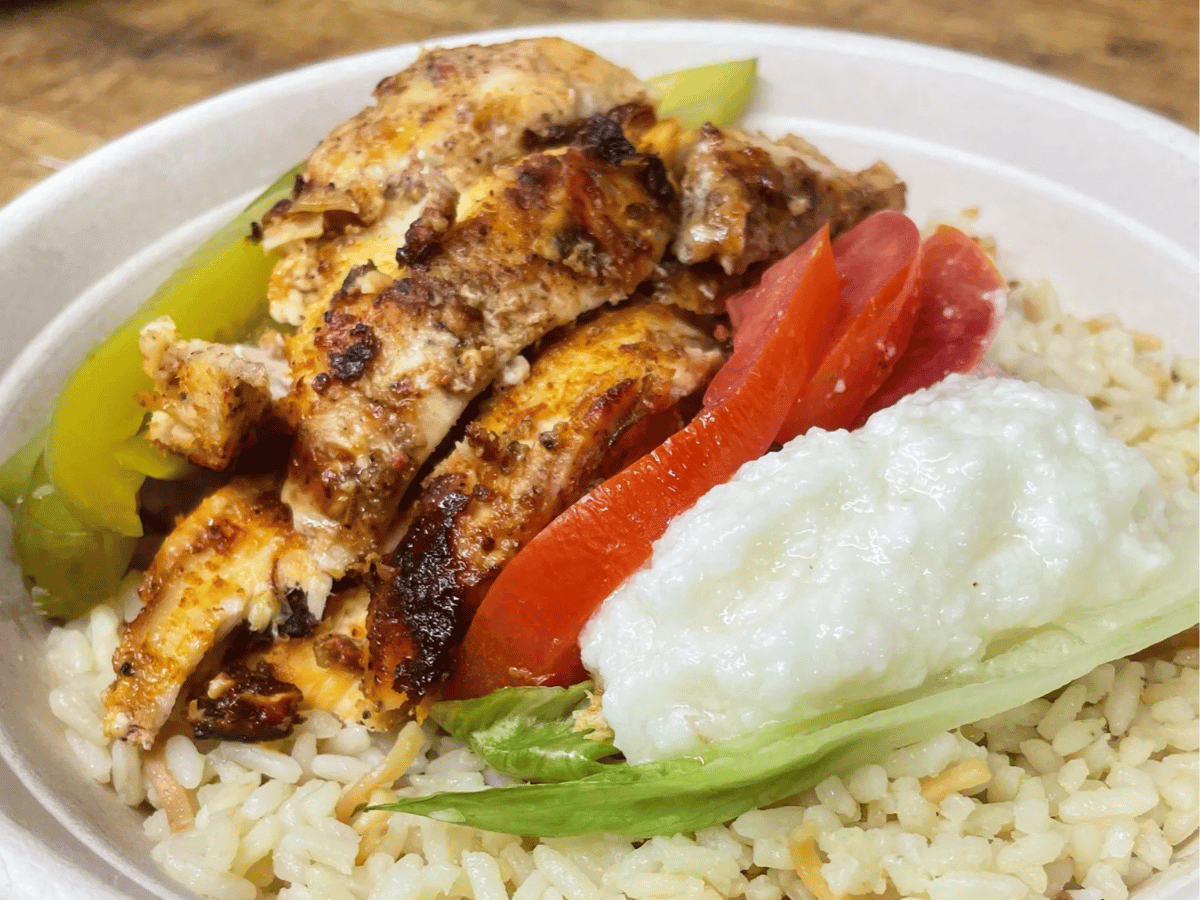
Why ANI Is the Best Choice for Office Catering in Boston
Finding office catering in Boston that your whole team actually gets excited about isn't easy. ANI Catering in Belmont has been doing it for over 30 years — fully halal, made-from-scratch Middle Eastern food that covers every dietary need, delivered on time to Cambridge, Waltham, Newton, and beyond.
Finding a Boston-area caterer:
your whole office actually gets excited about,
one that handles dietary restrictions, shows up on time,
and doesn't drain your budget

shouldn’t be this hard…
ANI Catering & Cafe has been serving Greater Boston for over 30 years, and office teams across Cambridge, Waltham, Newton, and Watertown keep coming back. Here's why.
We Show Up. Every Time.
In catering, reliability isn't a bonus feature — it's the whole job. When you're coordinating lunch for 40 people between back-to-back meetings, the last thing you need is a caterer who's 45 minutes late or calls with a problem the morning of your event.
Our kitchen is organized, our delivery process is tight, and your order is confirmed — not improvised. Office admins and event coordinators who work with us regularly will tell you the same thing: we're the caterer you stop worrying about. If we say we'll be there at noon, we're there at noon.
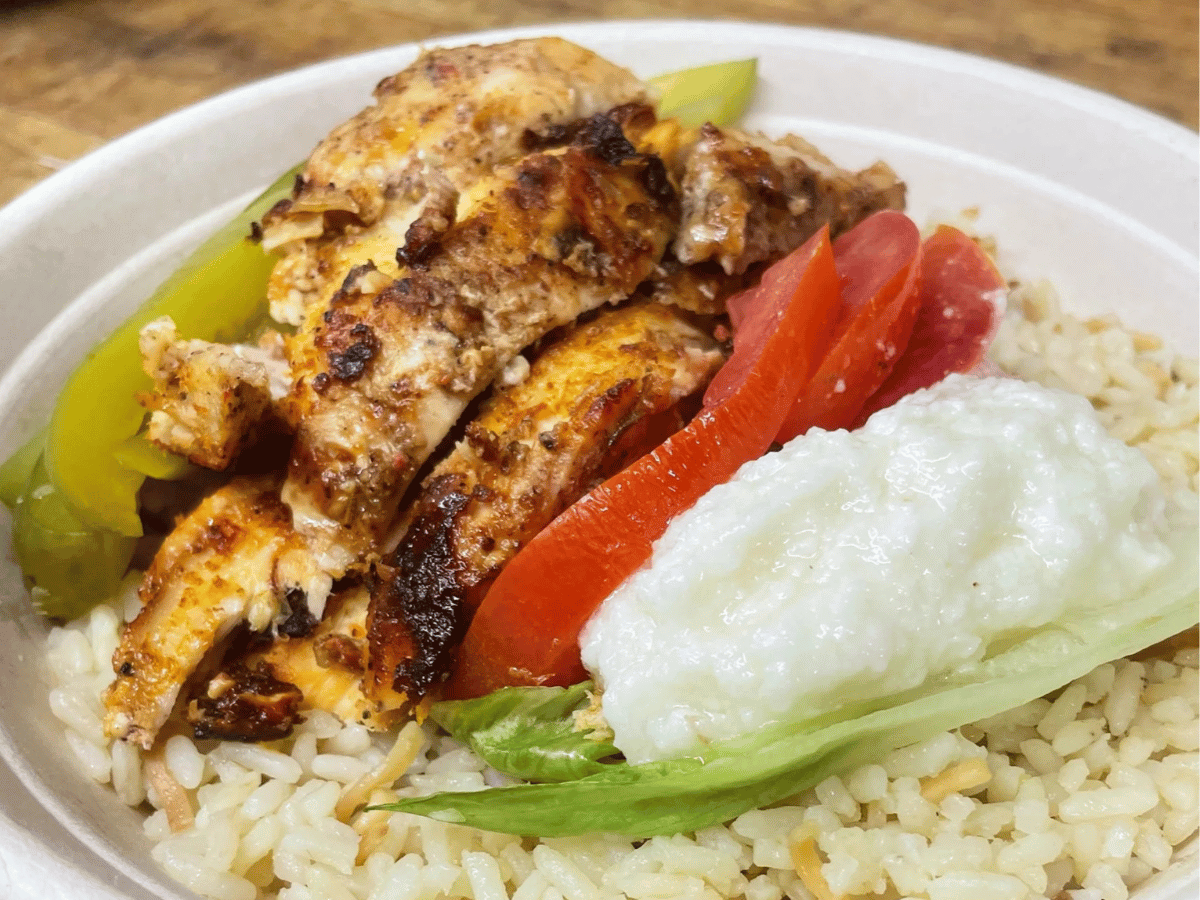
The Food Actually Tastes Amazing
This sounds obvious, but it's rarer than you'd think. A lot of corporate catering is forgettable — the kind of tray lunch that gets eaten out of necessity, not excitement. Our food gets talked about.
Everything is made from scratch using family recipes refined over three decades. The chicken shawarma is marinated and cooked fresh. The hummus is house-made and served with warm pita. The falafel is crispy outside, tender inside, and nothing like anything pre-frozen. When your team walks into the conference room and smells that spread, the afternoon meeting energy is genuinely different.

Modern offices are diverse, and modern teams have real dietary needs — not just preferences, but religious requirements, allergies, and medical conditions. Most caterers treat this as a problem to manage. We treat it as something we've been doing for 30 years.
We Handle Dietary Restrictions Without the Headache
Our menu naturally covers a wide range of needs. Nearly every dish has a vegetarian or vegan version. Our proteins are completely halal — not as an add-on, but as a foundational part of how we source and prepare food. We have gluten-friendly options that don't feel like a consolation prize. When you order from ANI, you don't need to send a second email asking if there's "something for the vegetarians." There already is — and it's good.
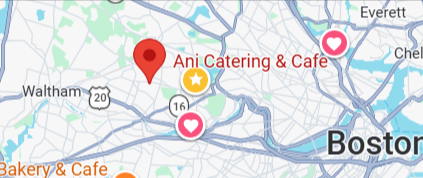
ANI is located at 687 Belmont Street in Belmont, MA — right in the middle of the densest stretch of corporate offices in Greater Boston. Cambridge is minutes away. Waltham is minutes away. Newton, Watertown, Lexington, and Arlington are all within easy reach.
We're Perfectly Located for the Boston Corridor
That proximity matters operationally. It means fresher food that doesn't sit in transit for an hour. It means more reliable delivery windows. And when something changes last minute — you added 10 people to the headcount, or your noon became an 11:30 — we have the flexibility to adapt in ways a more distant caterer simply can't.

Our Pricing Is Honest and Competitive
Corporate catering in Boston can feel like a premium tax on every event — minimums, service fees, itemized surcharges. We don't operate that way. ANI's pricing is straightforward. You know what you're getting and what it costs.
For the quality — made-from-scratch food, halal proteins, house-made sauces, fresh pita — our pricing is genuinely competitive with caterers who are serving you far less. We believe the best catering relationship is one where you're happy to reorder, not relieved it's over.
100% Halal — No Asterisks
For offices with Muslim employees, halal-certified catering isn't a nice-to-have — it's a requirement for those team members to eat. And "halal options available" isn't the same thing as a fully halal kitchen.
At ANI, every protein we serve is halal. There's no separate preparation process, no special request needed, no uncertainty about cross-contamination. When we say halal, we mean the whole kitchen operates that way. That makes ANI one of the few Greater Boston caterers where your Muslim colleagues can eat everything on the table — not just one or two designated items. For offices that care about genuine inclusion, that's a meaningful difference.
Why Boston Offices Choose ANI: The Short Version
✓ Dependable on-time delivery, every order — no excuses ✓ Made-from-scratch Armenian and Middle Eastern food your team will actually look forward to ✓ Full dietary coverage: halal, vegetarian, vegan, and gluten-friendly built into the menu ✓ Belmont location puts us minutes from Cambridge, Waltham, Newton, and Watertown ✓ Transparent, competitive pricing — no surprise fees or minimums to inquire ✓ Fully halal kitchen, not just halal options — every protein, every time
If you've been cycling through the same tired catering rotation, ANI is worth trying once. We're confident once you do, you'll understand why so many Greater Boston offices have made us a standing order. Reach out for a free quote — we respond within two hours on business days.
How to Order Office Catering When Half Your Team Has Dietary Restrictions
You've got 25 people coming to Thursday's lunch meeting. Someone's vegan. Two are gluten-free. One has a nut allergy. And your boss just asked you to handle it this morning.
This is office catering in 2026 — and it's not a niche problem anymore. Here's the step-by-step guide for getting it right, from the survey you should send before you touch a menu to the two-minute table setup that prevents incidents on the day itself.
You've got 25 people coming to Thursday's lunch meeting.
Someone's vegan. Two are gluten-free. One has a tree nut allergy. Your new hire just told you she keeps halal. And your boss asked you to handle it this morning.
This is the reality of ordering office catering in 2026.
It's not a niche problem anymore — it's the default. Here's exactly how to handle it without the stress, the complaints, or the sad salad that nobody touches.
ANI Catering & Cafe has been feeding diverse Boston-area office teams for over 30 years — which means we've seen every version of this problem, and we know exactly where it goes wrong.
Step 1: Survey your team before you touch a menu
This is the step most people skip.
It's also why catering orders go sideways.
Before you look at a single menu, send a two-question form to everyone attending:
Do you have any dietary restrictions or allergies?
Is there anything you absolutely won't eat?
A Google Form with checkboxes takes four minutes to build. Five minutes to fill out. The data you get back is worth more than any menu research you could do on your own.
Include these categories:
Vegetarian
Vegan
Gluten-free
Dairy-free
Halal
Kosher
Nut allergy
Shellfish allergy
Other
Don't assume you already know. People's dietary needs change. New employees haven't told you yet. That colleague who quietly skips the catered lunches? There's a reason.
Do this at least 48 hours before you need to order. Not the morning of.
Step 2: Separate allergies from preferences
Once your survey comes back, sort the responses into two lists.
List 1 — Preferences: Vegetarian, vegan, gluten-free by choice, dairy-free by choice.
These matter and need real accommodation — not an afterthought. But the consequence of getting them wrong is disappointment.
List 2 — Allergies: Nuts, shellfish, celiac-level gluten intolerance, severe dairy reactions.
These are medical. The consequence of getting them wrong is a hospital visit.
Your caterer needs to know about List 2 separately. Explicitly. In a direct message or phone call — not buried in an order note.
Say it plainly:
"We have one guest with a severe tree nut allergy. What is your kitchen's protocol for handling this?"
A caterer worth using will have a clear, specific answer.
A caterer who says "oh we'll just leave the nuts off" doesn't understand cross-contamination.
Find someone else.
Step 3: Choose a cuisine that solves the problem structurally
Here's what most people don't realize:
The cuisine you choose determines how hard your dietary job is before you even start.
The problem with common options:
Sandwich platters force you to customize every single item
Pizza leaves your vegan colleague with one cold, cheese-less option
BBQ trays leave half the table off-limits for vegetarians and halal guests
The better approach:
Choose a cuisine that's architecturally inclusive.
Mediterranean and Middle Eastern food is the clearest example.
Hummus, baba ghanoush, tabbouleh, falafel, and grilled kabobs are:
Naturally vegan or easily made vegan
Naturally gluten-free in most cases
Naturally halal when the kitchen is certified
Nobody had to modify anything. The food is just built that way.
When the cuisine works for most restrictions by default, you stop managing exceptions — and start placing a normal order.
Step 4: Build your order starting from your most restricted guest
This is the mental model shift that makes everything easier.
Most people start with what the majority wants — then try to add something for the restricted folks at the end.
That's how you end up with the sad salad. The bowl of undressed greens. The fruit cup that arrived as an obvious afterthought.
Do it the other way:
Start with your most restricted guest.
Ask: what can they eat that's a real, satisfying meal — not a side dish, not a garnish?
Then build outward:
What can gluten-free guests eat?
What can vegan guests eat?
What can halal guests eat?
When you start from the most restricted point and build outward, you'll find that everyone ends up with multiple options they actually want — not just the people without restrictions.
The goal isn't accommodation.
The goal is that every person gets a full, good meal and nobody has to ask "is there anything here I can eat?"
Step 5: Tell your caterer everything — twice
When you place the order, communicate every dietary requirement in the notes.
Then call or text to confirm they saw them.
This is not being annoying. This is being the admin who never has a catering incident.
What your caterer needs to know:
Number of guests per dietary category
Any severe allergies — called out separately and explicitly
Whether any items need to be physically separated from others
Your preferred labeling format on delivery
That last one matters more than people think.
When the food arrives, the labels on each tray are the only thing standing between your team and a dietary incident.
Ask your caterer to label every item with:
Vegan / Vegetarian
Gluten-free
Contains dairy
Contains nuts
A caterer who does this automatically takes this seriously.
A caterer who looks confused when you ask? Red flag.
Step 6: Set up the table before the room fills up
When catering arrives — before you let anyone near it — take three minutes to set up the table correctly.
Here's the setup:
Allergen-free and dietary-restricted items go on a separate end — or a separate small table entirely
Label anything that isn't already labeled
Put individual serving utensils in each tray — not shared ones
Keep the allergen-free tongs away from everything else
Then, before the room opens up, do a quiet 60-second walkthrough with any guests who have severe allergies:
"The nut-free items are on this end. These tongs haven't touched anything else."
Two minutes of setup.
The difference between an incident and a smooth lunch.
THE SHORT VERSION
Survey your team before you touch a menu — 48 hours minimum
Separate medical allergies from dietary preferences and call them out to your caterer separately
Choose a cuisine that handles dietary diversity by default, not through customization
Build the order starting from your most restricted guest and work outward
Ask your caterer to label every container before delivery
Separate allergen-free items on the table and use individual serving utensils
Ordering for a dietary-diverse team?
We've got you covered — every restriction, every guest, no afterthoughts.
✓ Halal, vegan, gluten-free, and dairy-free on every order
✓ Serving Cambridge, Waltham, Newton, Watertown & Greater Boston
✓ On-time delivery — or we make it right
View Our Boardroom Feast Package

Why We Have The BEST Falafel in Boston. Actually…
Bold claim, we know. But when you learn what actually goes into great falafel — fresh-soaked beans, house-made spices, fried to order — you'll never settle for anything less.

Fresh homemade falafel inside a classic Falafel Wrap fried to order at ANI Catering and Cafe in Belmont Massachusetts
Let's be honest — that's a bold claim.
Boston has no shortage of Middle Eastern restaurants, and plenty of them serve falafel. So when we say ours is the best, we're not just posturing. We're inviting you to understand why — because once you learn what separates great falafel from mediocre falafel, you'll never settle again.
This is a post about craft. About the decisions that happen before the first ball ever hits the oil. About why the falafel you get at ANI Catering & Cafe in Belmont tastes the way it does — and why it probably tastes different from anything you've had before.
🤔 What Most People Don't Know About Falafel
Falafel looks simple. A few ingredients, shaped into a ball, dropped in a fryer.
How complicated can it be?
Very.
The difference between extraordinary falafel and forgettable falafel lives almost entirely in the preparation — specifically, in choices that most restaurants skip because they're time-consuming, labor-intensive, and frankly, unnecessary if your only goal is to get product out the door fast.
Here's what we actually do — and why it matters.
1️⃣ We Soak Our Chickpeas & Fava Beans Fresh. Every. Single. Day.
The most important decision in falafel-making happens a full day before the falafel is ever shaped.
Authentic falafel is made with raw, soaked chickpeas — not cooked ones, and absolutely not canned ones. This is a non-negotiable rule in traditional Middle Eastern cooking, and one that a shocking number of shortcuts have quietly erased.
Here's the science:
When dried chickpeas soak, they rehydrate and soften just enough to be ground — but crucially, they remain uncooked. That raw, starchy composition is what binds the falafel mixture together. When this mixture hits hot oil, the starches gelatinize and expand, creating a light, fluffy interior while the outside becomes incredibly crisp.
Canned chickpeas — or pre-made falafel pouches — can't do this. They're already cooked, already waterlogged. The result?
❌ Dense, mushy falafel that falls apart ❌ Rescued with fillers like flour or eggs ❌ Flavor that's flat and generic
We also use a blend of chickpeas AND fava beans — the traditional Egyptian combination that predates the all-chickpea versions most people know today. That blend adds a nutty depth you simply can't get from chickpeas alone.
We soak fresh every day. No batch soaked four days ago. No frozen pre-portioned mix pulled from a bag. Every morning, the process starts from scratch — because that's the only way to control what ends up on your plate.
2️⃣ Our Spice Blend Is 100% House-Made 🌿
Walk into most fast-casual Middle Eastern spots in Greater Boston and you'll find the same falafel. Same texture. Same color. Same generic spice profile.
That's because they're all working from the same commercial falafel mix — a premeasured pouch designed for consistency and speed, not for flavor or character.
We don't do that.
Our spice blend is house-made — refined over more than 30 years of cooking for the Greater Boston community. It draws on the same culinary heritage that built this family business: Armenian and Middle Eastern cooking that treats spice as an art form, not an afterthought.
What a pouch gives youWhat we give youSame flavor, every restaurantA recipe built over 30 yearsDesigned for speedDesigned for flavorMade in a factoryMade in our kitchenPreservatives & fillersFresh herbs & whole spices
When a restaurant uses a premade mix, every flavor decision has already been made for them — by a food manufacturer somewhere else. We make those decisions ourselves, in our kitchen, every day.
3️⃣ Every Falafel Is Fried Fresh to Order 🔥
This one is about respect.
Falafel that's been sitting in a warming tray — or worse, pre-fried in bulk and reheated — is not falafel. It's a falafel-adjacent product.
Here's what happens to it:
😞 The crust goes soggy
😞 The structural integrity is gone
😞 The interior turns dense instead of light
😞 You eat it and forget it within the hour
We fry every falafel to order. You place your order, we form and fry. That's it.
Fresh-fried falafel arrives at its structural peak — the moment when the crust is at maximum crunch and the interior is still airy and steaming. That window is short. A falafel that sat for 15 minutes has already missed it.
⏱️ This means a slightly longer wait than you'd get at a place running a heat lamp. We think that's a reasonable trade.
4️⃣ It's Gluten-Free — And Still Ridiculously Crunchy ✅
This one surprises people.
Gluten-free and crunchy don't usually go together. Here's why ours is different:
Many commercial falafel preparations include wheat flour as a binder. It's an easy fix for the moisture problem that comes with using canned or improperly prepared chickpeas. Flour holds things together — but it also:
Adds gluten (obviously)
Changes the texture
Is a sign that something earlier in the process wasn't done right
Because we start with properly soaked, raw chickpeas and fava beans, we don't need flour as a crutch. The natural starch in soaked, uncooked chickpeas binds everything together — the way it's been done for centuries.
The result? Falafel that is:
✅ Naturally gluten-free ✅ Free of fillers and binders ✅ Still achieves that deep, satisfying crunch ✅ Safe for celiac and gluten-sensitive diets
No compromises. No trade-offs. Just falafel the way it's supposed to be made.
🏆 What This All Adds Up To
We've been feeding the Greater Boston area for over 30 years from our kitchen at 687 Belmont Street, Belmont, MA.
The falafel on our menu isn't a product engineered for convenience. It's a dish built — ingredient by ingredient, decision by decision — to be as good as it can possibly be.
Here's the short version:
🫘 Fresh-soaked chickpeas & fava beans — soaked daily, never canned 🌿 House-made spice blend — 30 years in the making 🔥 Fried to order — every single time ✅ Naturally gluten-free — no flour, no fillers
That's not a marketing checklist. That's just what it takes to make falafel worth eating.
📦 Ready to Try It?
Our falafel is available for:
🥡 Takeout — stop by 687 Belmont Street, Belmont, MA
🍽️ Catering platters — perfect for gatherings and events
🏢 Corporate catering — office lunches across Greater Boston
Order FALAFEL FOR PICKUP & DELIVERY →
We'd love to show you what 30 years of doing this right actually tastes like.
ANI Catering & Cafe is a family-owned Armenian and Middle Eastern restaurant located at 687 Belmont Street, Belmont, MA. We've been proudly serving the Greater Boston area for over 30 years.